
Water lines leak more at lake homes than at in-town homes because they are older, longer, and buried in harder ground. Many original cottages went in when the lakes filled (Hartwell in the early 1960s, Keowee in 1971, Jocassee in 1973) and still run on that first service line. The pipe from the road meter to the house is often several hundred feet, it crosses granite shelf and a steep slope, and the elevation drop adds pressure at the bottom that old fittings were never sized for. Sloan Underground Construction pinpoints and replaces these lines on lake lots across Oconee, Pickens, and Anderson counties. Here’s why they fail, how to spot a leak on a big lot, how it gets found without digging up the slope, and when to repair versus replace.
Why Do Water Lines Fail More Often at Lake Homes?
Water lines fail more often at lake homes because of eight causes: age, long runs, rock contact, slope creep, elevation pressure, freeze, construction strikes, and tree roots. Several usually act together, such as an old galvanized line resting on rock, on a slope, under more pressure than it was built for.
Age and Original Materials
A 50- to 60-year-old lake cottage often still drinks through its first service line — galvanized steel that corrodes from the inside out, or early polyethylene that has gone brittle. Every year past its design life is borrowed time. Our comparison of the best pipe for water service lines shows what replaces it.
Long Runs From the Road
Lake lots set the house at the water and the meter at the road. A 300- to 600-foot run has more couplings, more fittings, and more ground to shift around it than a 60-foot subdivision line — and every joint is a place to fail.
Rock Contact and Abrasion
Keowee and Jocassee lots sit on granite shelf. A line trenched in decades ago was often laid straight on rock; as the backfill settled, the pipe bore down on that edge and wore against it with every pressure cycle until it split.
Slope Creep and Erosion
Soil on a steep lakefront lot moves downhill a little every wet season. That creep drags on a buried line, stresses every fitting, and can strip cover off the pipe until it’s inches from the surface on the lower terrace.
Pressure From the Elevation Drop
Water gains roughly 0.43 psi for every foot it falls. A house sitting 100 feet below the road meter sees about 43 psi more than the meter does — on top of whatever the district supplies. Old pipe and old fittings at the bottom of the hill carry that load around the clock.
Freeze on Exposed Slopes and Dock Branches
A line that lost cover on a north-facing slope, or a dock branch left charged through January, freezes and splits. Lake homes that sit empty in winter find out in March when the meter has been spinning for weeks.
Construction and Dock-Work Strikes
Retaining walls, terraces, dock landings, and irrigation all went in after the water line, and each one was dug by someone who may not have known where it ran. A nicked line can hold for years before it lets go.
Tree Roots
Mature oaks, poplars, and pines on a wooded lake lot send roots straight toward the one wet spot in dry ground — a weeping joint. Roots don’t usually crush a pressurized line, but they pry fittings apart and turn a drip into a break.
What Are the Signs of a Water Leak on a Lake Lot?
The most reliable sign of a water leak on a lake lot is a meter that keeps moving with every fixture off. On a big sloped lot, water can run underground for months without surfacing where you would look, so trust the meter before the yard. The other signs are:
- The meter moves with everything off — the single most dependable sign; our guide to a spinning water meter walks through the test
- A bill spike with no change in use — especially on a house that sat empty; see why your water bill is so high
- A green or soggy strip running downhill — leaks on a slope travel; the wet spot is usually well below the break
- Pressure drop at the house — the shower fades while the meter keeps turning
- Running water at the shutoff — a hiss at the house valve with every fixture closed
- Water surfacing at the shoreline or weeping from a retaining wall — the lowest point on the lot is where an underground leak finally shows
The full checklist, including how to separate a service-line leak from a slab leak, is in our post on the signs your water line is leaking.
How Do You Find an Underground Leak on a Large Lakefront Property?
Find an underground leak on a large lakefront property by narrowing it down instead of digging. Confirm the leak at the meter, isolate the branch, then trace the sound of escaping water to the break. On a 300-plus-foot run down a hillside, that sequence is the difference between one small excavation and an exploratory trench.
- Meter-flow analysis. With every fixture shut, the meter should read zero. Any movement confirms water is leaving the system, and the rate says roughly how much.
- Isolate the branches. Lake properties usually have more than one line on the meter — house, dock, irrigation, sometimes a guest cottage. Close the dock or irrigation branch valve and watch the meter again. If it stops, the leak is on that branch; if it keeps moving, it’s between the meter and the house.
- Pressure isolation testing. Shutting off sections of the run and watching pressure hold or fall narrows the leak to one stretch of pipe.
- Acoustic listening. Water escaping a pressurized pipe makes a distinct hiss that travels along the pipe wall and through the soil. Listening equipment traces that sound above ground along the line’s path and pinpoints the break.
Why Pinpointing Matters More on a Lake Lot
On a flat 60-foot subdivision line, a wrong guess costs one extra hole. On a 400-foot run down a terraced, wooded slope, a wrong guess costs a retaining wall, a set of stone steps, and the landscaping between them. Sloan Underground pinpoints first so the repair is a single dig over the break — or, if the line has to go, a trenchless bore that never opens the hillside at all. Our posts on leak detection in the Upstate and what leak detection costs in South Carolina cover the process and price.
Should You Repair or Replace a Leaking Lake Home Water Line?
Repair an isolated failure on a sound line, and replace a line that has reached the end of its life. On a lake lot, replacement is the common case. Repair when the break is a single event: a root-pried fitting, a strike from dock or wall construction, or one crushed section.
Replace when the pipe is original galvanized or early poly, when this is the second leak on the same run, when pressure at the house has already dropped, or when getting to the break means tearing out hardscape anyway.
Full replacement on a lakefront lot is usually a trenchless bore: a directional drill pulls a new continuous HDPE line beneath the slope from a pit at the meter to a pit at the house, and the old line is abandoned in place. The decision framework is in our guide to repairing versus replacing a leaking water service line, and the method comparison for sloped lots is in trenching vs. directional boring for Upstate lake homes.
How Do You Keep the New Line From Failing the Same Way?
Keep a new lake-lot line from failing the same way with five details: continuous HDPE, correct depth, a house shutoff, a dock drain-down, and tracer wire. Sloan Underground Construction designs replacement lake-lot lines to outlast the causes above, not just to stop today’s leak, and each detail below answers one of them.
- Continuous HDPE, pulled in one piece. A bored line has no buried couplings between the meter pit and the house pit — nothing for creep, roots, or pressure to pry apart.
- Depth below frost and below rock contact. The bore path is plotted to hold cover on the lower terraces and to pass beneath the granite shelf instead of resting on it.
- A shutoff at the house. So a future problem anywhere on the run can be isolated in seconds without a trip to the road meter.
- A drain-down for the dock branch. A valve and low-point drain let the dock line be emptied before winter instead of freezing full.
- Tracer wire. HDPE is invisible to a locator on its own; tracer wire means the next wall or dock contractor can find the line before they dig.
How Does a Lake Home Leak Estimate Work?
A lake home leak estimate starts with a free site visit at the meter, and the written, line-item price that follows is free too. Sloan Underground Construction confirms the leak, isolates it to a branch, traces it along the run, and shows you where it is before quoting anything.
The quote is a spot repair if the line is sound, or a written all-in price for trenchless water line replacement if it isn’t. Lake Hartwell, Lake Keowee, and Lake Jocassee lots fall in the Oconee County, Pickens County, and Anderson service areas.
Sloan Underground Construction is a family-owned SC General Contractor (license #14665) based in Fountain Inn, in the ground since 1965. Its water leak detection service finds the leak and its water line installation and replacement service fixes it. Call (864) 386-1649 or browse more lake-home guides in the Sloan Underground blog.
Frequently Asked Questions
Why do water lines leak more often at lake homes than at in-town homes?
Because the lines are older, longer, and buried in harder ground. Many original cottages around Lake Hartwell, Lake Keowee, and Lake Jocassee still run on the galvanized steel or early poly service line installed when the lake filled, the run from the road meter to the house is often several hundred feet, the pipe crosses granite shelf and a steep slope, and the elevation drop from the meter to the house adds pressure that old fittings were never sized for.
How do I know the leak is in my service line and not the dock line or irrigation?
Isolate the branches. With every fixture off, watch the meter; if it moves, close the valve to the dock or irrigation branch and watch again. If the meter stops, the leak is on that branch. If it keeps moving, the leak is between the meter and the house. Sloan Underground runs the same meter-flow and pressure isolation tests on a site visit, then uses acoustic listening to pinpoint the break along the run.
Can a leak on a 300-foot lake lot water line be found without digging?
Yes, a leak on a 300-foot lake lot water line can be found without digging. Meter-flow analysis confirms there is a leak, pressure isolation narrows it to one section of the run, and acoustic listening equipment traces the sound of escaping water above ground along the pipe path to the break. On a long, sloped run that matters: the fix becomes one small excavation over the leak instead of an exploratory trench down the hill.
Should an old leaking lake home water line be repaired or replaced?
Repair a single isolated failure on an otherwise sound line. Replace it when the pipe is original galvanized or early poly, when this is the second leak on the same run, when pressure at the house has dropped, or when the repair dig would tear up hardscape anyway. On lake lots, a full replacement is usually a trenchless bore — a new continuous HDPE line pulled beneath the slope in a day.
Does Sloan Underground work on Lake Keowee, Jocassee, and Hartwell properties?
Yes, Sloan Underground Construction bores water, electric, and fiber lines on lake lots around Lake Hartwell, Lake Keowee, and Lake Jocassee in Oconee, Pickens, and Anderson counties. The company is based in Fountain Inn, SC. Call (864) 386-1649 to schedule a site visit.
Related Articles
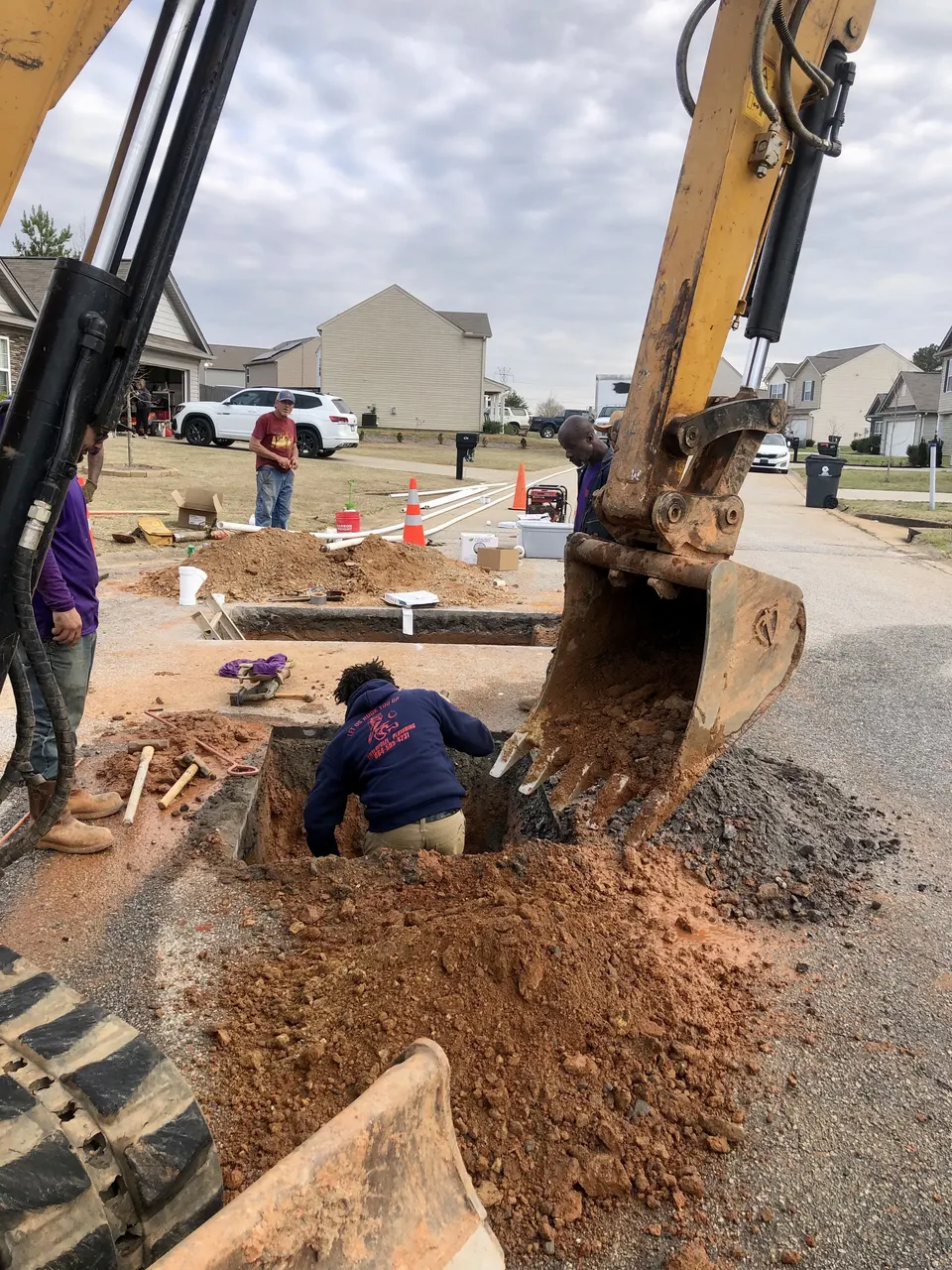
Signs Your Water Line Is Leaking
The meter test, the bill spike, the soggy strip — and how to tell a service-line leak from a slab leak.
Read article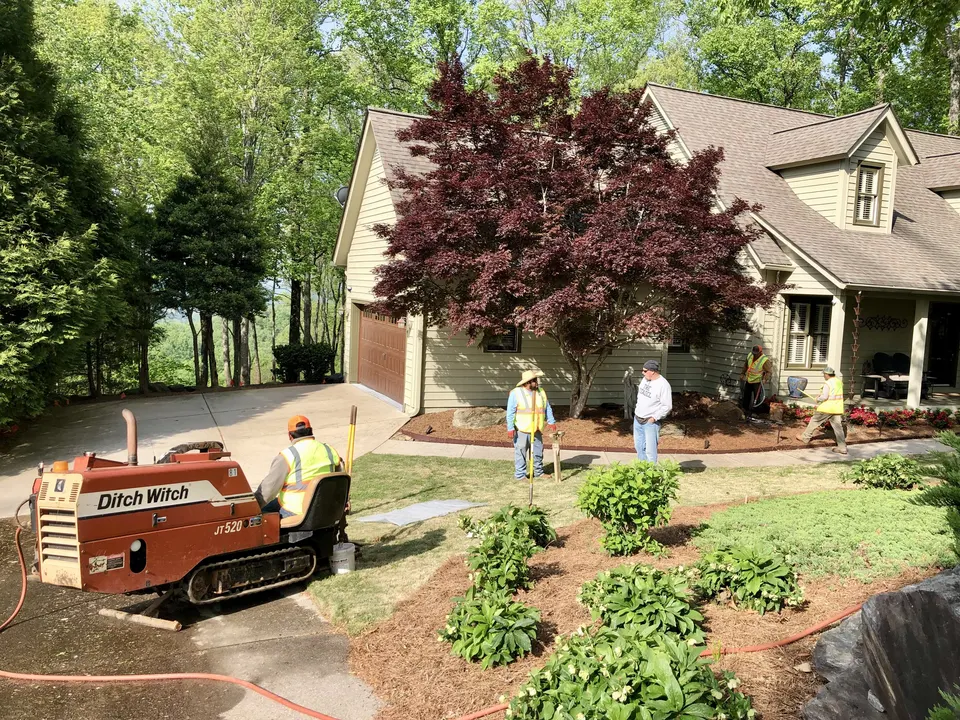
Water Leak Detection in the Upstate: Finding Hidden Leaks
How to confirm a hidden underground leak and how pros pinpoint it without digging up the yard.
Read article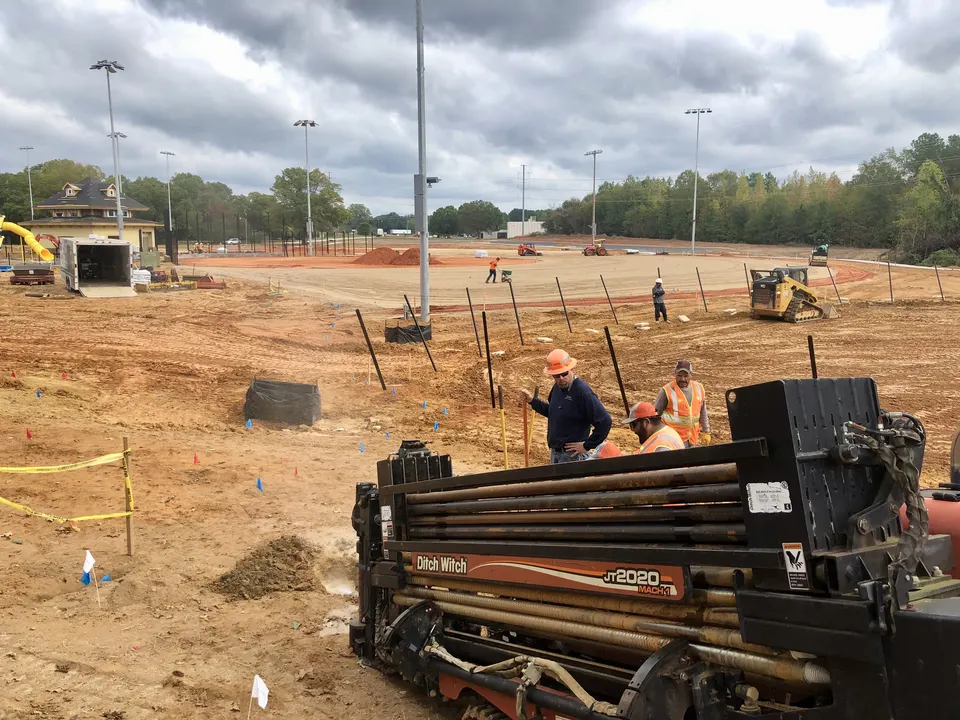
Trenching vs. Directional Boring for Upstate SC Lake Homes
When boring wins on steep, rocky Keowee and Hartwell lots, when a trench still fits, and what each costs.
Read article