
A water meter that spins with all fixtures off almost always means there is a hidden leak somewhere in your plumbing system. The leak may be underground in the service line, inside the house in a toilet or appliance, or in an irrigation system running undetected. A simple two-hour meter test can confirm whether water is escaping — and roughly how fast.
How to Read Your Water Meter
Before you can test for a leak, you need to find and read your water meter. In most South Carolina neighborhoods — including Greenville, Simpsonville, Greer, Taylors, and surrounding Upstate communities — the meter is located in a covered pit near the curb or at the edge of your property line, usually close to the street.
Open the cover and look at the meter face. Most residential meters have two key features for leak detection:
- The leak indicator: A small triangle, star, or dial on the meter face that rotates whenever even tiny amounts of water flow through. This is your first diagnostic tool.
- The digital or analog register: The odometer-style readout that shows total water consumption in gallons or cubic feet.
If the leak indicator is rotating — even slowly — with every fixture in the house shut off, water is moving through the meter. That means it's moving through your pipes somewhere, and it's not going down a drain you intended.
One important note before you test: the meter measures everything on your side of the curb stop. That includes your indoor plumbing AND your outdoor service line from the meter to the house. Both zones need to be checked. For full background on which section of line is your responsibility versus the utility's, see our guide on who is responsible for your water service line.
The Two-Hour Meter Test
This test takes about two hours of your time and costs nothing. It's the most reliable DIY method for confirming a leak and estimating its size.
Shut off all water
Turn off every faucet, showerhead, and irrigation zone. Make sure all toilets have finished filling (flush one to reset if unsure). Turn off the icemaker, dishwasher, and water softener if present. The goal is zero intentional water use.
Record the meter reading
Write down the exact reading from the meter register — every digit. Also note whether the leak indicator is moving. Take a photo with your phone for reference. Record the time.
Wait two hours — use no water
Do not use any water for two hours. This means no toilet flushes, no sink use, no running dishwasher. Alert everyone in the house. If you have a sprinkler system, make sure the controller is off and no zones are scheduled during this window.
Read the meter again
Check the register. If the number has changed — even by a small amount — water moved through your meter while all fixtures were off. Any change confirms an active leak.
Isolate inside vs. outside
To determine whether the leak is inside the house or underground, find your main shutoff valve (typically where the service line enters your foundation). Shut it off, then repeat the meter check. If the meter stops moving with the main shutoff closed, the leak is inside. If it keeps moving, the leak is in the underground service line between the meter and your house.
6 Reasons Your Water Meter Is Spinning
Once you've confirmed the meter is registering flow with everything off, here are the six most common causes — ranked roughly from most to least frequent in South Carolina homes.
1. Running Toilet
A toilet with a worn flapper, misaligned fill valve, or faulty float can silently discharge hundreds of gallons per day into the drain. This is the single most common cause of unexplained meter movement. Add a few drops of food coloring to the tank — if color appears in the bowl within 15 minutes without flushing, the flapper is leaking. Flapper replacement is a $10 fix and takes 10 minutes.
2. Underground Service Line Leak
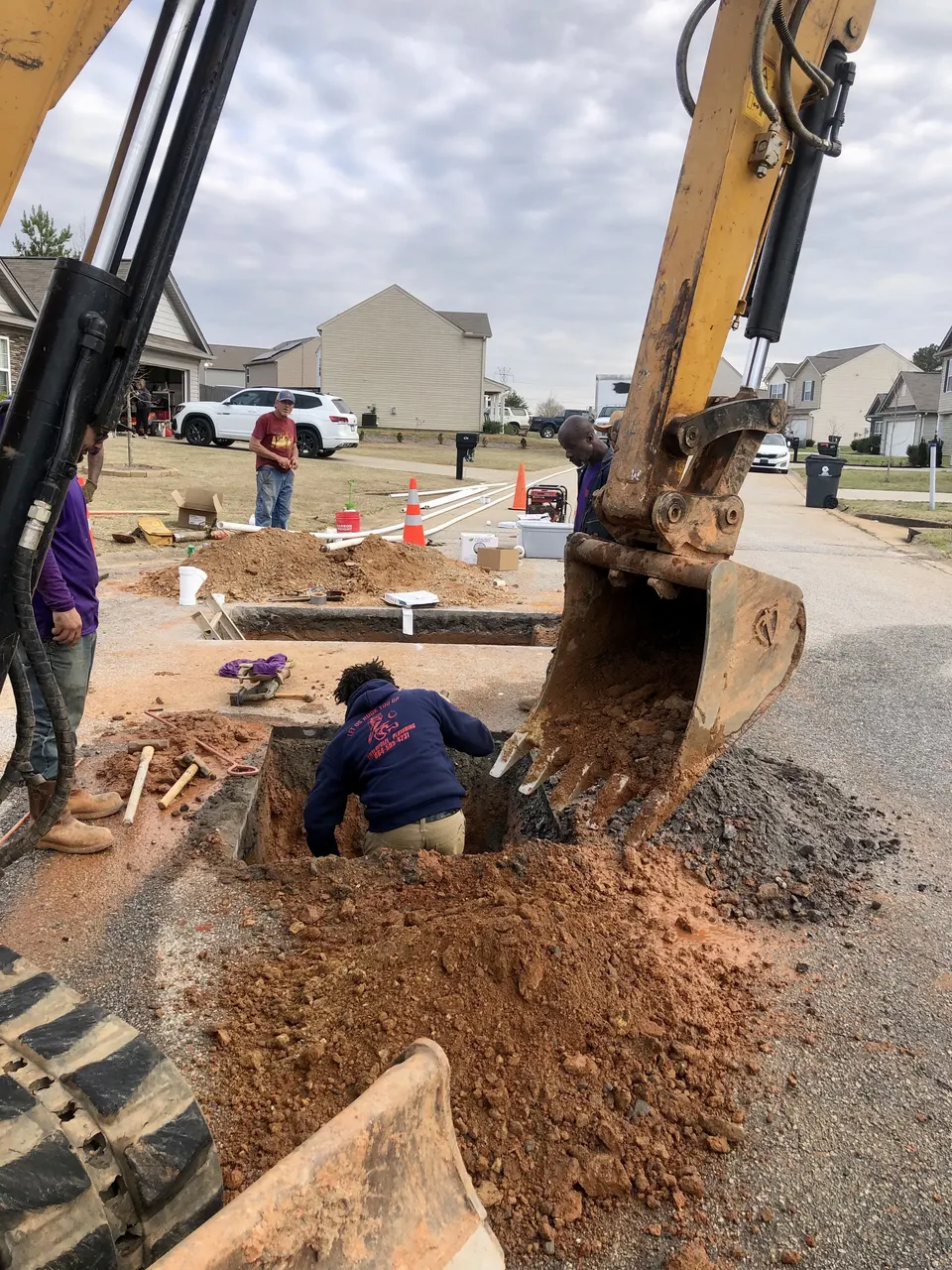
The water service line running from your meter to your foundation can fail from corrosion (galvanized steel older than 40–50 years), tree root intrusion, ground movement in Upstate SC's clay-heavy soil, or physical damage from prior work near the line. An underground leak is typically invisible from the surface until it's quite large — by which point it may have already softened soil, caused yard settling, or begun saturating your foundation. See our guide on signs your water line is leaking to identify the symptoms.
3. Irrigation System Leak
Broken irrigation heads, cracked lateral lines, and leaking zone valves can discharge significant water continuously — especially in irrigation systems that weren't blown out before winter or that haven't been inspected recently. If the meter stops moving when you manually shut off the irrigation controller's main supply, the irrigation system is your culprit.
4. Dripping Faucets and Showerheads
A faucet dripping once per second loses roughly 3,000 gallons per year. While a slow drip may not make the leak indicator spin visibly, it can register on a two-hour meter test as a small but real change. Check every faucet and showerhead — outdoor hose bibs are frequently overlooked.
5. Water Heater Pressure Relief Valve
A faulty T&P (temperature and pressure relief) valve on a water heater can discharge water intermittently or continuously, depending on system pressure. The discharge pipe typically runs to a floor drain or outside — making the leak invisible unless you specifically check. If your water heater's T&P valve is dripping, it needs replacement by a licensed plumber.
6. Faulty Meter or Service Connection
Less commonly, the meter itself may be malfunctioning — stuck registers that suddenly spin to catch up, or sand in the mechanism causing erratic readings. If you've ruled out all other leak sources and the meter continues to register movement, contact your water utility (Greenville Water, Spartanburg Water, etc.) and request a meter accuracy inspection. Utilities perform this test at no charge in most SC municipalities.
When to Stop DIY Testing and Call a Professional
The two-hour meter test and toilet dye test are the outer limits of effective DIY leak detection. If those tests confirm water is moving but you cannot locate the source inside the house, the leak is most likely in the underground service line — and that requires professional equipment to locate and repair.
Call a licensed water line contractor immediately if:
- The meter keeps moving after you shut off the main interior valve (underground leak confirmed)
- You see wet or soggy ground over where your service line runs
- Water bills have been rising steadily over 2–3 months with no change in usage habits
- You hear running water inside the walls or floor with all fixtures off
- Your home is on a slab and you notice floor warmth or discoloration (possible slab leak from the hot water line)
Underground water line leaks in Upstate SC are commonly repaired using directional boring — a trenchless method that installs a new HDPE water line beneath your yard without open excavation. Sloan Underground Construction has been replacing water service lines across Greenville, Spartanburg, Anderson, and Upstate SC since 1965. For same-week service, call (864) 386-1649 or visit our water line installation service page.
Frequently Asked Questions
Why is my water meter spinning when nothing is on?
A spinning meter with all fixtures off almost always means there is a leak somewhere in your plumbing system. Common sources include an underground service line leak, a running toilet (the most frequent inside culprit), a dripping faucet, a leaking irrigation system, or a faulty water heater pressure relief valve. The size of the movement tells you roughly how large the leak is — a rapid spin indicates a significant active leak.
How do I test my water meter for leaks?
Turn off all water in the house — every faucet, toilet fill valve, appliance, and irrigation controller. Locate your meter (typically near the street in a covered pit). Note the reading or watch the leak indicator dial — a small triangle or star-shaped disc on the meter face. If the indicator moves with all water off, you have a leak. For a more definitive test, record the full meter reading, wait two hours without using any water, then read again. Any change confirms a leak.
Can a faulty water meter cause false readings?
Yes, but it is uncommon. Older meters occasionally stick and then spin to catch up, or run fast due to sediment in the mechanism. If you have verified no plumbing leaks exist inside or outside the home and the meter continues to register flow, contact your water utility to request a meter accuracy test. Most utilities perform this test free of charge. However, do not assume a faulty meter before ruling out actual leaks — the odds heavily favor a real leak over a defective meter.
What should I do if my meter is spinning due to an underground leak?
An underground water line leak requires professional attention. Locate your main shutoff valve (typically near where the line enters your foundation) and turn off the water supply to prevent further water loss and potential soil erosion or foundation saturation. Then call a licensed water line contractor for leak location and repair. In South Carolina, directional boring allows trenchless repair — no open trenches across your yard. Call Sloan Underground at (864) 386-1649 for same-week service in the Greenville and Upstate SC area.
Related Articles
Signs Your Water Line Is Leaking
Wet spots, hissing sounds, low pressure, and high bills explained — and how to tell if the problem is underground.
Read article
Why Is My Water Bill So High?
How to diagnose a sudden water bill spike — from running toilets to underground service line leaks.
Read article