Quick Answer
The water utility (city or county) owns the water main in the street and the connection up to the meter box. You own the line from the meter to your house. That section — called the service line or water lateral — is your maintenance responsibility. When it fails, the repair bill is yours.
Tell us about the job
Family-owned since 1965 — we reply within one business day with a straight answer.
The Split Responsibility: Utility vs. Homeowner
Every residential water connection in South Carolina involves two separate ownership zones. Most homeowners don't know where the line is drawn until something breaks — which is usually when they find out the hard way that the repair is on them.
The dividing line is typically the curb stop (also called the curb valve) or the meter box, which is usually located at the edge of your property near the street or sidewalk. Everything on the street side of that point is the utility's responsibility. Everything on your side — across your yard, under your driveway, and into your house — is yours.
This split is standard across Greenville, Spartanburg, Anderson, and most municipalities throughout Upstate South Carolina. The specifics can vary slightly — some utilities own to the curb stop, others to the meter — but the principle is consistent: the line running from the meter to your house is homeowner-owned infrastructure.
What Does "Homeowner's Side" Actually Cover?
The homeowner's section of the water connection is typically 30 to 150 feet of pipe, depending on how far back from the street the house sits. It runs from the meter pit across the yard, sometimes beneath the driveway, and into the foundation wall where it connects to the home's main shutoff valve.
Older homes in Greenville and across Upstate SC — especially those built before 1970 — frequently have galvanized steel service lines. Galvanized pipe has a service life of 40 to 70 years. At that age, it corrodes from the inside, restricting flow and eventually failing. Lead service lines, while less common in SC than in Northern cities, do exist in older neighborhoods and present a health concern that makes replacement urgent rather than optional.
Homes built in the 1970s and 1980s often have copper service lines. Copper lasts longer than galvanized — typically 70 to 100 years — but is vulnerable to pinhole leaks from South Carolina's slightly acidic groundwater and to physical damage from freeze events. A burst copper service line is an emergency that requires same-day attention.
Modern installations use HDPE (high-density polyethylene) or PEX, which are flexible, corrosion-resistant, and well-suited to Upstate SC's red piedmont clay soil. When a failing galvanized or copper line gets replaced, HDPE is the current standard for trenchless installations.
For more on the trenchless replacement process itself, see our guide on installing a water line without yard damage.
Does Homeowners Insurance Cover Water Service Lines?
This is the part most homeowners don't discover until they're facing a $4,000 repair bill: standard homeowners insurance policies do not cover water service line failure.
A typical homeowners policy covers sudden and accidental water damage inside your home — a burst pipe inside the wall, for example. But the service line underground is usually classified as infrastructure rather than a covered structural element, and underground failure is typically excluded.
- Service line protection add-ons: Some utilities offer optional "service line protection" programs for $5–$10 per month added to your water bill. These cover repair or replacement of the homeowner-side service line up to a defined dollar limit. They're worth checking with your utility — coverage limits vary widely.
- Home warranty programs: Some home warranty companies offer service line coverage as an add-on, but exclusions for pre-existing conditions and installation method can limit payout.
- Flood insurance: FEMA's National Flood Insurance Program does not cover service line failure.
The practical advice: read your homeowners policy before a failure occurs. Look for exclusions around "underground pipes" and "service lines." If you have a house older than 40 years, it may be worth proactively evaluating your service line before a leak forces a reactive (and more expensive) repair.
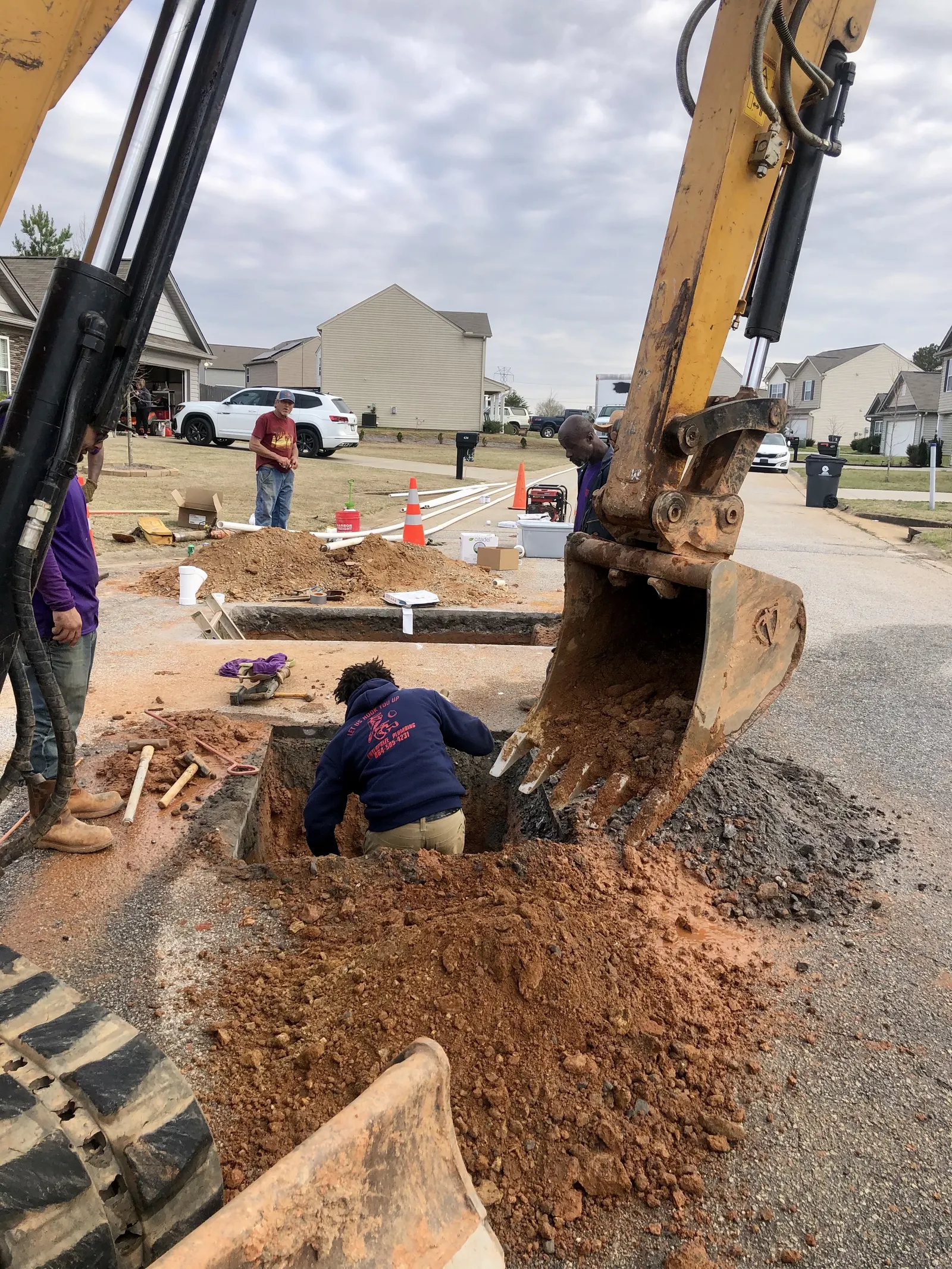
Trenchless water service line replacement in South Carolina typically runs $2,500–$8,000+. That range covers most residential service lines — 30 to 150 feet — using directional boring. Longer runs, pipe crossings under driveways, and difficult soil conditions push toward the higher end. When you factor in yard restoration costs from open-cut, trenchless is often cost-competitive or cheaper overall. Understanding your directional boring cost in South Carolina upfront helps you plan.
When Should You Replace Your Water Service Line?
Service line failure rarely happens without warning signs. Here's what to watch for:
If you see multiple warning signs, don't wait for the line to fail completely. An active leak under your yard damages the surrounding soil, can undermine driveways and foundations if left long enough, and turns a planned replacement into an emergency repair — which always costs more.
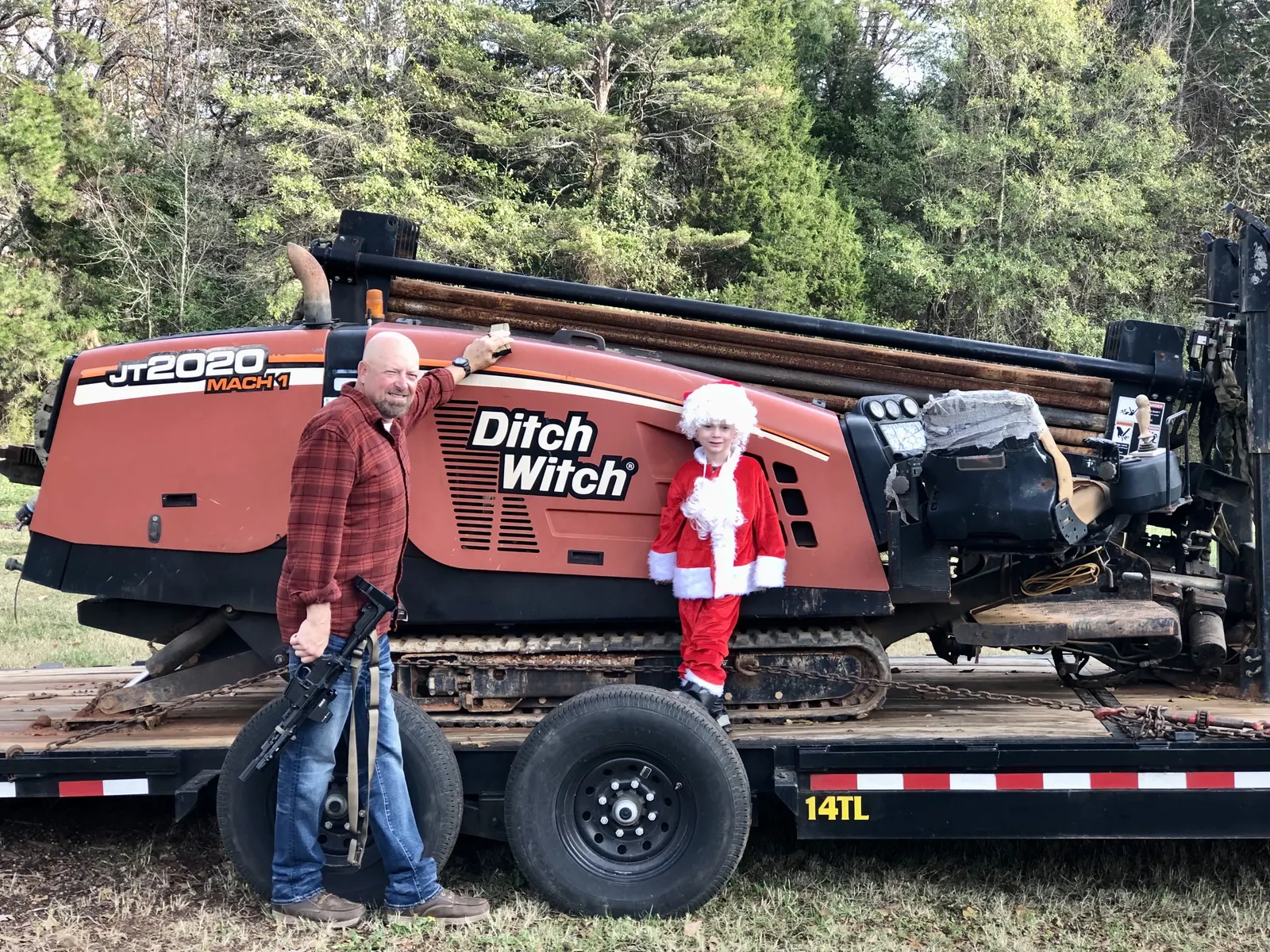
Trenchless replacement is now the standard approach for service line replacement near homes with established landscaping, mature trees, or hardscape. Sloan Underground has been replacing water service lines across Greenville and Upstate SC since 1965. We bore the new HDPE line in, pull the old material out in the same pass when possible, and restore the entry and exit pits. The yard looks the same at the end of the day.
Frequently Asked Questions
Who owns the water line from the meter to my house?
The homeowner owns and is responsible for the water service line from the meter to the house. This section — called the service line or water lateral — is your property and your maintenance responsibility, even though it typically runs under your yard and sometimes under the public sidewalk or street edge.
Does the city replace water service lines?
Only the portion the city or water utility owns — typically from the water main in the street to the curb stop or meter box. Everything from the meter to your house is your responsibility. City crews will not repair or replace the homeowner's section of the service line. You'll need to hire a licensed contractor.
How much does it cost to replace a water service line in SC?
Trenchless water service line replacement in South Carolina typically runs $2,500 to $8,000+ depending on length, pipe diameter, and soil conditions. Longer runs, difficult soil, or lines crossing under driveways or hardscape push the cost higher. Open-cut replacement may appear cheaper initially but often costs more once yard restoration is factored in. Call Sloan at (864) 386-1649 for a free estimate specific to your property.
Can a water service line be replaced without digging up the yard?
Yes. Directional boring installs a new water service line beneath your yard without open trenches. Only small entry and exit pits are required. Your lawn, driveway, landscaping, and hardscape stay intact throughout the job. This is Sloan Underground's standard method for residential service line replacement in the Greenville area.