
Trenchless water line installation — using horizontal directional drilling — puts a new water line underground without opening a trench across your yard. Only two small entry and exit pits are required. Grass, landscaping, mature trees, driveways, and irrigation systems all stay untouched. Most residential jobs finish in one day.
Yes — Trenchless Water Line Installation Protects Your Yard
Traditional water line installation cuts a trench from the meter to the house — or wherever the new line needs to go. That trench is typically 24–36 inches wide, 36–48 inches deep, and can stretch hundreds of feet across a property. Everything in its path gets removed: grass, garden beds, shrubs, root systems, and irrigation lines.
Horizontal directional drilling is fundamentally different. The drill enters the ground at a shallow angle on one side of the run, travels underground along a guided path, and exits on the far side. The water line product — HDPE or PEX pipe — is pulled back through the bore hole in a continuous run. Nothing above ground is touched except the two small access pits.
Traditional Trenching
- 200–500 ft of open trench, 24–36″ wide
- Destroys sod in its entirety
- Severs irrigation system laterals
- Kills or severely damages tree roots
- Removes shrubs and garden beds
- Breaks concrete driveways and hardscape
- $3,000–$8,000 in yard restoration after the job
- 3–7 day recovery visible from the street
Trenchless HDD
- Two 3×3 ft access pits only
- Yard surface completely undisturbed
- Irrigation system untouched
- No tree root damage
- No landscaping removal
- Driveways and hardscape stay intact
- Zero yard restoration required
- No visible disturbance when pits are backfilled
If you're weighing the cost difference between trenchless and open-cut, the full pricing breakdown is in our guide to directional boring costs in South Carolina. The short version: trenchless is usually comparable in direct cost, and almost always cheaper once yard restoration is factored in.
What Makes Traditional Trenching So Destructive?
The damage from trenching isn't a contractor doing the job poorly. It's the nature of the method. A water service line running from the street meter to the house foundation on a typical Upstate South Carolina lot can cover 100–300 feet. Installing that line by open trench means excavating every foot of that path.
What Trenching Actually Destroys
Sod and Turf
Every square foot of sod over the trench path is stripped, killed, and disposed of. Premium Bermuda, Zoysia, or Fescue replacement in Greenville-area markets runs $0.75–$1.50 per square foot installed — plus 4–6 weeks of establishment watering.
Tree Root Systems
Lateral tree roots extend well beyond the drip line. A trench through the root zone of a mature Sweetgum, Oak, or Magnolia — common in Upstate SC — severs the feeder roots the tree depends on. Trees can decline or die in the 2–5 years following trench installation without ever showing immediate distress at the time of the job.
Landscaping and Irrigation
Shrubs, perennials, ground cover, and ornamental beds in the trench path are removed. Irrigation laterals are typically cut — a system repair running $400–$1,200 depending on how many zones are affected. On established South Carolina yards with mature plantings, this is often the most expensive and irreversible part of the damage.
Driveways and Hardscape
If the water line crosses a driveway, sidewalk, or patio, open trenching means cutting the concrete or asphalt, trenching through, then patching — which never matches the existing surface perfectly. A single driveway cut-and-patch runs $800–$2,500 depending on thickness and material.
The total restoration bill after a traditionally trenched water line replacement on a developed South Carolina yard often runs $3,000–$8,000 on top of the pipe installation itself. Trenchless HDD avoids every one of these costs.
What Else Can Be Installed Trenchlessly Alongside a Water Line?
One of the most cost-effective applications of trenchless installation is combining multiple utilities in a single bore. When the drill path is already planned and the rig is mobilized, adding a second or third product pull in the same bore adds minimal cost compared to a separate job.
Common combination installs alongside a residential water line:
Electrical Conduit
If you're running a water line to a detached garage, workshop, or outbuilding, bore the electric conduit on the same pass. The conduit is pulled alongside or bundled with the water line in the same bore path. Your electrician pulls the wire after we're done — no second mobilization needed.
Fiber Optic / Data Conduit
Internet conduit from the service point to a home office, barn, or accessory dwelling unit. Small diameter (1–1.5 inch innerduct), light weight, minimal bore enlargement required. Easily combined with any other utility pull.
Gas Line
Natural gas PE pipe can run in the same general bore path as water (different bore, same mobilization). If you're adding a gas line alongside a water service extension, scheduling both in a single visit saves on mobilization costs. See our gas line installation service for specs.
Irrigation Supply Lines
Irrigation mains running under driveways or from one zone to another can be pulled in the same bore operation as the water service. Coordinate with your irrigation contractor — we'll install the supply pipe; they handle the heads and valves.
Ask about combined utility installs when you call for your estimate. If we're already mobilized for the water line, adding another conduit or pipe pull typically costs 20–40% less than a separate visit.
Is Trenchless Water Line Installation Available in South Carolina?
Yes. Sloan Underground Construction has performed trenchless water line installation and replacement across Upstate South Carolina and Western North Carolina since 1965. We're one of the few contractors in the region with the equipment depth and crew experience to handle both residential service line connections and commercial water main replacements by HDD.
We serve homeowners, builders, municipalities, and commercial developers across:
- Greenville County — Greenville, Simpsonville, Greer, Mauldin, Fountain Inn, Taylors, Travelers Rest
- Spartanburg County — Spartanburg, Duncan, Inman, Gaffney, Boiling Springs
- Anderson County — Anderson, Pendleton, Seneca corridor
- Pickens and Oconee Counties — Pickens, Easley, Clemson, Walhalla, Seneca
- Laurens, Newberry, Saluda, Abbeville, Greenwood, Union, Aiken, Lexington, Richland Counties
- Western North Carolina — Asheville, Hendersonville, Brevard corridor
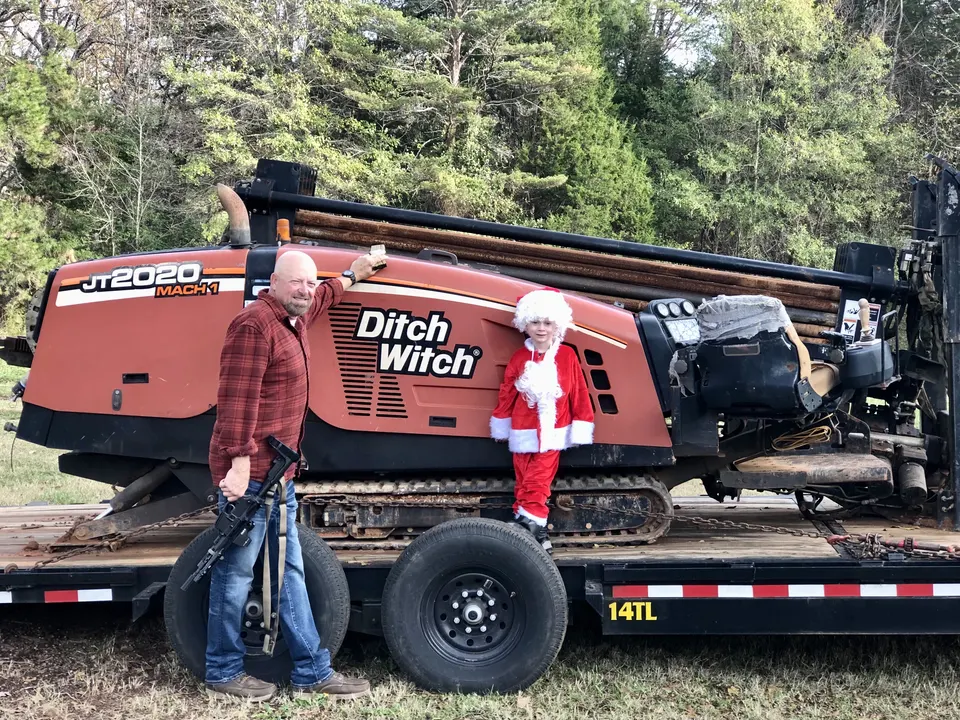
Upstate SC's Piedmont geology — predominantly red clay over granite basement rock — is well-suited for directional drilling. Our Ditch Witch JT-5 handles residential service line bores up to 150 feet. Longer commercial water main runs use the JT-520 or JT-2020. Soil conditions in your specific area (clay, sandy alluvial, decomposed granite, or rocky) affect the drilling fluid formula and feed rate — not whether the job can be done.
If you need to understand who's responsible for the water line from the meter to your house before scheduling replacement work, our article on who is responsible for your water service line covers the SC utility ownership boundary in detail.
For the complete scope of what we install trenchlessly, visit our water line installation service page and our horizontal directional drilling overview.
Frequently Asked Questions
Can a water main be replaced without digging up the yard?
Yes. Horizontal directional drilling replaces water mains and service lines without open trenches. Only small entry and exit pits are required — typically 3x3 feet, positioned at each end of the bore path. Everything in between — lawn, landscaping, trees, driveways, and hardscape — stays completely undisturbed.
How long does trenchless water line installation take?
Most residential trenchless water line jobs finish in a single day — typically 4 to 8 hours from equipment setup to pit backfill. Commercial water main replacements involving longer runs or larger pipe diameters take 1 to 3 days depending on total footage and ground conditions in the Upstate SC area.
Does trenchless water line replacement cost more?
The direct boring cost is usually similar to or slightly higher than open-trench labor. But when you include yard restoration after trenching — sod replacement, landscaping repair, driveway patching, and irrigation system repairs — trenchless almost always costs less in total. Many South Carolina homeowners who initially choose trenching for price end up spending $3,000–$8,000 more than the trenchless quote once the yard is repaired.
What size water line can be installed by directional boring?
3/4-inch service lines up to 6-inch water mains are routinely installed by horizontal directional drilling. Sloan Underground installs HDPE and PEX for residential service connections, and HDPE or PVC for larger commercial distribution mains. The bore hole diameter is sized to the product being pulled — smaller pipe means smaller bore, faster completion, and lower cost.
Related Articles
Directional Boring Cost in South Carolina
Real price ranges for residential, road crossing, and commercial boring jobs across Upstate SC — and what moves the number up or down.
Read article
Who Is Responsible for Your Water Service Line?
Who owns the water line from the street meter to your house — and who pays when it fails? The SC rules explained.
Read article
Running Water to a Boat Dock on Lake Hartwell or Keowee
Boring a continuous line down the slope to the dock — Corps vs Duke Energy rules, winterizing, and cost.
Read article