

 Trenchless Underground Boring
Horizontal Directional Drilling Across South Carolina
Trenchless HDD boring for water, gas, electric, fiber & conduit, under roads, driveways, and landscaping, from one entry pit to one exit pit.
Sloan Underground Construction is a licensed, family-owned South Carolina trenchless contractor (SC General Contractor #14665) based in Fountain Inn, serving the Upstate since 1965. The company's core work is horizontal directional drilling (HDD): the method of installing underground utilities beneath roads, driveways, landscaping, and waterways without an open trench. Its Ditch Witch JT-5, JT-520, and JT-2020 directional drills handle water, gas, electric, fiber, and conduit bores across 28 named service areas in the Carolinas. For work inside the city, start with the directional drilling Greenville SC page; every trade that uses the drill is listed under Sloan Underground's underground utility services.
What Is Horizontal Directional Drilling?
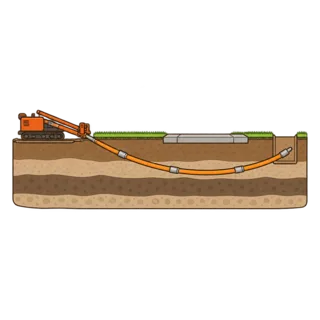
Horizontal directional drilling (HDD) is the trenchless method Sloan Underground Construction uses to install underground pipes, cables, and conduit without digging an open trench. The drill bores a steerable pilot hole along a planned path, the hole is reamed to the required diameter, and the new utility line is pulled back through the completed bore.
The path can run under driveways, roads, sidewalks, creek beds, or landscaping. The only surface disturbance is a small entry pit (where the drill starts) and a small exit pit (where it emerges).
| Bore type | Typical depth | Typical duration |
|---|---|---|
| Residential utility run | 3–8 feet | A single day, often 4–8 hours from setup to restoration |
| Commercial or road-crossing bore | Often 10–25 feet | 1–3 days for longer runs, multiple bores or difficult soil |
Why use directional drilling instead of an open trench?
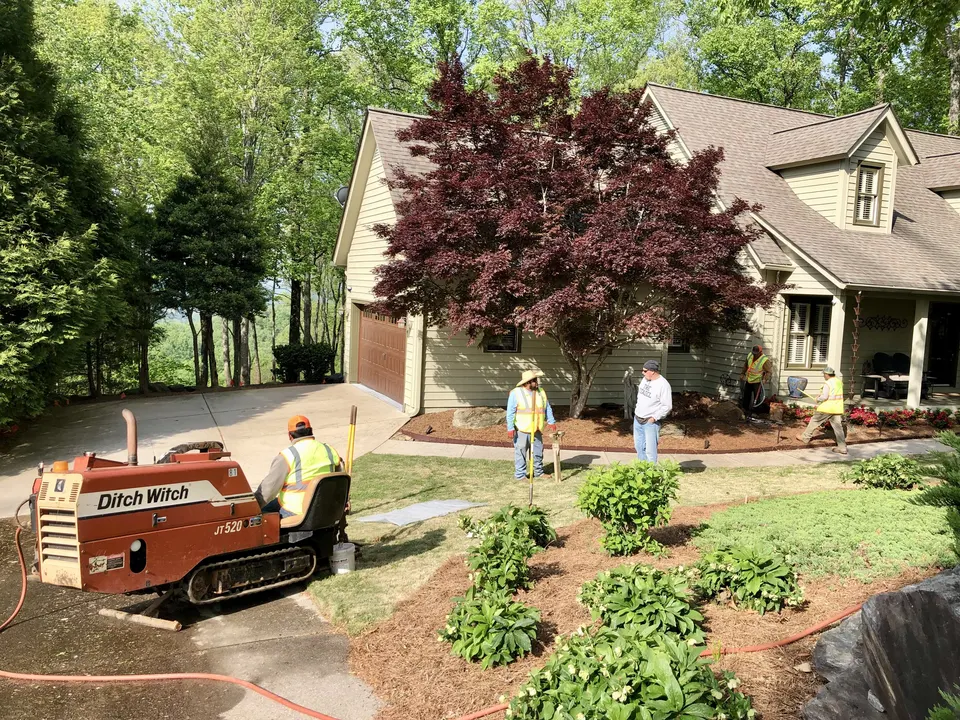
Sloan Underground Construction uses directional drilling instead of an open trench because the line goes in underground and the surface between the two pits is never excavated. An open-cut trench runs the full length of the job (through lawns, flower beds, driveways, sidewalks, and patios) and all of it has to be backfilled and restored.
Horizontal directional drilling bores a small-diameter underground path and pulls the new pipe or cable through, leaving what is above ground where it was. Restoration is limited to the entry pit and the exit pit.
The same drill handles new construction utility taps, waterline replacements, underground gas line installation and extensions, fiber optic installations, electric conduit runs, and drainage bores for residential, commercial, and municipal clients across the Carolinas.
What can be installed with horizontal directional drilling?
Sloan Underground Construction installs water, gas, electric, fiber, conduit, sewer and drainage lines with horizontal directional drilling. Pipe from 1 inch to 12+ inches in diameter can be pulled through a bore, which covers a single home's service line at one end and commercial mains and multi-conduit bundles at the other.
Water Lines
New service lines, main replacements, irrigation runs — HDPE and PEX for residential; HDPE and PVC for commercial mains.
Gas Lines
Natural gas service bores for homes, businesses, and new construction developments. Code-compliant, pressure-tested installations.
Electric & Conduit
Underground electrical conduit and direct-bury cable replacing or supplementing overhead power service.
Fiber Optic Cable
High-speed fiber infrastructure for ISPs, telecom providers, and commercial data networks.
Utility Conduit
Empty conduit runs for future utility installation, telecom pathways, and multi-use underground corridors.
Sewer & Drainage
Trenchless sewer and stormwater drainage installation without destroying hardscape or landscaping.
How does a horizontal directional drilling project run?
A horizontal directional drilling project with Sloan Underground Construction runs in four steps: a site visit, a utility locate and bore plan, the bore itself, and restoration. The order does not change with the utility; what changes is the test at the end, pressure for water and gas, continuity for electric and fiber.
-
01
Free Site Visit
The crew looks at the ground, identifies the connection points, talks through the bore path, and writes a line-item estimate. The visit and the written estimate cost nothing.
-
02
Locate & Plan
An 811 locate request gets existing underground utilities marked, and they are potholed (hand-exposed) where needed. The bore path, entry pit, and exit pit are planned around roots, trees, existing utilities, and the landscape above.
-
03
Bore, Ream & Pull
The rig drills a small-diameter steerable pilot hole along the planned path, tracked in real time. A reamer enlarges the bore to the required diameter, and the new pipe or cable is attached and pulled back through from exit to entry, below grade the whole way.
-
04
Restoration
Once the utility is connected at both ends and tested for leaks (water/gas) or continuity (electric/fiber), the entry and exit pits are restored, the site is cleaned, and the crew walks the property with you before leaving.
Why Choose Sloan Underground for Directional Boring?
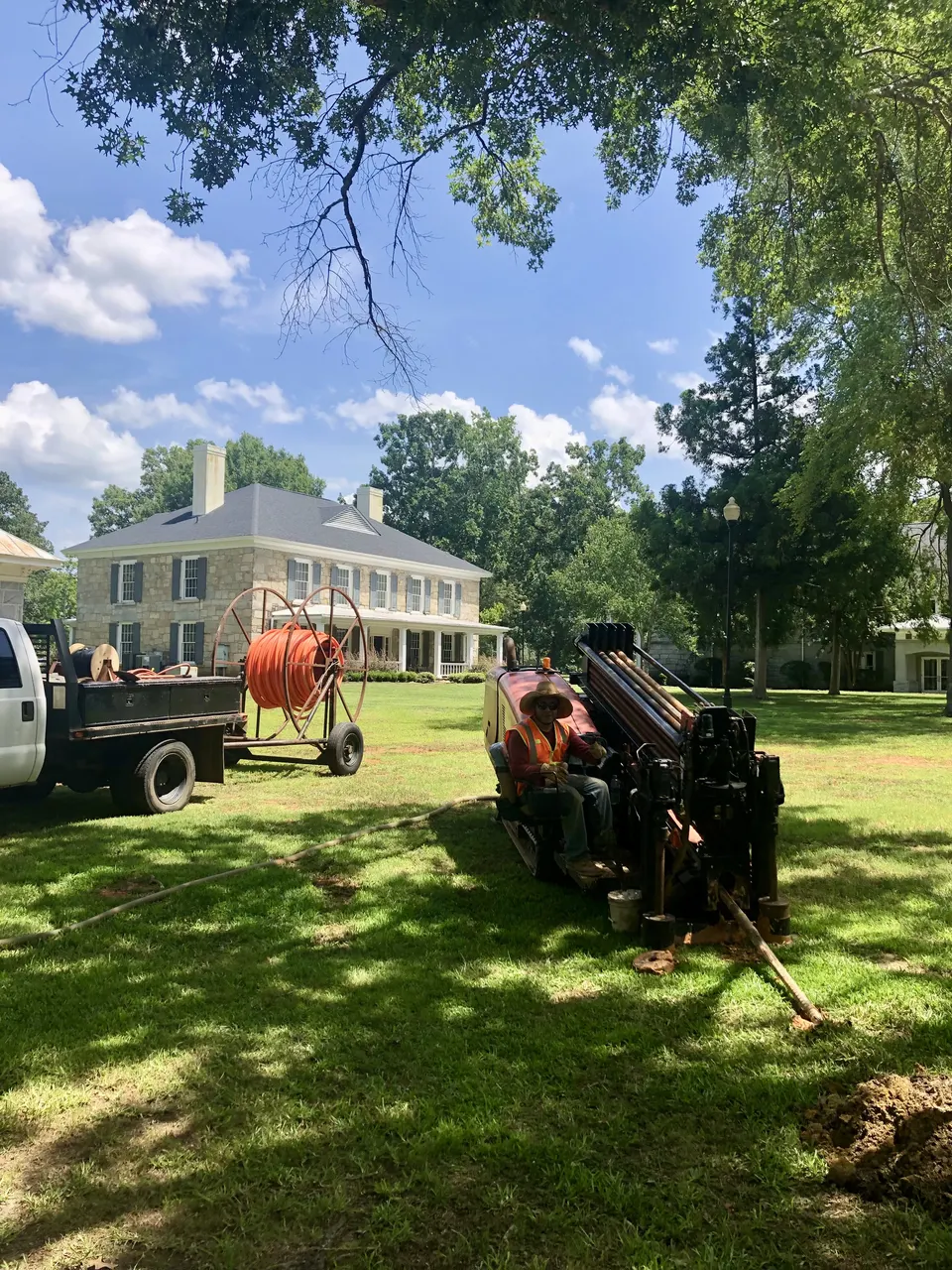
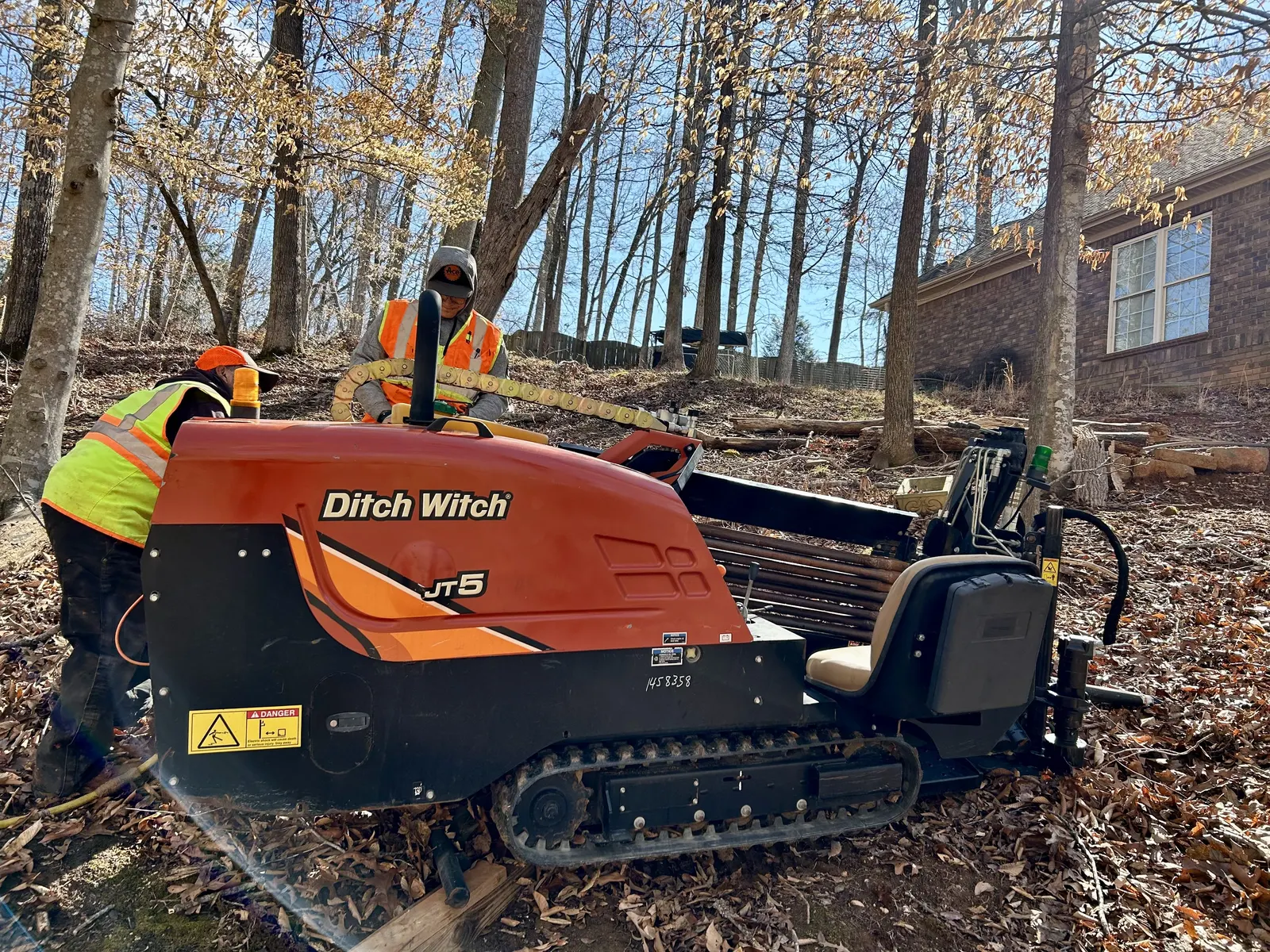
Sloan Underground Construction runs three sizes of Ditch Witch directional drill, so the rig is matched to the bore rather than the bore to the rig. The crew works out of Fountain Inn, in southern Greenville County, and plans every bore path around an 811 locate before any drilling starts.
- Rig matched to the job: from single-family bores to large commercial runs.
- Piedmont ground: clay, rock, sand, and wet conditions are all bored without opening the surface.
- Utilities found first: marked through 811 and hand-exposed where the bore passes close.
- Line-item pricing: the written estimate lists the work item by item, with a project timeline.
- Tight crossings: a recent job Sloan Underground posted to its Google profile was a crossing at Prysmian in Abbeville, past thick reinforced concrete and a high-pressure gas line.
Where does Sloan Underground do horizontal directional drilling?
Sloan Underground Construction does horizontal directional drilling in 28 named service areas of South Carolina and Western North Carolina, from Fountain Inn outward. The list includes Greenville, Spartanburg, Anderson, Pickens, Oconee, Laurens, Newberry, Saluda, Abbeville, Greenwood, Union, Aiken, Lexington, Richland County, and Asheville, NC.
The ground changes across that map: Piedmont red clay in the Upstate, saprolite and rock shelves in the foothills, and sand with a high water table on the coastal barrier islands. Two guides go deeper: directional boring through rock in Upstate SC and Western NC and what directional boring costs in South Carolina.
View All Service Areas →Common Questions About Horizontal Directional Drilling
What is horizontal directional drilling?
Horizontal directional drilling (HDD) is a trenchless method of installing underground utilities without digging an open trench. A drill rig bores a steerable pilot hole underground along a planned path, then pulls the utility line back through the completed bore. Only small entry and exit pits are needed: driveways, landscaping, and hardscape remain intact.
How deep can you drill with HDD?
Sloan Underground Construction drills from 3 feet to 30+ feet deep depending on project requirements and soil conditions. Most residential utility runs are 3–8 feet deep; commercial and road-crossing bores often run 10–25 feet. Depth is determined by code requirements, obstacle clearance, and soil type.
Do I need a permit for directional boring?
A permit is typically needed for road crossings, DOT right-of-way work, and municipal utility connections; requirements vary by city and utility type. A bore under a state-maintained road needs an SCDOT encroachment permit (NCDOT in North Carolina), and local roads go through the county or city, so confirm with the county. Every bore starts with an SC811 or NC811 locate request.
Can you bore under roads, driveways, and sidewalks?
Yes, boring under roads, driveways, sidewalks, parking lots, and other hardscape is what horizontal directional drilling is designed for. Sloan Underground Construction crosses under asphalt, concrete, pavers, and landscaping without cutting the surface, in Piedmont clay, rock, sand, and mixed conditions.
How long does a directional drilling project take?
Most residential horizontal directional drilling projects finish in a single day, often 4–8 hours from setup to restoration. Longer commercial runs, multiple bores, or difficult soil conditions may take 1–3 days. The written estimate includes a project timeline.
What utilities can be installed with directional drilling?
Water lines, gas lines, electric conduit and direct-bury cable, fiber optic cable, telecommunications conduit, sewer and drainage pipe, and irrigation lines can all be installed with directional drilling. Sloan Underground Construction bores pipe diameters from 1 inch to 12+ inches.
Other Services You May Need
Water Line Installation
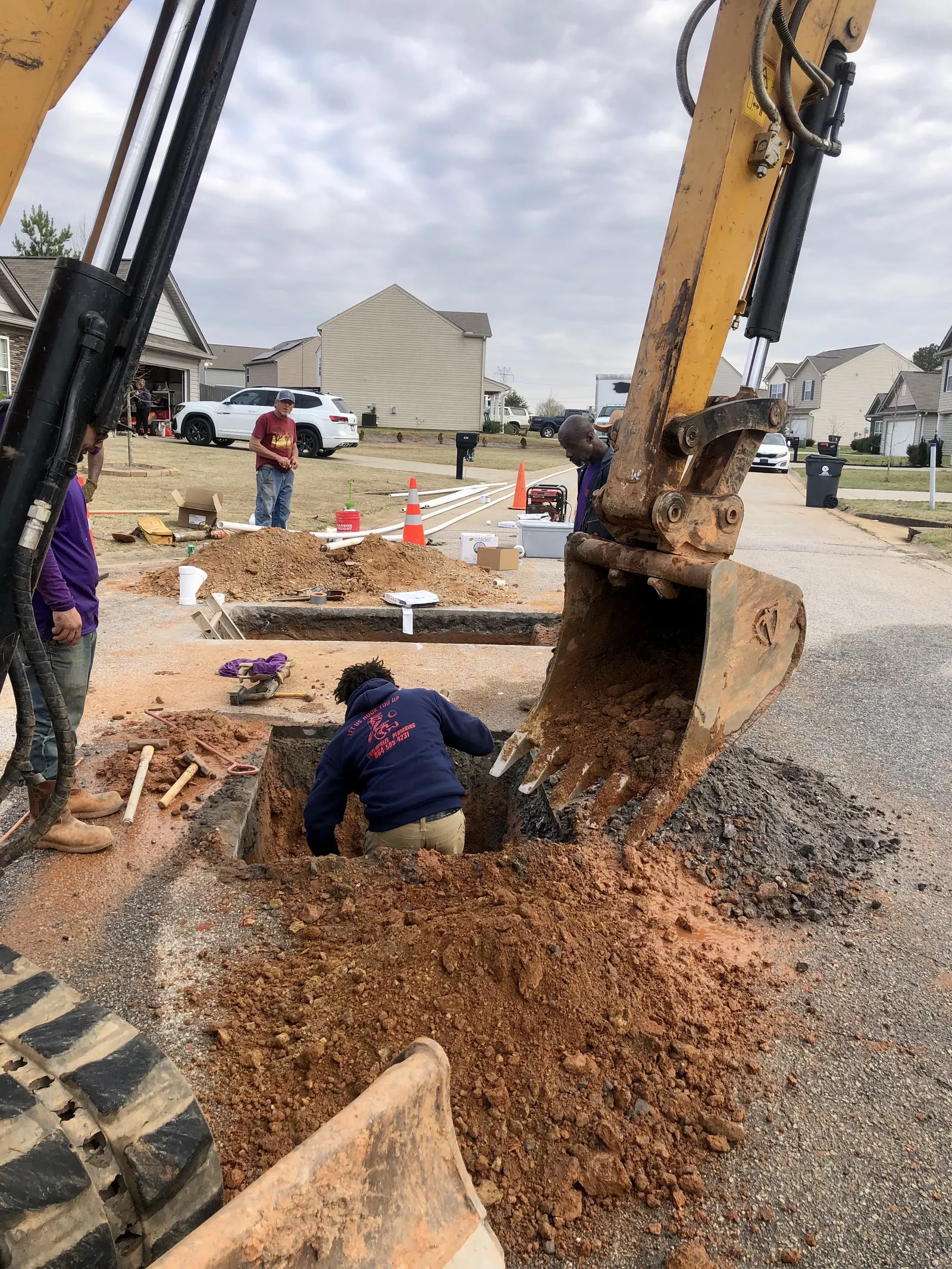
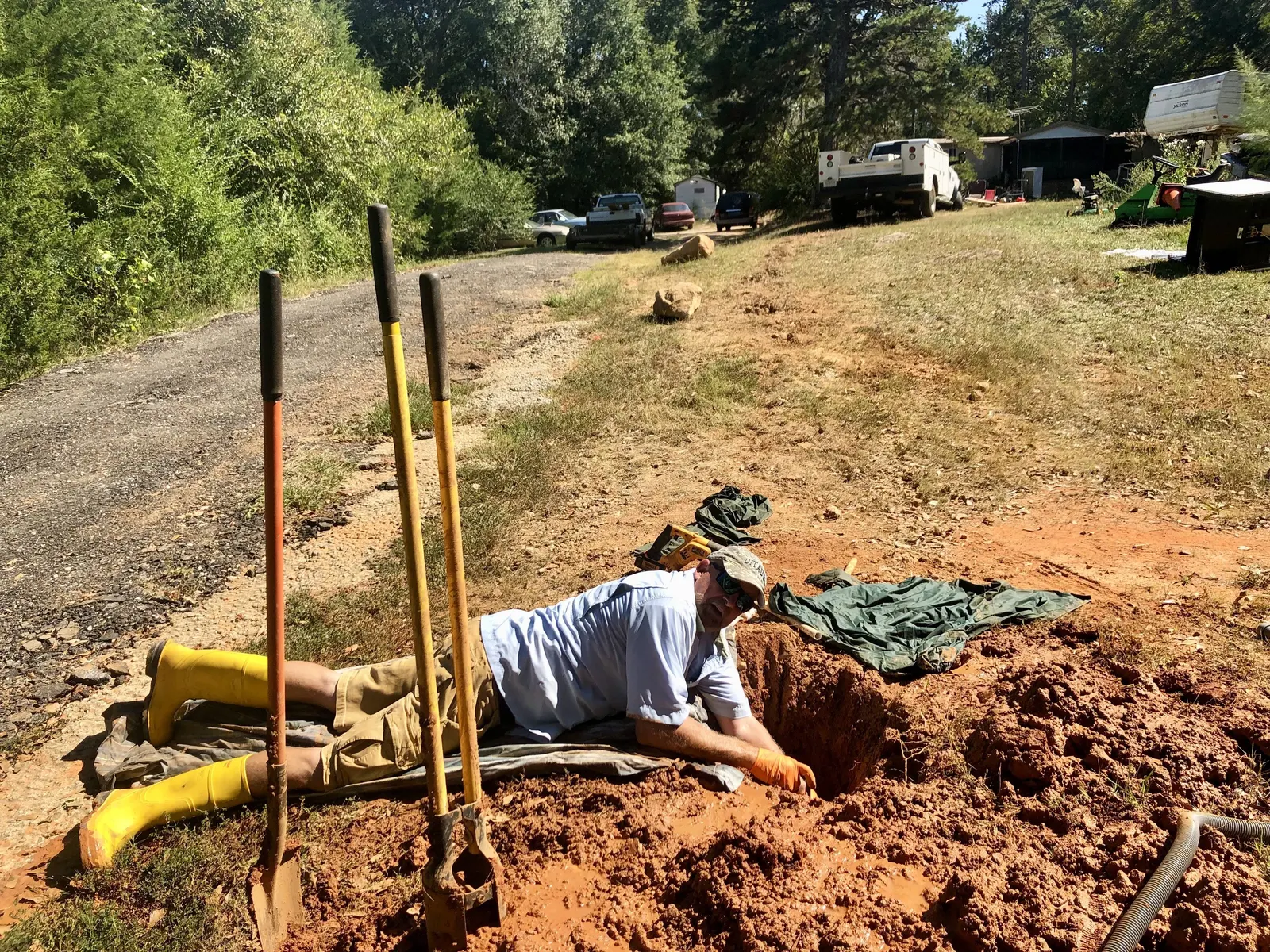
New water service lines, main replacements, and irrigation installs for homes and businesses.
- Residential & commercial
- New lines and replacements
- No yard damage
Gas Line Installation
Safe, code-compliant underground gas lines for new runs, replacements, and extensions.
- Code-compliant work
- Coordinated with the utility
- Full pressure testing
Fiber Optic Installation
Precision bores for ISPs and telecoms connecting neighborhoods to high-speed internet.
- Precision bore paths
- Telecom contractor work
- Minimal site disruption