
Yes, directional drilling bores through the granite, gneiss, and weathered rock that sit under much of Upstate South Carolina and the Blue Ridge, but rock changes the tooling, slows the advance, and raises the price. The bore still leaves the surface intact, which is why boring usually still beats trenching through the same rock. Sloan Underground Construction, family-owned since 1965 and licensed as an SC General Contractor (#14665), runs Ditch Witch rigs through clay, rock, sand, and mixed Piedmont soils. Here’s what rock actually changes, what kind of rock is under your lot, how a crew knows it’s there, what it does to cost and schedule, and what happens on the rare bore that rock stops.
Can a Directional Drill Bore Through Rock?
Yes, a directional drill can bore through rock, including granite, gneiss and weathered rock on Upstate and mountain lots. It is the same horizontal directional drilling method used in clay, with four things changed: the tooling, the advance rate, the drilling fluid and the pull-back.
Each of the four changes works like this:
- Rock tooling replaces the standard soil bit. A soil head is built to steer by pushing against the ground; rock needs a cutting head that grinds the path instead. The tooling is chosen once the crew knows what is down there.
- The advance rate drops. A pilot bore that runs through clay in an hour can spend most of a day in granite. The rig has the power; the rock simply gives up footage slowly.
- Drilling fluid takes more management. Rock cuttings are heavier and sharper than clay, so keeping the bore lubricated and the cuttings moving out of the hole takes more fluid and more attention.
- Pull-back happens in smaller steps. The bore is reamed to size in more passes and the pipe is pulled with more care, so the hole stays clean and the product pipe is never dragged over a rock edge.
None of that changes the result: the finished water, gas, electric, or fiber line sits beneath the yard, the driveway, and the rock with nothing torn up on top. That’s the difference from trenching rock, where the hammering or blasting is only half the job and putting the surface back is the other half.
What Kind of Rock Is Under the Upstate and Western NC?
The Upstate is mostly Piedmont red clay over decomposed rock, with hard shelf appearing as the ground climbs toward the mountains. Western North Carolina sits on Blue Ridge bedrock much closer to the surface, and Sloan Underground Construction works across both geologies, where the difference shows up in the drill head every day.
| Ground type | Where you find it | What it does to the bore |
|---|---|---|
| Piedmont red clay over saprolite | The default ground around Greenville, Simpsonville, and the I-85 corridor | Saprolite is rock that has weathered in place into something that bores like stiff soil, the easiest and fastest drilling in the region. |
| Granite and gneiss shelf | Around Lake Keowee, Lake Jocassee, and the Oconee and Pickens foothills, often a foot or two down on lakefront lots | The bore path gets plotted around the shelf rather than straight through it. |
| Blue Ridge bedrock | Montreat's rocky cove floor, the ridge lots around Asheville, and the slopes of Laurel Park | Bedrock stalls light-duty rigs, and rock tooling from the first foot is common. The Montreat page covers the cove work in detail. |
| Boulders and floaters in fill | Graded subdivisions and older lakefront lots | Loose boulders move when the head touches them and deflect a bore in a way solid shelf doesn't, so the operator has to read them fast. |
| Quartz veins and hard lenses | Hidden even in easy Piedmont ground | They show up as a sudden slowdown mid-bore and rarely stop a run, but they are why a clay job can still have a rock hour in the middle of it. |
How Do You Know Rock Is There Before You Drill?
You know rock is there before you drill by reading the ground and, once the pilot bore starts, the drill head itself. Sloan Underground Construction files an SC 811 or NC 811 locate request before any bore, but a locate marks buried utilities, not geology, so the rock question is answered separately by the signs below:
- Surface outcrops. Rock showing in the yard, at the shoreline, or in the nearest road cut is the most reliable sign that the shelf is shallow.
- Neighbors’ experience. A neighbor who hit rock setting a footing, digging a pool, or trenching a fence line has already mapped the problem for you.
- A probe or test pit at the entry point. Where the signs are mixed, a few minutes at the planned pit tell the crew what the first ten feet look like and which tooling to bring.
- The drill head itself. Once the pilot bore starts, the operator reads the head from the surface — a bore that stalls, deflects, or suddenly slows is reporting rock in real time, and the plan adjusts on the spot.
Tell the Estimator What You Know
If you have seen rock on the lot, hit it planting a tree, or watched a neighbor’s trench turn into a hammering job, say so at the estimate. It doesn’t raise the price — the rock is there whether or not anyone mentions it — but it lets Sloan Underground Construction bring the right tooling on the first trip and plot the path around the shelf instead of discovering it mid-bore.
What Does Rock Do to the Cost and the Schedule?
Rock raises both the cost and the schedule of a directional bore, and it is the single biggest reason two bores of the same length get different prices. A standard residential bore in the Upstate runs roughly $15–$45 per foot, while bores through rocky terrain, along with longer and commercial runs, scale to roughly $4,000–$20,000+.
The full breakdown is in the guide to directional boring cost in South Carolina.
What actually moves the number:
- Footage per hour. The rig is on site longer for the same run, and the crew’s day is the core of the price.
- Tooling. Rock heads and reamers wear faster and cost more to run than soil tooling.
- A re-routed path. Steering around a shelf can add length, and length is billed by the foot — our post on what a 500- or 1,000-foot water line costs shows how the per-foot rate behaves on long runs.
- Shorter pulls. Breaking a long rock run into staged pulls adds setup time at each pit.
Against that, compare the alternative honestly. Trenching the same rock means a hammer or blasting the full length of the run, hauling the spoil, and then restoring the lawn, driveway, walls, and landscaping the trench went through. On nearly every residential lot in the Upstate or the mountains, the rock bore is still the cheaper all-in job — and it’s the only one that leaves the surface alone.
When Does Rock Stop a Bore — and What Happens Then?
Rock stops a bore only rarely, and even then the answer is a change of plan, not a trench down the whole run. When the drill head reports rock it can’t make progress through, Sloan Underground Construction works through four options in order:
- Re-route around the shelf. Rock shelf has edges. A path plotted a few feet to one side often finds the saprolite the shelf is sitting in.
- Steer shallower or deeper. Hard layers are frequently thin. Dropping the bore under the shelf, or riding above it where depth allows, keeps the run continuous.
- Break the run into shorter pulls. Additional pits along the path let the rig work the rock section on its own terms without dragging the whole run through it.
- Open a short rock section by hand. On the rare run where a few feet of rock will not give, the crew bores everything else and opens only that section: a trench of a few feet, not a few hundred. The same approach applies on the toughest mountain jobs, described in the post on replacing a water line on a steep WNC mountain property.
The point of every option is the same: keep the surface — the lawn, the driveway, the retaining walls, the trees — out of the job. That’s the reason lake and mountain owners choose boring over trenching in the first place, as our comparison of trenching vs. directional boring for Upstate lake homes lays out.
How Does the Estimate Work on a Rocky Lot?
The estimate on a rocky lot is a site visit that does double duty. Sloan Underground Construction walks the run, measures the distance, notes what the line must pass under, looks for outcrops and other signs of shallow rock, and identifies where the pits would go and where the path could shift if the head meets shelf.
You get a written price for the complete job before anything is scheduled, with rock accounted for rather than added later as a surprise. The site visit and the written line-item estimate are free, and the job then follows four steps:
- Free site visit: the crew looks at the ground and writes a line-item estimate.
- Locate and plan: an 811 locate request, hand-exposing existing utilities where needed, and a bore path planned around roots, trees, utilities, and the rock signs found on the walk.
- Bore, ream and pull: pilot bore, ream to size, and pull the line through below grade.
- Restoration: entry and exit pits restored, the site cleaned, and the property walked with the customer before the crew leaves.
The Ditch Witch JT-5, JT-520 and JT-2020 drills handle clay, rock, sand, and mixed Piedmont soils, under slabs and crawl spaces included, from the Fountain Inn base across Upstate SC, the Midlands, and Western North Carolina. The same rock-ready approach applies to every trenchless pipe installation, and to boring beneath pavement, covered in how boring under a road works. For mountain-side specifics, see the Mills River directional boring guide, and browse more guides on the Sloan Underground blog. Call (864) 386-1649 or request your estimate online.
Frequently Asked Questions
Can a directional drill really bore through solid granite?
Yes. Directional drilling rigs bore through granite, gneiss, and other hard rock with rock-specific tooling in place of the standard soil bit. The trade-off is speed: rock advances far more slowly than clay, needs more drilling fluid management, and is pulled back in smaller steps. The surface above the bore still stays intact, which is the whole reason to bore rather than trench through the same rock. Sloan Underground Construction runs its Ditch Witch rigs through clay, rock, sand, and mixed Piedmont soils across Upstate South Carolina and Western North Carolina.
How much more does directional boring cost in rocky ground?
A standard residential bore in the Upstate runs roughly $15 to $45 per foot. Bores through rocky terrain, along with longer and commercial runs, scale to roughly $4,000 to $20,000 or more, because rock cuts the footage per hour and can force a re-routed path. Even so, boring rock is usually cheaper than trenching it, since an open trench through rock means hammering or blasting plus restoring everything on top. A firm number needs a site visit, which is free; call Sloan Underground at (864) 386-1649.
How do you know there is rock in the bore path before you start?
An 811 locate marks buried utilities, not geology, so rock is read from other signs: outcrops in the yard or road cuts nearby, a neighbor who hit rock digging a footing or a pool, a probe or small test pit at the planned entry point, and the crew reading the drill head once the pilot bore starts. A head that stalls, deflects, or suddenly slows tells an experienced operator what is down there long before the bore is finished.
What happens if the drill hits rock it cannot get through?
The bore path changes. Depending on what the drill head reports, the operator re-routes around the rock shelf, steers shallower or deeper to find the softer layer above or below it, breaks the run into shorter pulls, or bores everything except a short rock section that is opened by hand. The last option keeps the trench to a few feet instead of the full run, which is still far less restoration than trenching the whole path.
Is the rock in Western North Carolina harder to bore than the Upstate?
Often, yes. The Upstate is mostly Piedmont red clay over saprolite, which is decomposed rock that bores like stiff soil, with granite and gneiss shelf close to the surface around Lake Keowee, Lake Jocassee, and the foothills. Western North Carolina coves and ridges sit on Blue Ridge bedrock much closer to the surface, so places like Montreat, the ridge lots around Asheville, and Laurel Park more often mean rock tooling from the first foot. The mountain jobs simply take longer per foot.
Related Articles
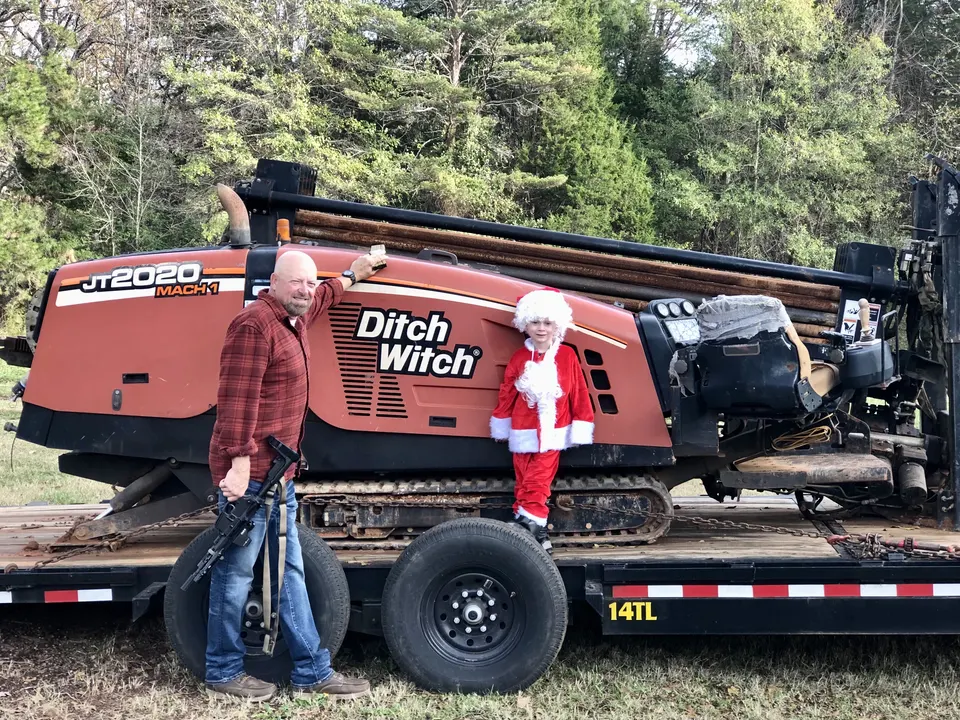
Replacing a Water Line on a Steep WNC Mountain Property
Bedrock, grade, and ridge-lot logistics — how a mountain water line is replaced without trenching the slope.
Read article
Directional Boring Cost in South Carolina
Per-foot ranges, what moves the number, and why mobilization makes short bores cost more per foot than long ones.
Read article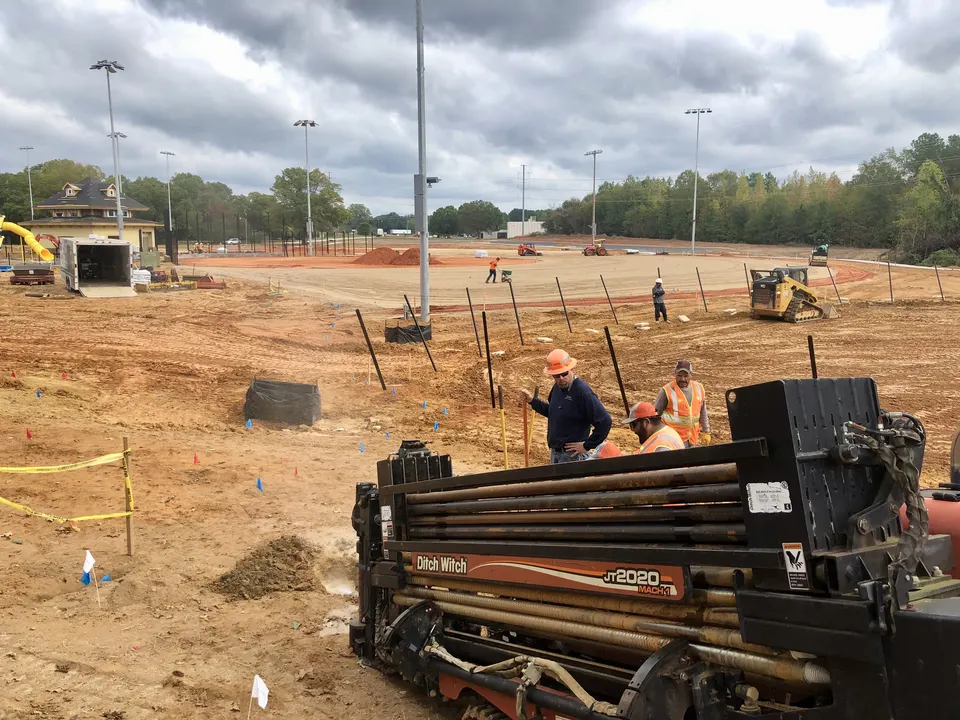
Trenching vs. Directional Boring for Upstate SC Lake Homes
When boring wins on steep, rocky Keowee and Hartwell lots, when a trench still fits, and what each costs.
Read article