
On a Western North Carolina mountain lot, a water line is replaced by directional boring: a drill bores a steerable path from a small pit at the meter or well to a small pit at the house, tracked from the surface so it follows the grade, and the new HDPE line is pulled through in one piece. The driveway switchbacks, the wooded slope, and the rock never get trenched. An open trench down a mountainside is an erosion channel until it heals and a restoration bill after that. Sloan Underground Construction, family-owned since 1965 and licensed as an SC General Contractor (#14665), bores Carolina mountainsides with Ditch Witch JT-5, JT-520, and JT-2020 drills. Here’s how the job runs, when trenching still makes sense, what rock and freeze depth change, and what it costs.
How Is a Water Line Replaced on a Steep Mountain Lot?
Sloan Underground Construction replaces a mountain water line from two small pits and a plotted bore path, not a trench. The crew requests an NC 811 locate, sets a pit at the meter or well head and one at the house, and plots a path between them that holds the required depth.
- Site visit. The crew walks the run from the meter or well to the house and writes a line-item estimate.
- Locate and plan. An NC 811 locate request, hand-exposed existing utilities where needed, and a bore path planned around boulders, root zones, and driveway crossings.
- Bore, ream, and pull. A pilot bore tracked from the surface, reamed to size, with the new HDPE service line pulled back through in one continuous run with no buried joints.
- Restoration. Connections are made at both ends, the two pits are backfilled and seeded, the old line is abandoned in place, and the property is walked with the customer before the crew leaves.
The drill head is tracked from the surface every few feet as it advances, so the operator steers it around boulders and beneath the driveway, the stone steps, and the root zones of the hardwoods. The full method is on our horizontal directional drilling page.
Directional Boring vs. Trenching for a WNC Mountain Home — Which Is Better?
Directional boring is the better choice on nearly every Western North Carolina mountain lot, for six reasons that Sloan Underground Construction weighs in each estimate. Each one is a cost or a risk that a trench creates and a bore avoids.
Slope and Erosion
A trench cut downhill is a channel. The first hard mountain rain runs down it, washes out the backfill, and carries the topsoil to the neighbor’s lot. Stabilizing that scar takes matting, seed, and a season. A bore leaves the slope’s surface untouched, so there is nothing to wash out.
Wooded Lots and Root Zones
Most mountain lots were bought for the trees. A trench through the root zone of a mature oak or hemlock cuts the roots that hold it to the hillside; the tree declines over a few years and, on a slope, can come down. Boring passes beneath the roots — our post on whether trenching kills trees explains the damage a trench does that isn’t visible for seasons.
Rock
Bedrock sits close to the surface in the coves and along the ridges, and it shows up as boulders in the fill between. Rock slows any method and changes the tooling on the drill, but a trench through it means hammering or blasting an open cut across the lot. The bore goes through or around it below grade. Details in whether directional boring can go through rock.
Switchback Driveways and Narrow Access
A mountain driveway climbs in switchbacks, and the water line usually crosses it more than once. Trenching means cutting the drive at every crossing and finding room on a one-lane road for an excavator and a spoil pile. A directional drill stages in a footprint about the size of a pickup and bores beneath every crossing — the kind of logistics Montreat’s cove roads and Laurel Park’s ridge lots demand.
Freeze Depth
Mountain elevations freeze harder and longer than the Piedmont, so the line has to sit below the frost depth the county requires — and on exposed or north-facing slopes it pays to go deeper. A plotted bore holds that depth the entire run. A trench dug by feel down a hillside tends to shallow out wherever the digging gets hard, which is exactly where the pipe later freezes.
Schedule
A bored residential replacement is usually a one-day job: drill, pull the pipe, connect, and turn the water back on. A trench down a mountain lot is excavation, backfill, compaction, and then slope restoration, often a week of disruption with a second crew for the landscaping.
When Does Trenching Still Make Sense on a Mountain Lot?
Trenching still makes sense on a mountain lot when the run is short, gentle, and open, or when the lot is already being graded for new construction. A level lawn between the meter and the house with nothing on top is the typical case, and Sloan Underground Construction will say so when it applies.
A failure point that is already exposed can also be a simple open repair rather than a full bore.
The tipping point comes fast, though. The moment the line crosses a driveway, runs through the woods, follows a real slope, or hits rock, the trench’s restoration bill passes the cost of the bore. Our broader comparison of trenching versus directional boring on Upstate lake lots walks through the same math on steep shoreline ground.
Ask the Contractor Where the Rig Will Sit
On a mountain lot the logistics decide the job. Before you accept any bid, ask exactly where the crew will stage the drill, where the two pits go, and how the pipe gets from the road to the house. A crew that has to widen your driveway or park an excavator on the road for three days is quoting you a different job than a crew that sets a rig in the turnaround and bores beneath everything. Turning the drill head is the easy part: the ridge-lot logistics around it are the craft.
What Does It Cost in Western North Carolina?
Directional boring for residential water lines runs roughly $15 to $45 per foot, and most residential replacements land in the $2,000 to $6,000 range in Western North Carolina. Longer bores and rocky terrain scale to $4,000 to $20,000 or more. Sloan Underground Construction prices each mountain lot after walking the run.
Mountain lots often sit above that bracket for three reasons: the runs are longer (a house set 300 feet back from the road is normal, not unusual), rock slows the bore and changes the tooling, and access adds setup time.
| Mountain lot situation | Typical price |
|---|---|
| Short, clean run in mountain fill | Toward the low end of the $2,000–$6,000 residential range |
| Typical set-back mountain home, 150–300 ft with a driveway crossing | Mid-range, priced per foot after a site walk |
| Long run, ridge lot, or bedrock close to the surface | $4,000–$20,000+, with rock the biggest swing factor |
Long runs also get cheaper per foot, because the setup is spread across more footage: see the math in what a 500- or 1,000-foot water line costs.
Restoration is the line item that separates the two methods. A bored replacement leaves two pits to backfill and seed; a trenched one leaves a hillside to stabilize, a driveway to patch, and trees to worry about. Our guide to directional boring cost breaks down the per-foot drivers in more detail.
Which WNC Communities Does Sloan Underground Serve?
Sloan Underground Construction serves the Western North Carolina communities nearest the Upstate, including Asheville, Montreat, Laurel Park, Flat Rock, Brevard, and Mills River, from its Fountain Inn base. The ground is different in every one of them, from steep Asheville driveways to rocky cove floors in Montreat.
In Asheville, the older neighborhoods (Montford, Kenilworth, and the West and North Asheville blocks) pair aging service lines with steep, narrow driveways that leave no room for a trench. Montreat’s cove floor is rocky mountain ground that stalls light-duty rigs, reached by roads narrow enough that the staging footprint decides whether a job is even possible. Laurel Park’s Echo Mountain ridge lots are some of Henderson County’s steepest residential ground, and the neighboring Flat Rock estates sit on the same slopes.
West of there, Brevard and the rest of Transylvania County put many homes on wooded, sloped lots set well back from the road off the US-276 corridor, and Mills River’s valley-floor and hillside properties round out the list. Our earlier post on directional boring in Mills River covers that community’s conditions and costs in detail.
What Happens During the Estimate Site Visit?
The on-site walk of the run and the written, line-item estimate are free, and neither is a phone description of the lot. The crew walks the route from the meter or well to the house, measures the real distance along the slope, and notes every driveway crossing. The all-in price covers pipe, boring, and connections.
Any permit or inspection fees your county or water system charges, and the depth the county requires, are named before anything is scheduled. The same approach applies to a failed line and a new one: see water line replacement for the former and water line installation for a new build or an outbuilding. Call (864) 386-1649 or request an estimate online, and read more mountain-lot guides on the Sloan Underground blog.
Frequently Asked Questions
How do you replace a water line on a steep mountain lot without trenching the hillside?
A water line on a steep mountain lot is replaced by directional boring, not trenching. A Ditch Witch drill bores a steerable path from a small pit at the meter or well to a small pit at the house, tracked from the surface every few feet so the operator follows the grade of the slope. The new HDPE line is then pulled back through the bore in one continuous piece. The driveway switchbacks, the wooded slope, the root zones, and the rock stay exactly where they are: only the two pits are dug.
Is directional boring better than trenching for a Western North Carolina mountain home?
Yes, directional boring is almost always better than trenching for a Western North Carolina mountain home. An open trench down a mountainside becomes an erosion channel until it heals, tears out root zones on a wooded lot, needs an excavator and a spoil pile on a narrow access road, and has to be regraded and stabilized afterward. A bore leaves the surface intact, stages in a footprint about the size of a pickup, and is usually finished in a day. Trenching still makes sense on a short, gentle, open-lawn run or on a lot that is already being graded for construction.
Can a directional drill go through the rock on a WNC lot?
Yes, a directional drill can go through the rock on a WNC lot. The rig handles clay, rock, sand, and mixed soils. Bedrock close to the surface in coves and along ridges slows the advance and calls for different tooling, so rocky bores take longer and cost more per foot than clay, but the surface above them still never gets opened.
How much does it cost to replace a water line on a mountain property in Western North Carolina?
Directional boring for residential water lines generally runs $15 to $45 per foot, and most residential replacements land roughly in the $2,000 to $6,000 range. Longer runs, rocky terrain, and difficult access scale that to $4,000 to $20,000 or more, though long runs tend to cost less per foot because the setup is spread across more footage. Call Sloan Underground at (864) 386-1649 for a written estimate.
How deep does a water line need to be buried in the North Carolina mountains?
A water line in the North Carolina mountains is buried deeper than in the Piedmont, below the local frost depth (confirm the requirement with the county). Mountain elevations see harder and longer freezes, and exposed slopes and north-facing lots often justify going deeper still. A bore path is plotted to hold that depth the whole run, which a trench dug by feel on a hillside often fails to do.
Related Articles
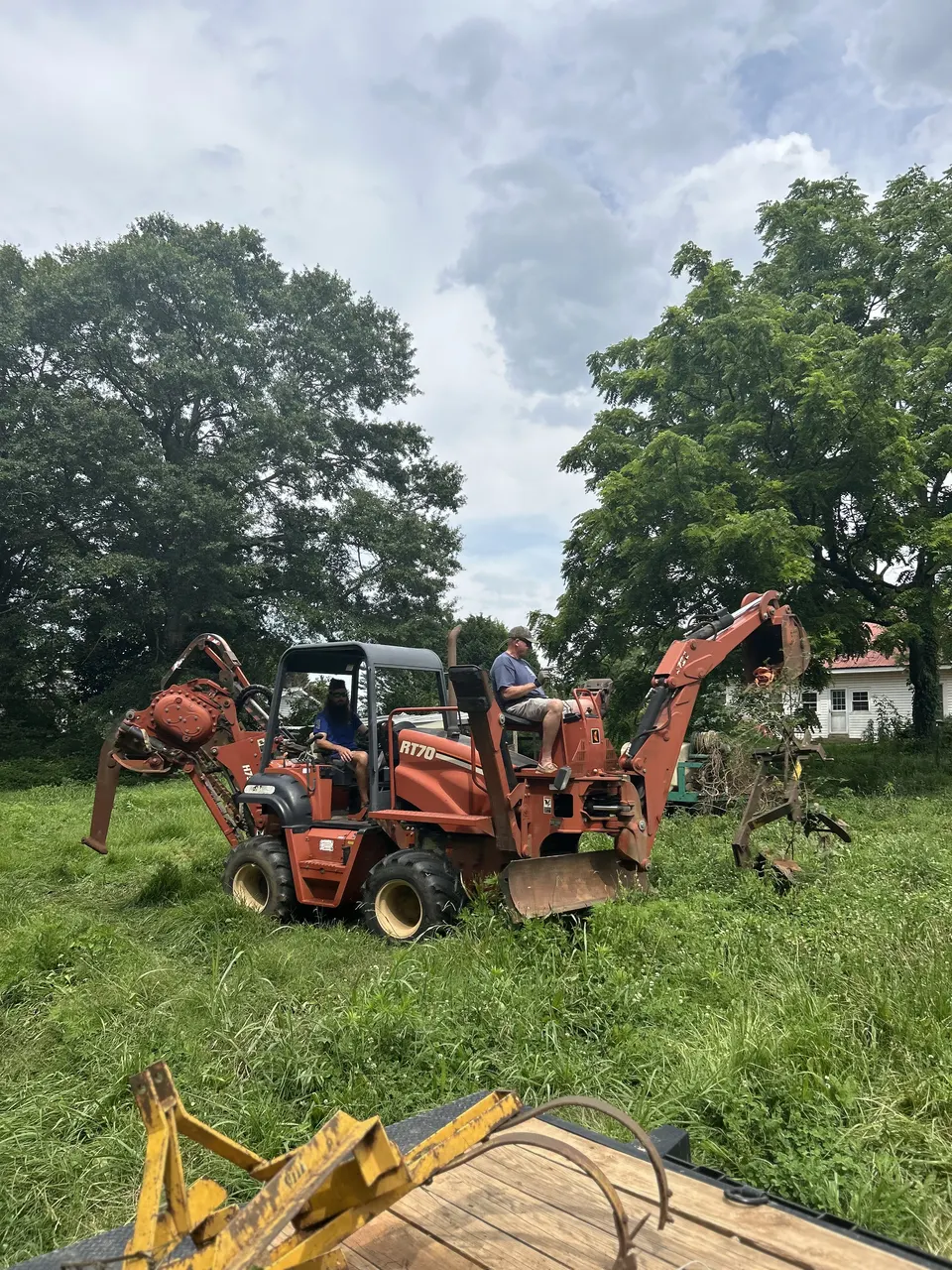
Can Directional Boring Go Through Rock? Upstate SC & WNC
What bedrock, granite pockets, and boulders change about a bore — tooling, speed, and cost — and why the surface still stays intact.
Read article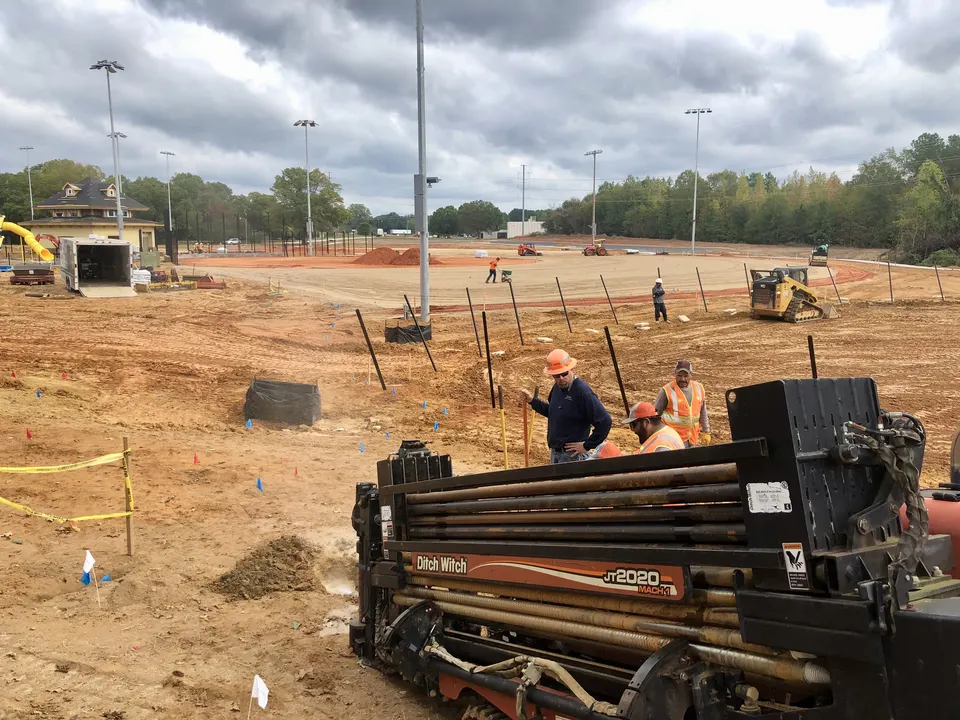
Trenching vs. Directional Boring for Upstate SC Lake Homes
When boring wins on steep, rocky Keowee and Hartwell lots, when a trench still fits, and what each costs.
Read article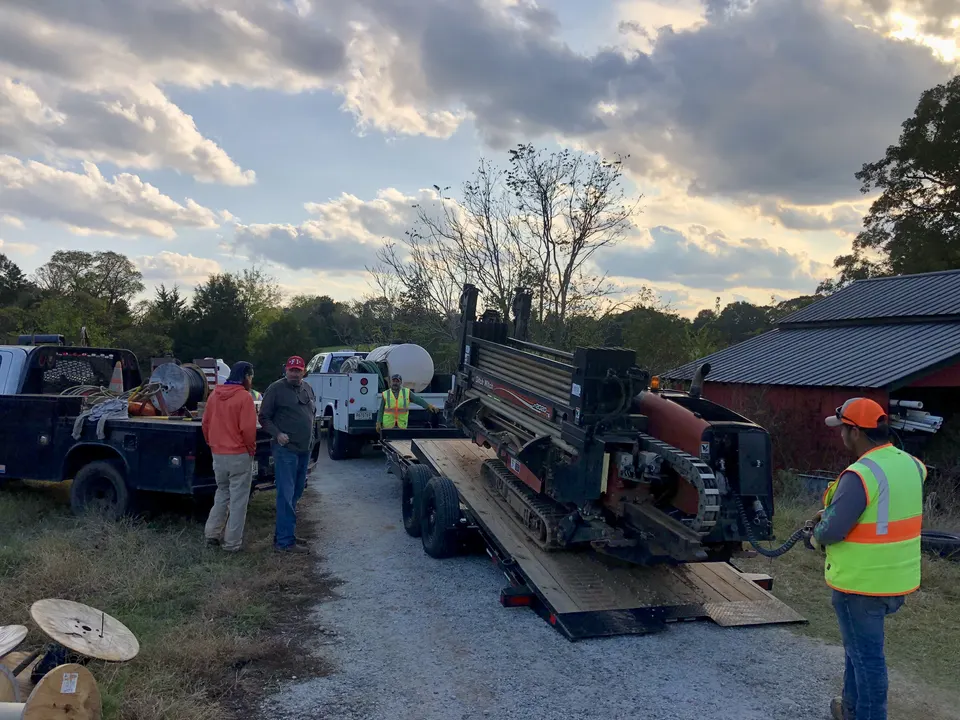
Cost to Run a Water Line 500 or 1,000 Feet in SC
Per-foot math for long runs, why the rate drops with length, and what rock, crossings, and pipe size add.
Read article