
On an Upstate South Carolina lake lot, directional boring is almost always the better way to install or replace a water line. The lot is steep, the run is long, the slope is terraced with retaining walls and landscaping, and the ground is often granite — and an open trench down that hillside costs more to put back than the pipe inside it. Open trenching still wins in one situation: flat, open ground with nothing on top and a short run. Here’s how Sloan Underground Construction decides between the two on Lake Keowee, Lake Hartwell, and Lake Jocassee properties, how a leaking line gets replaced without wrecking the yard, and what each method costs.
When is directional boring better than trenching on a lake lot?
Directional boring is better than trenching on a lake lot whenever the ground above the pipe is worth more than the pipe. On a steep, terraced, landscaped lot, that is nearly always. A bore enters at a small pit, travels beneath everything in its path and exits at a second pit, while a trench opens the full run.
That is why Sloan Underground Construction uses horizontal directional drilling on lake lots. The six differences below decide most lake jobs.
Surface Restoration
A trench tears out lawn, irrigation, plantings, and paths for the entire run, then you pay to rebuild all of it. A bore leaves two pits, backfilled and seeded. On a landscaped lake lot, restoration is usually the biggest line on an open-cut bid.
Slope and Erosion
An open trench running downhill toward the water is an erosion channel until the ground heals — every Upstate thunderstorm washes loose backfill and red clay down the slope. A bore never opens the hillside, so there is nothing to wash out.
Retaining Walls, Hardscape, and Seawalls
Lake lots are terraced. Trenching through a retaining wall, a stone stairway, or a paver terrace means dismantling and rebuilding it. Boring passes beneath the wall footing and never touches the structure.
Tree Save and Root Zones
The hardwoods between the house and the water are half the reason the lot was bought. A trench through their root zone can kill them slowly over the next few seasons; a bore travels below the roots. Our post on whether trenching kills trees covers the mechanism.
Rock
The granite shelf under Keowee and Jocassee lots slows both methods. The difference is what you see afterward: a trench through rock is an open cut hammered across the property, while a bore with rock tooling leaves the surface exactly as it was.
Schedule and Long Runs
Most residential bores finish in a day, and a long run from a road-side meter down to a house near the water is exactly where a bore’s per-foot cost drops. A trench of the same length takes longer to dig, backfill, and restore — and stays open in the meantime.
The table sets the two methods side by side, using only the figures and conditions covered in this post.
| Method | Surface damage | Cost factors | When it fits |
|---|---|---|---|
| Directional bore | Two small pits, backfilled and seeded. Slope, walls, plantings and paths stay untouched. | Roughly $15–$45 per foot; most replacements about $2,000–$6,000 all-in. Long runs trend lower per foot; rock, depth and pipe size push it higher. | Steep, terraced, landscaped or rocky lots, and long runs from a road-side meter down to the house. |
| Open trench | Full run opened: lawn, irrigation, plantings and paths torn out, walls and stairways dismantled, and an erosion channel downhill until the ground heals. | Excavation can look similar or cheaper alone; regrading, erosion control, replanting and wall or path repair usually add more than the pipe cost. | Short, flat runs through open lawn, very shallow utilities, bare lots being graded, and spot repairs where the leak is already exposed. |
When does an open trench still make sense on a lake lot?
An open trench still makes sense on a lake lot when the run is short and flat through open lawn with nothing on top to restore. Sloan Underground Construction also recommends one for very shallow utilities, bare lots being graded and spot repairs where someone has already dug to the leak.
An honest contractor will tell you which situation you’re in. The trench is the right call when:
- The run is short and flat through open lawn — nothing on top to restore, so the excavation is the whole cost
- The utility is very shallow and the trench doubles as access — irrigation laterals and low-voltage runs a few inches down
- The site is already being graded — new construction where the lot is bare and the final grade hasn’t been set
- The failure point is already exposed — a spot repair on a sound line where someone has already dug to the leak
Notice what those have in common: no slope, no landscaping, no hardscape, no trees. Lake lots almost never fit that description past the driveway apron.
Ask One Question of Every Bid
“Does this price include putting the slope, the walls, the plantings, and the path back the way they were?” An open-cut bid that excludes restoration isn’t cheaper — it’s incomplete. A trenchless bid is naturally all-in because there is almost nothing to restore.
How do you replace a leaking water line at a Lake Keowee or Hartwell home without tearing up the yard?
Sloan Underground Construction replaces a leaking lake-house service line by boring a new line beside or beneath the old one and abandoning the failed pipe in place. The yard between the meter and the house never opens, because the entire excavation is one pit at the meter and one at the house entry.
The work follows four steps:
- Site visit and leak confirmation. The crew walks the lot and writes a line-item estimate. Shut every fixture off and watch the meter; a dial that keeps turning means water is leaving the line. A bill that jumped with no change in use, or a strip of ground on the slope that stays soggy and greener than the rest, points the same way. Our guides to the signs your water line is leaking and why a water bill is suddenly high walk through the checks.
- Locate and plan. The existing service line is traced from meter to house and the failure point pinpointed: see how leak detection works in the Upstate. A locate request to SC811 marks every other buried utility on the lot before any drilling, and the crew picks the two pit locations: one at the meter, usually up near the road, and one at the house entry.
- Bore, ream and pull. The drill head is steered beneath the slope, the walls and the plantings, tracked from the surface the whole way, and the hole is reamed to size. A continuous HDPE line is pulled back through the bore with no buried joints, tied in at both ends and pressure-tested; the old line is capped and left in the ground.
- Restoration. The two pits are backfilled and the site is cleaned up. The crew walks the property with the customer before leaving.
This is the same water line replacement process the crew uses across the Greenville metro: the lake lot just makes the case for it stronger. If the home has never had a line at all, or you’re adding one to a guest house or a dock, the parallel water line installation service covers new runs, and our post on running water to a boat dock on Lake Hartwell or Keowee covers the shoreline end.
What does steep or rocky ground change about a lake-lot bore?
Steep or rocky ground changes the bore plan on a lake lot, not the method. The crew picks level spots for the pits, tracks the drill head on grade, switches to rock tooling where the granite starts and sets the depth below footings and roots. The slope itself never opens.
Four adjustments separate a lake-lot bore from a flat suburban one:
- Pit placement on terraces. The entry and exit pits go where the ground is level enough to set up — a terrace, the driveway edge, the flat beside the house — and the bore path is plotted between them, however many walls sit in between.
- Tracking the head on grade. A locator reads the drill head’s depth and pitch every few feet, so the operator can follow the hillside down while staying below frost depth and below every retaining-wall footing along the way.
- Rock tooling and a slower advance. Piedmont red clay bores cleanly and fast. The granite pockets and shelf rock under much of Keowee, Jocassee, and the Hartwell shoreline call for rock bits and reamers and more time on the pilot bore. Sloan Underground’s Ditch Witch JT-5, JT-520 and JT-2020 rigs carry the tooling for both.
- Depth. The line runs deep enough to clear wall footings, tree roots, and winter frost, and the exit pit at the house is positioned to come up clean at the entry point rather than under the foundation.
Sloan Underground Construction bores water, electric, and fiber lines on Lake Keowee and Lake Jocassee lots, including communities such as Keowee Key, The Cliffs at Keowee, and the Reserve at Lake Keowee, and on Lake Hartwell properties across Oconee County, Pickens County, and Anderson County.
What does each method cost on a lake lot?
Trenchless work on a lake lot runs roughly $15 to $45 per foot in South Carolina, and most residential water line replacements land between $2,000 and $6,000 all-in. Long runs trend toward the low end per foot because the rig setup is spread across more pipe, while rock, depth and pipe size push a bore toward the top.
Open-cut trenching can look similar or cheaper on the excavation line alone. On a lake lot, the rest of the bill is where it separates: regrading the slope, erosion control while the trench heals, replacing plantings and irrigation, and repairing any wall, stairway, or path the trench crossed. Those items usually add more than the pipe cost, and a rebuilt terrace never quite matches. The all-in comparison is the only fair one: our guides to directional boring cost in South Carolina and what it costs to run a water line 500 or 1,000 feet break the numbers down further.
One more lake-specific note: work near the water can need the lake authority’s sign-off. Lake Hartwell is a U.S. Army Corps of Engineers lake, and Lake Keowee and Lake Jocassee are Duke Energy lakes; a line replaced between the meter and the house usually stays above their shoreline zones, but a run that continues toward a dock or seawall does not. Confirm the requirements with the lake authority before boring starts.
What happens at the site visit and written estimate for a lake-lot water line?
Sloan Underground Construction’s site visit is free: the crew walks your lot and writes a line-item price. The crew finds the meter and the house entry, measures the run, notes every wall, tree, and path between them, checks for rock, and picks the two pit locations.
The written estimate lists pipe, boring, connections, and testing as line items before anything is scheduled. Confirm any permit or reconnection fees with your water district, since those are set by the district and not by the contractor.
Sloan Underground Construction is a family-owned underground utility contractor founded in 1965, based at 208 Goldsmith Rd in Fountain Inn and serving the Greenville metro, the Upstate lakes, and Western North Carolina under SC General Contractor license #14665. Call (864) 386-1649 or request an estimate online, and browse more lake-lot guides in the Sloan Underground blog.
Frequently Asked Questions
Is directional boring better than trenching for a water line at a lake house?
Yes, directional boring is better than trenching for a lake-house water line on almost every Upstate lake lot. Lake properties are steep, long, terraced with retaining walls and landscaping, and often sit on granite. An open trench down that slope destroys everything above the pipe and becomes an erosion channel until it heals, and the restoration bill usually exceeds the cost of the pipe. A directional bore places the new line beneath the slope from two small pits and leaves the surface intact. Open trenching only wins on short, flat runs through open lawn with nothing on top.
Can you replace a leaking water line at a Lake Keowee or Lake Hartwell home without tearing up the yard?
Yes, a leaking water line at a Lake Keowee or Lake Hartwell home can be replaced without tearing up the yard. After the leak is confirmed and the existing line is located, a directional drill bores a new path from a pit at the meter to a pit at the house, pulls a continuous new HDPE line through it, and the old line is abandoned in place. The terraces, walls, plantings, and paths between the two pits never move, and most residential replacements are finished in a single day.
Does rocky ground stop directional boring?
Rocky ground slows directional boring but does not stop it. Piedmont red clay bores cleanly; the granite shelf and rock pockets common on Keowee, Jocassee, and parts of Hartwell call for rock tooling and a slower advance. The difference from trenching is what the surface looks like afterward: a trench through rock means blasting or hammering an open cut across the lot, while a bore leaves the ground on top untouched.
How much does directional boring cost compared to trenching on a lake lot?
Trenchless installation in South Carolina typically runs $15 to $45 per foot, and most residential water line replacements land roughly between $2,000 and $6,000 all-in. Long runs trend lower per foot. Open-cut trenching can price similarly on the excavation line alone, but on a lake lot it adds regrading, erosion control, landscaping, and wall or path repair that often costs more than the pipe itself. Compare the all-in numbers, not the dig numbers.
Do I need permission to run a water line near the shoreline?
Work near the shoreline can need the lake authority's approval. Lake Hartwell is a U.S. Army Corps of Engineers lake and Lake Keowee and Lake Jocassee are Duke Energy lakes, and each has its own rules for anything done within its shoreline zone. A line replaced between the meter and the house usually stays well above that zone, but a run that continues toward a dock or seawall needs the lake authority's approval before boring starts. Sloan Underground can tell you during the site visit whether your run touches it; confirm the requirements with the lake authority before boring starts.
Related Articles
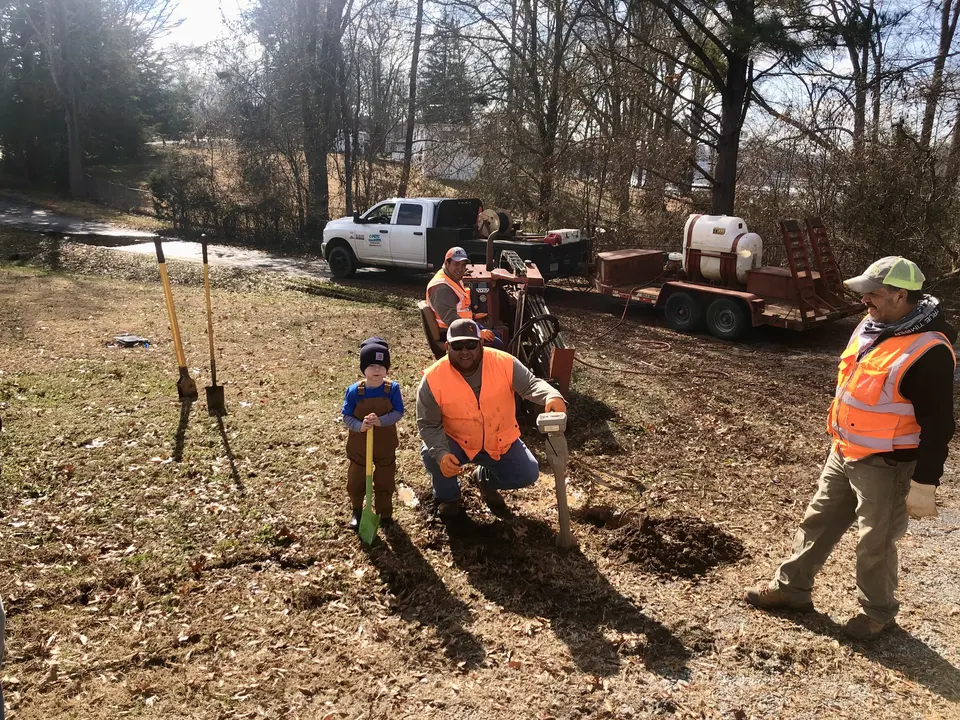
Running Water to a Boat Dock on Lake Hartwell or Keowee
How a house-to-dock water line is bored down the shoreline, what the lake authority needs to approve, and what it costs.
Read article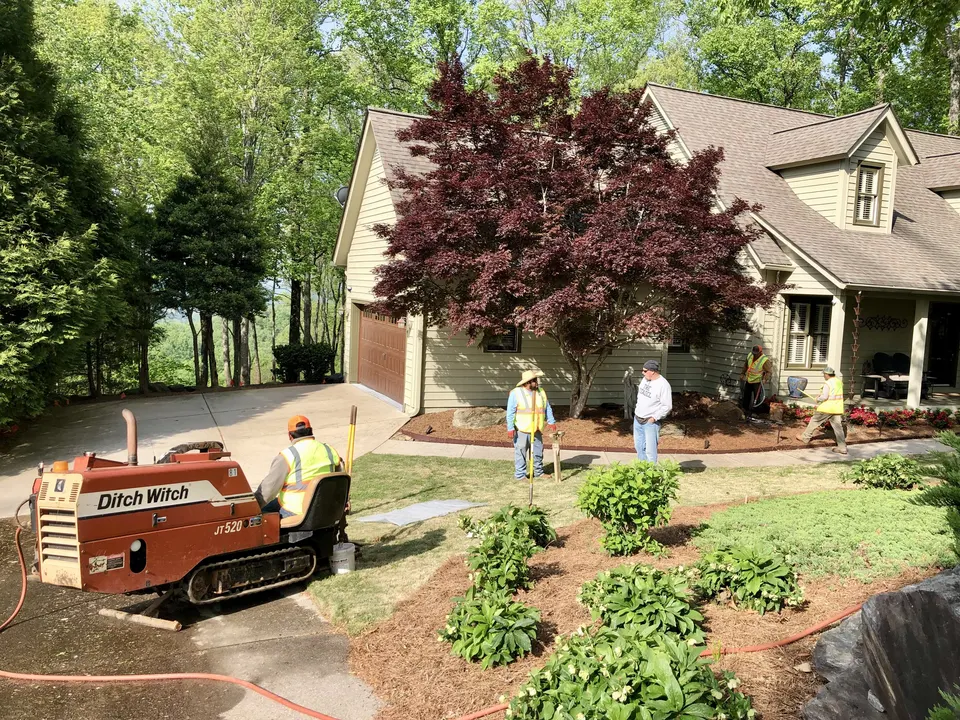
Will Trenching Kill Your Trees?
How root-zone excavation damages mature hardwoods — and how boring beneath them avoids it entirely.
Read article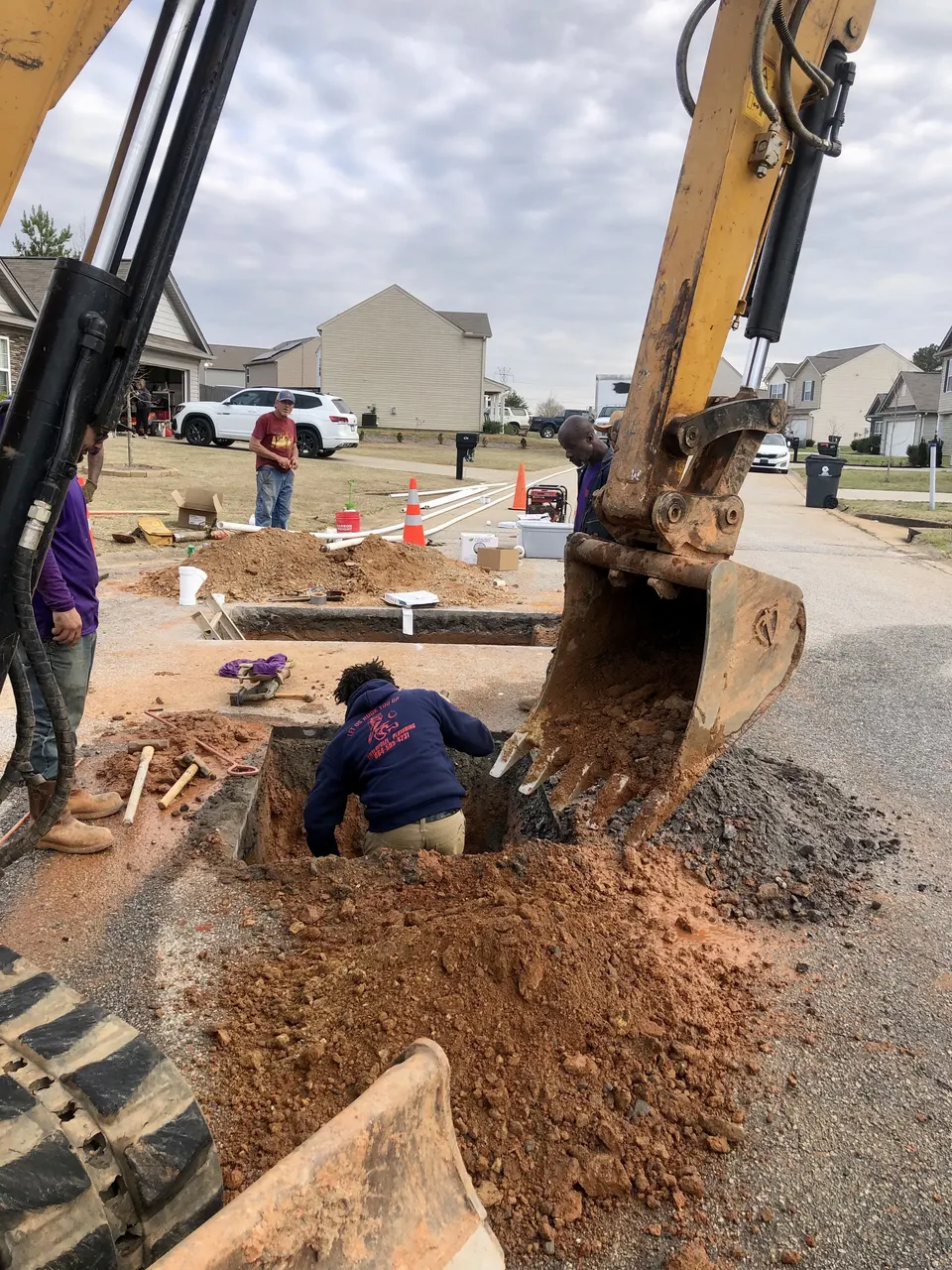
Signs Your Water Line Is Leaking
The meter test, the bill spike, the soggy strip — how to confirm a buried service-line leak before calling anyone.
Read article