
A sudden water bill spike almost always means a hidden leak — a running toilet, a broken irrigation head, or an underground service line that developed a crack. Seasonal usage increases can raise bills modestly, but a 30–100% jump points to water escaping somewhere. A simple meter test, a toilet dye check, and an irrigation walkthrough will identify the source for most homeowners within 30 minutes.
Most Likely Reasons for a Sudden Water Bill Spike
Here are the causes ranked by frequency in South Carolina homes — starting with the most common inside causes, then outside.
Running Toilet
A worn flapper valve silently discharges hundreds of gallons daily without any obvious sound or wetness. It's the #1 cause of unexplained high water bills in SC residential properties. Test with food coloring in the tank — color appearing in the bowl without flushing confirms a leak.
Irrigation System Break
A cracked irrigation lateral, broken head, or failed zone valve can run for weeks before it's noticed — especially in zones that run at 2 a.m. and cover areas you rarely walk. A zone-by-zone manual activation test (running each zone for 2 minutes while watching) identifies the problem quickly.
Underground Service Line Leak
A pinhole or crack in the underground water service line leaks continuously under pressure. The leak may show no visible yard symptoms for weeks in SC's clay-heavy soil. A meter test with the interior shutoff closed confirms this source. Line replacement — typically trenchless in residential settings — is the fix.
Dripping Faucets and Hose Bibs
A faucet dripping at one drip per second wastes 3,000+ gallons per year. Outdoor hose bibs are frequently left partially open or have worn washers that leak. Check every faucet and outdoor spigot — this is often a quick, inexpensive fix.
Water Heater Pressure Relief Valve
A faulty T&P valve on the water heater discharges water intermittently or continuously to a floor drain or exterior discharge pipe — often completely undetected. Check the discharge pipe periodically for dripping or flow.
Meter or Billing Error
Utility billing errors and meter malfunctions do occur — though they're less common than real leaks. If you've verified no plumbing issues exist and the bill remains high, request a meter accuracy test from your utility. Most SC water utilities perform this free of charge.
How to Check Your Water Meter for a Leak
The meter check is the fastest way to confirm whether water is actively escaping your system. Here's how to do it:
- Turn off all water. Every faucet, toilet (let fill valves finish cycling), irrigation controller, dishwasher, washing machine, ice maker, and water softener.
- Find your meter. In most SC neighborhoods, it's in a covered pit near the curb or property edge. Open the lid.
- Watch the leak indicator. This is the small triangle, star, or disc on the meter face. If it's rotating with all water off, water is flowing through the meter — meaning it's leaking somewhere.
- Record the full reading and wait one hour. Return and check again. Any increase confirms an active leak.
For a complete walkthrough of the two-hour meter test and how to isolate inside versus outside leaks, see our full guide on why your water meter is spinning.
Quick Inside / Outside Checklist
Before calling a plumber or water line contractor, work through this checklist in order. Most homeowners identify the problem by item 5 or 6.
- Toilet dye test on every toilet (food coloring in tank — color in bowl = flapper leak)
- Listen for running water sounds inside walls with all fixtures off
- Inspect water heater T&P valve discharge pipe for dripping
- Check all faucets and showerheads for drips
- Verify washing machine hose connections aren't seeping
- Check refrigerator ice maker line for moisture at the connection
- Run each irrigation zone manually — watch for gushing heads or pooling water
- Check all outdoor hose bibs for drips
- Walk the service line path from meter to house — look for soggy ground, unusually green grass, or soft soil
- Inspect the meter pit — listen for hissing or dripping sounds
- Watch the meter leak indicator with all indoor water off (see above)
When to Call a Professional
If the checklist above doesn't surface an obvious inside cause, and your meter is registering movement with the interior main shutoff closed, the problem is in the underground service line. That requires professional equipment and a licensed contractor to repair.
Call immediately if:
- Your meter spins with the interior main shutoff closed (underground leak confirmed)
- You've found and fixed the inside leak but the bill remains elevated the following month
- You notice soggy yard sections, ground settling, or unusually green grass strips along the service line path
- Your home is a slab construction and you notice warm floor spots or new foundation cracks
Sloan Underground Construction replaces leaking underground water service lines trenchlessly across Greenville, Spartanburg, Anderson, and all of Upstate South Carolina. Our HDPE replacement lines are rated 50+ years — you won't be dealing with the same problem again. For details on the symptoms that point specifically to the service line, see our guide on signs your water line is leaking.
Call (864) 386-1649 for same-week service or visit our water line installation page to learn more about trenchless replacement.
Frequently Asked Questions
Why did my water bill double this month?
A bill that doubles in a single month almost always means a new leak — a toilet flapper that failed, an irrigation head that broke, or an underground service line that cracked. Seasonal factors like outdoor watering can cause meaningful increases, but doubling rarely happens from usage alone. Start by checking your toilets (dye test), turning off everything and watching your meter, and inspecting your irrigation zones. If the meter is still moving with everything off, you have an active leak somewhere.
Can a running toilet really cause that much water loss?
Yes. A toilet with a failing flapper can lose 20–200 gallons per hour depending on how far open the valve gap is. At the high end, that is 4,800 gallons per day — equivalent to dozens of 10-minute showers. A toilet running at the lower end of that range (20 gallons per hour) still adds 480 gallons per day and roughly $30–$50 to a monthly water bill at typical South Carolina residential water rates. The fix — a $5–$10 flapper replacement — is one of the highest-value DIY repairs in home maintenance.
How do I know if my high water bill is from an underground leak?
Shut off all water in the house (including all toilets and the irrigation system) and watch your water meter's leak indicator. If it keeps moving with everything off, water is flowing through the meter — and since nothing inside is on, it must be leaking underground. Close your main interior shutoff valve to confirm: if the meter stops moving when the interior shutoff is closed, the leak is inside the house. If the meter keeps moving with the interior shutoff closed, the leak is definitively in the underground service line between the meter and your home.
Will the water company give me a credit for a hidden leak?
Most South Carolina water utilities — including Greenville Water, Spartanburg Water System, and others — offer a one-time leak adjustment credit when a homeowner documents and repairs a leak. Typically you must show proof of repair (contractor receipt or permit) and submit a written request within a defined window after the high-bill period. Credit policies vary by utility, so call your provider directly after completing a repair. Adjustments of 25–50% of excess usage are common. Utilities will not credit usage from a recurring unfixed leak.
Related Articles

Why Is My Water Meter Spinning?
The two-hour meter test, the 6 most common causes of a spinning meter, and how to confirm an underground leak.
Read article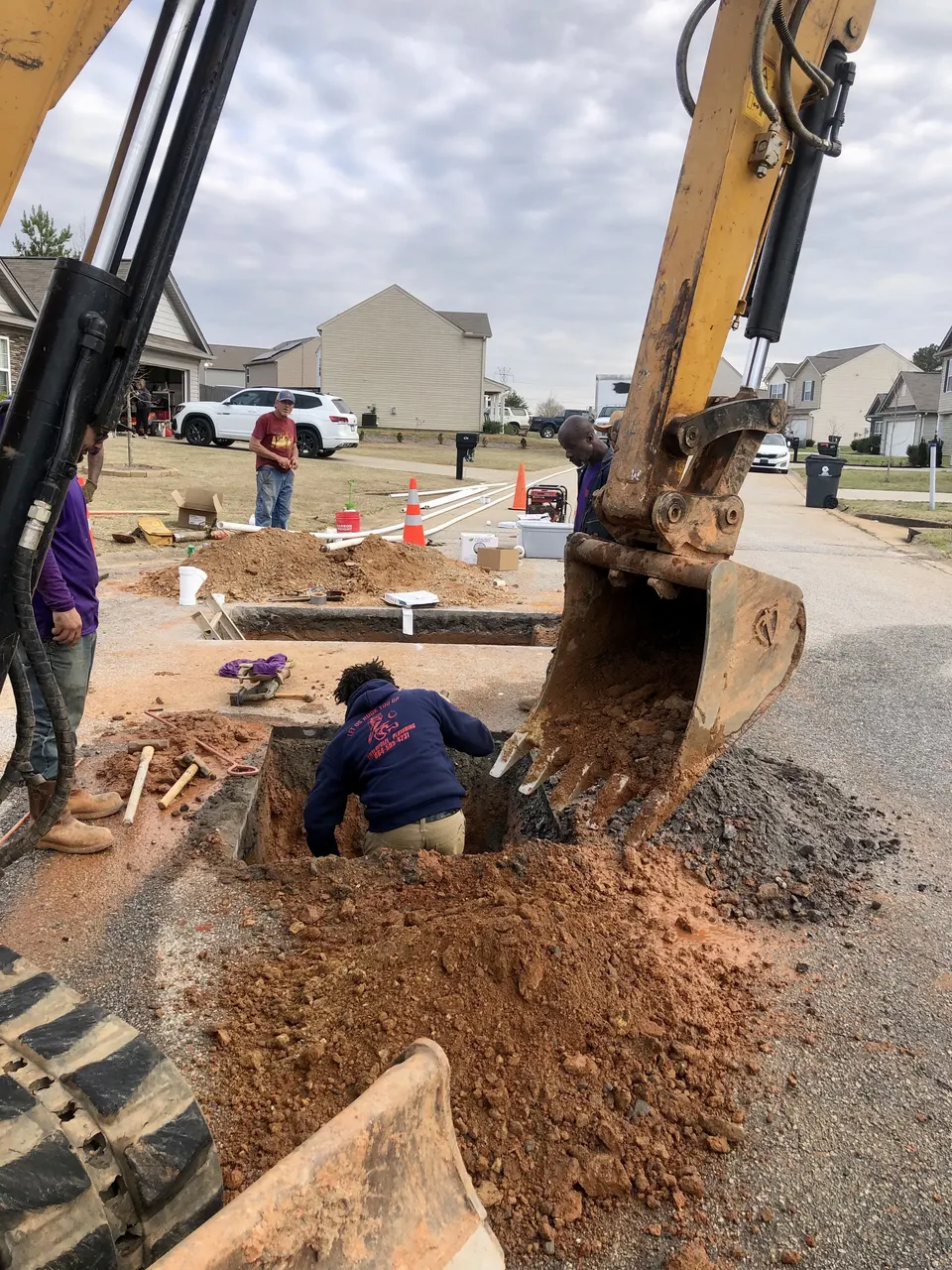
Signs Your Water Line Is Leaking
Wet spots, hissing sounds, pressure loss, and more — how to identify a leaking service line in Upstate SC.
Read article