Quick Answer
Yes — trenching through a tree's root zone can kill a mature tree within 1–3 years. Tree roots extend well beyond the visible canopy, and severing 25–33% or more of the root system sends a tree into decline. Directional boring goes beneath the root zone with no cuts to roots, no soil disturbance along the bore path — it's the right method whenever utilities need to run near mature trees.
Tell us about the job
Family-owned since 1965 — we reply within one business day with a straight answer.
Trenching Can Kill Mature Trees — Here's Why
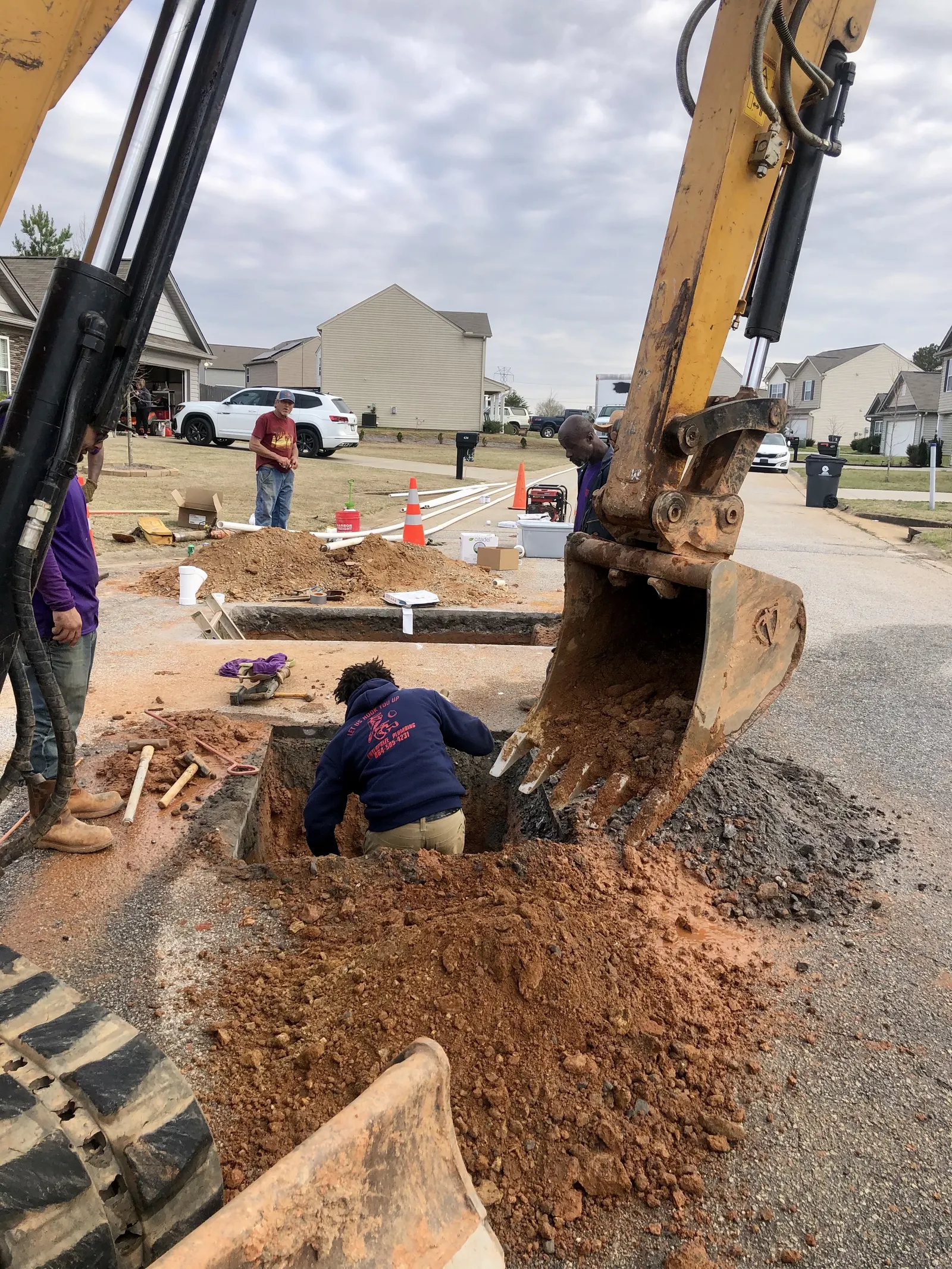
Tree roots don't stay under the trunk. They spread outward — often 2 to 3 times the width of the tree's canopy drip line — staying in the top 12 to 18 inches of soil where oxygen, water, and nutrients are most accessible. A utility trench cuts straight through that system.
The damage isn't always obvious in the first year. A tree that's lost a quarter of its root mass may look fine through the growing season following the trench. But feeder roots that got severed can't regenerate quickly enough to replace the loss, and the tree gradually declines. By year two or three, you start seeing: thin canopy, dead limbs, reduced leaf size, early fall color. At that point, the damage is usually irreversible.
Studies in urban forestry consistently show that trees losing 25–33% or more of their root system have significantly reduced survival odds. For large, mature trees — the ones that add the most value to a property — the threshold can be even lower.
The Upstate South Carolina red piedmont clay soil makes this worse. Clay traps heat and gas in cut zones better than loamy soils, creating anaerobic pockets around severed roots that accelerate decay. When you cut roots in heavy clay and then backfill, the compaction from the backfill further restricts the surviving roots. SC's hot summers add temperature stress on top of that.
Which Trees Are Most Vulnerable to Trenching Damage?
Not all trees respond to root damage the same way. Species with shallow, lateral root systems are the most vulnerable to trenching injury. These include many of the most common and valued trees in Upstate SC yards:
- White oak (Quercus alba) — a South Carolina native with wide-spreading lateral roots; extremely sensitive to root zone disturbance
- Southern red oak (Quercus falcata) — common in Upstate SC neighborhoods; shallow feeder roots extend far from the trunk
- Flowering dogwood (Cornus florida) — shallow-rooted and highly sensitive; a trench through the root zone often results in death within 2 years
- Red maple (Acer rubrum) — one of the most common yard trees in the region; responds poorly to root severance
- Sweetgum (Liquidambar styraciflua) — native to SC, shallow-rooted, frequently encountered in suburban lots
Pine species — including loblolly pine (Pinus taeda), common throughout Upstate SC — are somewhat more resilient due to deeper taproots, but still affected by feeder root severing and should not be trenched within their drip line without evaluation.
Older, larger trees are more vulnerable than young trees. A young tree losing 20% of its root system may recover. A 60-year-old white oak losing 20% may not — the regeneration capacity simply isn't there.
A mature shade tree can add $1,000 to $10,000+ in property value and provide meaningful energy savings through summer shading. Losing one to an avoidable trench is an expensive outcome when boring is available as an alternative.
How Directional Boring Protects Your Trees
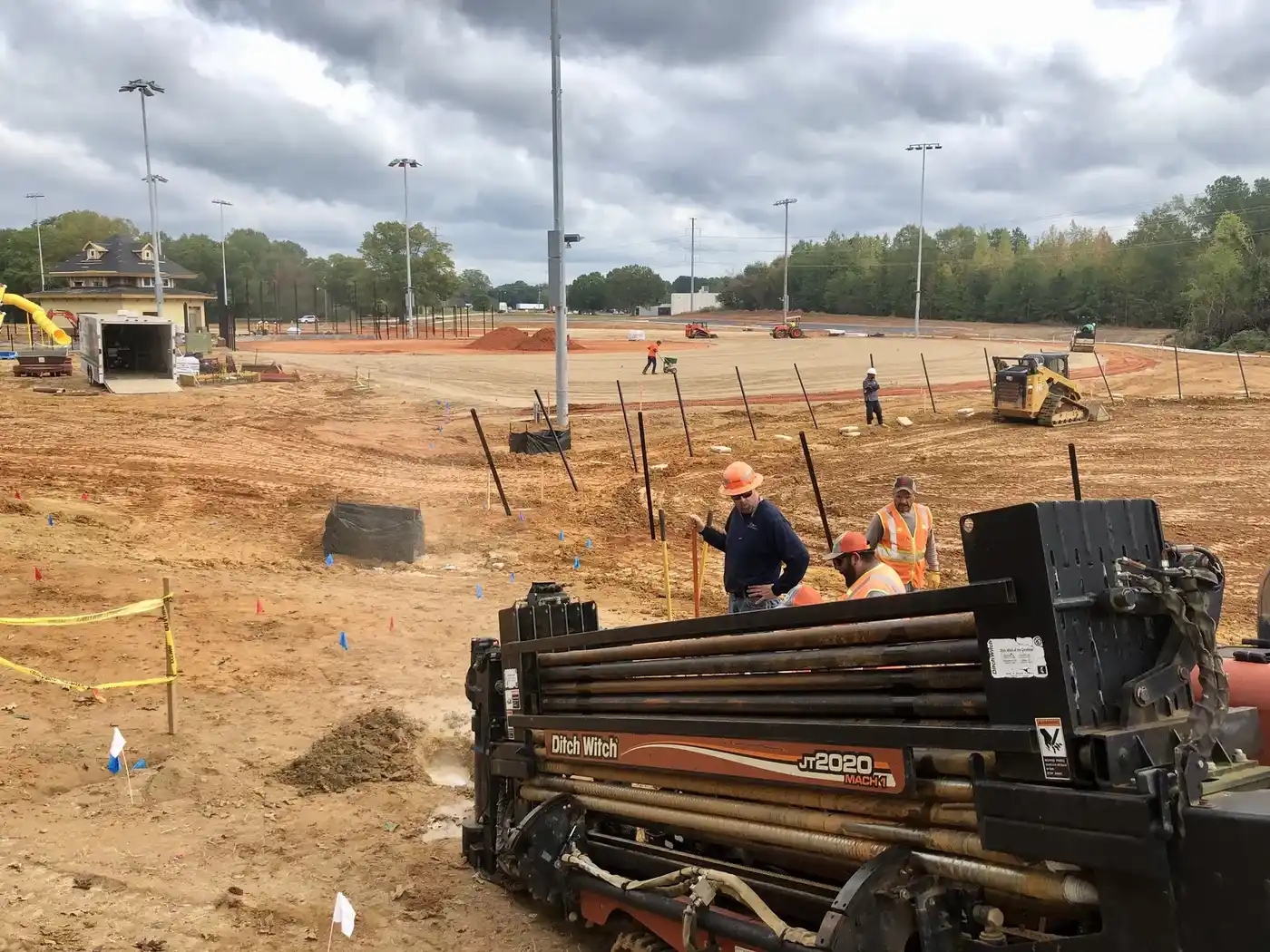
Trenchless pipe installation via horizontal directional drilling takes the utility completely out of the root zone. Here's why it works:
- Bore depth: The bore path typically runs 24–36 inches below the surface — well below the feeder root zone for most mature trees, which concentrates in the top 12–18 inches of soil.
- No soil excavation along the path: Unlike trenching, which opens the ground the entire length of the utility run, HDD only disturbs two small entry and exit pits at the ends of the bore. The soil — and root architecture — between the pits is completely undisturbed.
- Bore path can be steered: Directional boring uses a steerable drill head that can navigate around obstacles. If a tree requires the bore path to arc away from it or go deeper beneath it, the operator can adjust in real time.
- No compaction along the route: Heavy trenching equipment compacting soil over root zones is a secondary damage source that HDD eliminates entirely.
This is why boring under a driveway without damage works just as well for trees — the principle is the same. Surface and near-surface structures (roots, driveways, irrigation systems) are bypassed entirely because the bore happens beneath them.
For residential underground utility installations near established landscaping, directional boring is the standard recommendation from Sloan Underground. We've been running lines through established SC neighborhoods since 1965, and protecting mature trees — which those neighborhoods are built around — is part of doing the job right.
When homeowners ask whether they can bore under a tree, the answer is almost always yes. The bore path can be threaded beneath the root zone with no surface disruption above it. Only the entry and exit pits are needed, and both can be positioned well clear of the tree.
If you're also considering installing a water line without yard damage, the same trenchless approach protects your lawn, gardens, and every tree in the bore path simultaneously.
When Trenching Is Unavoidable — Tree Protection Tips
Sometimes trenching is necessary — a repair close to the house foundation, a specific access point, or budget constraints on a short run. If you must trench near trees, these practices reduce but don't eliminate damage:
- Maintain 10–15 feet from the trunk minimum. For large trees (trunk diameter over 18 inches), 15–20 feet is safer, and staying outside the drip line entirely is ideal.
- Hand-dig within 10 feet of any trunk. Mechanical trenchers sever roots at speed and leave jagged wounds that invite disease. Hand tools give you the chance to redirect around major roots rather than cut through them.
- Make clean cuts, not torn wounds. If you do sever a root, use a sharp saw or loppers to make a clean cut. A torn, crushed root end invites pathogens; a clean cut heals more effectively.
- Avoid trenching during drought or heat stress. Summer in Upstate SC is the worst time to injure a tree's root system. Spring or fall work gives the tree more resources to respond.
- Backfill carefully and don't overcompact. Pack soil back with minimum compaction over root zones. Compaction restricts oxygen to surviving roots.
- Consult a certified arborist first. For high-value or heritage trees, an arborist assessment before any digging is worth the cost. They can define the exact protection zone and advise on post-trench recovery care.
| Factor | Open Trenching | Directional Boring |
|---|---|---|
| Root disruption | Severs roots entire length of trench | Zero root cuts along bore path |
| Bore depth relative to roots | Cuts through root zone (0–18") | Below root zone (24–36") |
| Surface disturbance | Full open cut, soil exposure | Entry/exit pits only |
| Soil compaction risk | Heavy equipment over root zone | Equipment stays at pit locations |
| Tree survival odds | Reduced, especially for sensitive species | Unaffected |
Frequently Asked Questions
Can trenching near a tree kill it?
Yes, especially if the trench severs major lateral roots within the drip line. Trees that lose 25–33% or more of their root system typically go into stress and may die within 1–3 years, even if they look healthy for the first season after the trench. Decline is often delayed, which is why homeowners don't always connect the trench to the tree's death.
How close to a tree can you safely trench?
Stay at least 10–15 feet from the trunk, or ideally outside the drip line entirely. For large trees with wide canopies, the safe zone may extend 20–25 feet from the trunk. When in doubt, consult a certified arborist before trenching near any tree you want to keep.
Does directional boring damage tree roots?
No. The bore path runs 24–36 inches below the surface, well below the feeder root zone for most mature trees. Only small entry and exit pits are needed at the ends of the bore — the soil and root architecture between them are completely undisturbed. Sloan Underground has bored through established neighborhoods across Upstate SC without harming a single mature tree.
Can you bore under a tree?
Yes. Directional boring can be steered beneath a tree's root zone without any surface disruption. This is one of the primary reasons homeowners and municipalities choose HDD over open-cut trenching when mature trees are in the utility path. The bore operator can adjust depth and steering in real time to navigate well beneath root zones.