
Running a water line 500 feet in South Carolina usually costs roughly $6,000–$15,000 by directional boring, and 1,000 feet runs roughly $10,000–$25,000 or more. Boring typically prices at $15–$45 per foot, and long runs land toward the low end of that range because the rig setup is spread across more footage — but rock, road crossings, and the larger pipe a long run needs for pressure can push the total well past the bracket. Here’s the per-foot math, what actually moves the number, whether trenching is ever cheaper, and how Sloan Underground Construction prices a long water line installation for real.
How Much Does It Cost to Run a Water Line 500 Feet?
A 500-foot residential water line in the Upstate and Midlands usually costs roughly $6,000 to $15,000 when installed by directional boring. At $15–$45 per foot the math reaches $7,500–$22,500, but a clean red clay run with no crossings sits near the bottom, because the per-foot rate drops once mobilization is absorbed.
Where 500-foot jobs climb is at the crossings and the ends. A driveway or county-road bore mid-run, a creek, granite along the path, or a step up to 1.5-inch pipe for pressure each add real money. Meter, tap, and permit fees set by the water district sit on top. Treat the bracket as a bracket: two 500-foot lines on the same road can price thousands apart depending on what is in the ground between the meter and the house. Our guide to directional boring cost in South Carolina walks through the base rates in more depth.
How Much Does It Cost to Run a Water Line 1,000 Feet?
A 1,000-foot residential water line in South Carolina typically costs roughly $10,000 to $25,000 and up when installed by directional boring. Per foot, a run this long usually sits at the low end of the $15–$45 range because setup cost is spread across a thousand feet, so the total is far less than double the 500-foot figure.
Two things keep the top of that range open. First, pressure: a thousand feet of 1-inch pipe loses too much to friction to deliver a decent shower, so most 1,000-foot runs step up to 1.5-inch or 2-inch HDPE, and larger pipe costs more per foot to buy and to pull. Second, odds: over 1,000 feet in the Upstate, the chance of hitting rock shelf, crossing a road right-of-way, or passing a creek or drainage is high, and each of those is its own line item. Bores beyond about 600 feet of continuous run are done in staged pulls rather than one shot, which is normal and planned for — it is not a reason to trench.
What Drives the Per-Foot Price on a Long Run?
A long water line is priced on six variables: length and mobilization, pipe diameter, rock and soil, crossings, depth, and meter, tap and permit fees. Knowing them lets you read an estimate instead of taking one number on faith, because the per-foot rate is not fixed and moves with each of these.
Length and Mobilization
Getting the rig, the crew, and the locating gear on site costs the same whether the bore is 30 feet or 800. A 30-foot bore may cost $2,000 — about $67 per foot — while a 300-foot run might cost $9,000, or $30 per foot, because that fixed setup is amortized across ten times the footage. Long runs are the cheapest per foot you will ever see.
Pipe Diameter and Pressure Loss
Water loses pressure to friction over distance. A 1-inch line that works fine at 80 feet starves the house at 800, so long runs commonly step up to 1.5-inch or 2-inch HDPE. Larger pipe costs more per foot and needs a wider bore. The tradeoffs between HDPE, PEX, and copper are in our guide to the best pipe for water service lines.
Rock and Soil
Piedmont red clay bores quickly and cleanly. Granite shelf and rock pockets — common on Upstate ridgelines and around the lakes — slow the drill down, wear tooling, and sometimes force a rock head. Over 1,000 feet, the chance of hitting at least some rock is high, and it is the single biggest reason a long run lands at the top of the bracket instead of the bottom.
Crossings: Driveways, Roads, and Creeks
Every driveway, paved road, or creek along the path is a controlled crossing with its own depth and setup. Boring under a public right-of-way generally requires an encroachment permit from the road authority, and creek crossings go deeper to stay below the scour line. None of these stop a bore — they just get priced as what they are.
Depth and Frost Line
South Carolina service lines typically sit 18–36 inches down — below the shallow Upstate frost line with room to spare. Deeper placement is sometimes required under roads or where the line crosses other utilities, and deeper means more at the pits and a longer approach angle for the drill.
Meter, Tap, and Permit Fees
The water district sets the meter and tap fees, and the county or city sets any plumbing permit. These are separate from the boring price, vary widely from one district to the next, and belong on the estimate as named line items — not as a surprise after the pipe is in.
Is Trenching Cheaper Than Boring on a Long Run?
Trenching is cheaper than boring only on paper, and only across ground with nothing on it. An open trench across 1,000 feet of bare pasture can price lower than a bore on the excavation line alone, but backfill, seeding, erosion control, days of open ditch and a scar across the property follow.
| On a long run | Open trench | Directional bore |
|---|---|---|
| Excavation line | Can price lower across bare pasture | Small pits at the entry, exit and crossings |
| Restoration | Backfill, compaction, seeding, erosion control on slopes | Almost nothing to restore |
| Time on the property | Days of open ditch | Pits only; staged pulls on the longest runs |
| Driveways, roads, creeks, septic fields, mature trees | Destroyed, or a bore at every crossing anyway | Bored beneath the whole run |
The moment the path meets a driveway, a paved road, a creek, a septic field, or a stand of mature trees, trenching either destroys that thing or stops and switches to a bore at every crossing anyway. Directional boring handles the whole run beneath all of it from a handful of small pits, which is why horizontal directional drilling wins the all-in comparison on most long Upstate runs. Our comparison of trenching vs directional boring for Upstate lake homes goes deeper on steep and rocky lots, and our post on installing a water line without damaging your yard covers what the property looks like when the crew leaves.
Ask for the All-In Number
When comparing a trench quote to a bore quote on a long run, ask each contractor the same question: “Does this price include putting everything back, grading, seeding, erosion control, and every crossing?” A trench bid that excludes restoration is not cheaper; it is unfinished. A bore bid is closer to all-in because there is almost nothing to restore.
Who Needs a 500- to 1,000-Foot Water Line?
Rural lot owners, lake-lot owners, and anyone with a building set far back from the meter need a 500- to 1,000-foot water line. Sloan Underground Construction bores these runs across the Upstate, the Midlands, and Western North Carolina, and if your property is on this list, the brackets above are the ones to plan around:
- Rural lots and acreage off a county road — the meter is at the road, the house is set back, and the line has to cover the gap
- Lake lots and house-to-dock runs — steep shoreline, long driveways, and retaining walls between the meter and the water; see our guide to running water to a boat dock on Lake Hartwell or Keowee
- Barns, shops, and outbuildings — a second line from the house or meter to a structure across the property
- Second homes on family land — a new residence sharing a tap or well with the original homeplace
- New construction set far back from the road — privacy lots where the build site is hundreds of feet from the nearest main
- Well-to-house or meter-to-house on large tracts — where the well or meter location was chosen for water, not convenience
Many of these runs cross at least one driveway and often a drainage or property-line tree row, which is exactly why they are bored rather than trenched. The same trenchless pipe installation approach applies whether the pipe is carrying water, gas, or conduit.
How Do You Get an Accurate Number for a Long Run?
You get an accurate number for a long run from a site visit, not a phone script. Sloan Underground Construction walks the full path from the meter or well to the house, measures the actual footage, notes every crossing, checks the pressure at the source and the elevation change, and sizes the pipe for pressure at the house.
The written price covers the complete job: pipe, boring, connections, staged pulls if the run needs them, and every meter, tap, or permit fee the district charges, before anything is scheduled. A long run follows the same four steps as any other bore:
- Free site visit: the crew looks at the ground, walks the full path, and writes a line-item estimate.
- Locate and plan: an 811 locate request, hand-exposing existing utilities where needed, and a bore path planned around roots, trees, and utilities.
- Bore, ream and pull: pilot bore, ream to size, and pull the line through below grade, in staged pulls if the run needs them.
- Restoration: entry and exit pits restored, the site cleaned, and the property walked with the customer before the crew leaves.
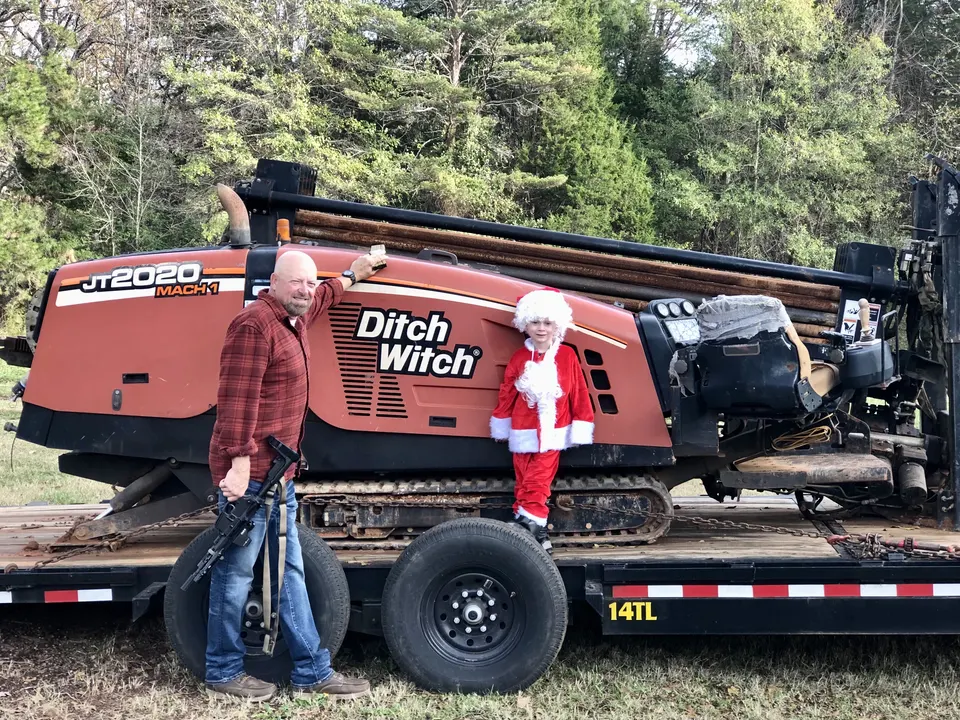
Sloan Underground Construction is a family-owned underground utility contractor, in business since 1965 and based in Fountain Inn in the Greenville metro, serving the Upstate, the Midlands, and Western North Carolina. It holds South Carolina General Contractor License #14665 and runs Ditch Witch JT-5, JT-520 and JT-2020 directional drills on everything from a single driveway crossing to runs past a thousand feet. The site visit and the written line-item estimate are free. If the line you need is a replacement rather than a new run, our guide to water line replacement cost in South Carolina covers those brackets, and more cost guides are on the Sloan Underground blog. Call (864) 386-1649 or request your estimate online.
Frequently Asked Questions
How much does it cost to run a water line 500 feet?
In South Carolina, a 500-foot residential water line installed by directional boring usually lands somewhere around $6,000 to $15,000. Boring typically prices at $15 to $45 per foot, and long runs trend toward the lower end of that range because the rig setup and mobilization are spread across more footage. Rock, road or driveway crossings, larger-diameter pipe, and tap or permit fees push the total up. A firm number requires a site visit, which Sloan Underground provides free at (864) 386-1649.
How much does it cost to run a water line 1,000 feet?
A 1,000-foot water line in South Carolina generally runs roughly $10,000 to $25,000 or more when directionally bored. The per-foot rate on a run this long is usually at the low end of the $15 to $45 range, but 1,000 feet of pipe almost always means stepping up to 1.5-inch or 2-inch HDPE to protect water pressure at the house, and the odds of crossing rock, a creek, or a county road go up with every hundred feet. Those are the variables that decide whether a thousand-foot run lands near $10,000 or well past it.
What is the cost per foot for directional boring a residential water line?
Residential directional boring in South Carolina typically costs $15 to $45 per foot. The high end of the range is reserved for rock and bores under hardscape. The per-foot number falls as the run gets longer: a 30-foot bore might be $2,000, or about $67 per foot, while a 300-foot run might be $9,000, or about $30 per foot, because the same mobilization cost is amortized over ten times the footage.
Is trenching cheaper than boring for a long water line?
On paper, an open trench across 1,000 feet of empty pasture can price lower than a bore. In practice, the trench adds restoration, seeding, erosion control, and days of open excavation, and it cannot cross a driveway, a paved road, a creek, or a stand of mature trees without either destroying them or switching to a bore at each crossing anyway. Directional boring wins the all-in comparison whenever anything sits on top of the path, and on long Upstate runs something usually does.
What size pipe do I need for a 500 or 1,000 foot water line?
Longer lines lose pressure to friction, so a run that would be fine at 1 inch over 80 feet often needs 1.5-inch or 2-inch HDPE at 500 to 1,000 feet to deliver usable pressure and flow at the house. The right size depends on the pressure available at the meter or well, the elevation change along the run, and the fixtures being served. Sizing is part of the estimate, not an afterthought, because undersized pipe on a long run is a frequent cause of low pressure in rural and lakefront homes.
Related Articles
Directional Boring Cost in South Carolina
Base per-foot rates, what changes them, and why short bores cost more per foot than long ones.
Read article
Water Line Replacement Cost in South Carolina (2026)
Honest brackets for replacing a failed service line, the six factors that drive the total, and when a spot repair is enough.
Read article
Running Water to a Boat Dock on Lake Hartwell or Keowee
Steep shoreline, long runs, and permits — how a house-to-dock water line gets bored on an Upstate lake lot.
Read article