
Most full residential water line replacements in South Carolina cost roughly $2,000–$6,000, with short simple runs coming in lower and long, deep, or hard-access lines running higher. The spread is that wide because the total depends on line length, depth, pipe material, what sits above the pipe, and whether the job is done trenchlessly or with an open trench. Here’s what actually drives the number, why trenchless water line replacement usually wins once restoration is counted, and how to get a real price for your property without spending a dime.
What Does Water Line Replacement Cost in South Carolina?
For a typical residential service line — the buried pipe running from the water meter to the house, usually 40 to 100 feet on South Carolina lots — honest 2026 ranges look like this. Treat them as brackets, not quotes: two houses on the same street can land at opposite ends depending on what’s in the ground and on top of it.
- Spot repair of one failed section: a few hundred dollars up to roughly $1,500, when the rest of the line is sound
- Trenchless full replacement, typical run: roughly $2,000–$5,000 all-in for most single-family lots
- Open-cut full replacement: often a similar base price — but add lawn, landscaping, sidewalk, or driveway restoration on top, which can add hundreds to several thousand more
- Long, deep, or complicated runs: $5,000–$8,000+ when the line is unusually long, crosses a driveway or mature landscaping, or the path is congested with other utilities
- Permit and meter/reconnection fees: vary by city and water district — commonly somewhere between $50 and a few hundred dollars, confirmed during the estimate
Anyone quoting a firm sitewide number over the phone is guessing. A real price requires seeing the meter location, the entry point at the house, the distance between them, and what the new line has to pass under.
What Drives the Cost of Replacing a Water Line?
Six factors decide nearly every water line replacement price in the Upstate and Midlands. Knowing them lets you read an estimate line by line instead of taking a single mystery number on faith.
Line Length and Depth
The run from meter to house is the single biggest variable — a 40-foot line and a 150-foot line are different jobs. Depth matters too: service lines here typically sit 18–36 inches down, and deeper lines mean more work at the connection pits regardless of method.
Pipe Material — HDPE, PEX, or Copper
HDPE is the 2026 default for buried service lines: corrosion-proof, jointless in continuous coils, and ideal for trenchless pulls. PEX is a solid, economical option on shorter runs. Copper is the premium pick and can multiply the material line item. Our full comparison of the best pipe for water service lines breaks down the tradeoffs.
What Sits on Top of the Line
Open lawn is the cheap scenario. A line that runs under a concrete driveway, a paver walkway, mature trees, or an irrigation system either has to be bored beneath those obstacles or they have to be cut and rebuilt — and rebuilding hardscape is where open-cut budgets blow up.
Trenchless vs Open-Cut Method
Trenchless replacement pulls new pipe through a directional bore between two small pits; open-cut digs a trench the full length of the run. The base labor can price similarly — the difference shows up in restoration, covered in the next section, and in what trenchless pipe installation lets you avoid destroying in the first place.
Permits and Meter Reconnection
Most municipalities and water districts in South Carolina require a permit for service line work, and the utility handles or inspects the reconnection at the meter. Fees vary district to district — usually a modest line item, but one a legitimate estimate names up front rather than springing on you later.
Soil, Rock, and Utility Congestion
Piedmont red clay bores cleanly, but rock shelves and granite pockets slow any method down, and a path crowded with gas, electric, or fiber lines demands careful locating and a plotted bore path. The 811 locate is free; working around what it flags is part of the price.
Why Does Trenchless Usually Cost Less Overall?
Because the trench itself is only half the bill. An open-cut replacement digs up everything above the pipe for the entire run — and after the new line is in, you pay again to put the surface back: regrading and reseeding the lawn, replacing landscaping, repouring sidewalk sections, sometimes cutting and patching a driveway. Restoration routinely adds hundreds to several thousand dollars, and a patched driveway never quite matches.
Trenchless replacement skips nearly all of that. A directional drill bores a path beneath the yard between a small pit at the meter and one at the house, then pulls the new HDPE or PEX line back through the bore. The lawn, the landscaping, and the driveway never move. Sloan Underground Construction runs Ditch Witch JT-520 and JT-2020 directional drills on exactly this work across the Upstate, the Midlands, and Western North Carolina — with William Sloan on-site on jobs. Our guide to installing a water line without yard damage walks through the bore process step by step.
Compare the All-In Number, Not the Dig Number
When you collect quotes, ask each contractor one question: “Does this price include putting my yard, walkway, and driveway back the way they were?” An open-cut bid that excludes restoration isn’t cheaper — it’s incomplete. Trenchless bids are naturally all-in because there’s almost nothing to restore: two small pits, backfilled and seeded, and the job is done. That’s the honest apples-to-apples comparison, and it’s why trenchless wins on total cost for most South Carolina homes.
When Is a Spot Repair Enough Instead of Full Replacement?
A spot repair makes sense when the failure is a single, isolated event on an otherwise healthy line — a root strike, a crushed section from old construction, one failed fitting. Excavate that one point, replace the damaged section, and you’re done for a fraction of full-replacement cost.
Full replacement is the smarter spend when any of these are true:
- The pipe is old galvanized steel — corroding from the inside out; the next leak is already forming
- The line is polybutylene — a discontinued material with a known failure record; patching it just relocates the problem
- This is the second leak on the same run — repeat failures mean the whole line is at end of life
- Pressure or flow has dropped house-wide — often internal corrosion narrowing the pipe, which no patch fixes
- The repair dig would tear up hardscape anyway — if you’re paying for access, put a whole new line in the hole
Paying twice for two spot repairs on a dying line usually costs more than one trenchless replacement — and the water damage risk never goes away in between.
Who Pays for Water Line Replacement — You or the Utility?
In nearly every South Carolina water system, the utility owns and maintains everything up to and including the meter, and the homeowner owns the service line from the meter to the house. That means the buried line that fails in your yard is almost always your bill, not the water company’s — a surprise to many homeowners getting their first quote.
There are edge cases: a few districts draw the ownership split slightly differently, leaks on the street side of the meter belong to the utility, and some insurers sell service line endorsements that cover exactly this repair. Our full breakdown of who is responsible for your water service line covers how to check your district’s policy and your insurance before assuming the cost is all yours.
How Does the Free Estimate Work?
The estimate is a site visit, not a phone script. We walk the run from your meter to the house, measure the actual distance, note what the new line has to pass under, check the entry point at the foundation, and identify where the two bore pits would go. You get a written price for the complete job — pipe, boring, connections, and any permit or reconnection fees your water district charges — before anything is scheduled.
Sloan Underground Construction is a family-owned underground utility contractor — in the ground since 1965, four generations deep — based in Greenville, SC and serving the Upstate, the Midlands, and Western North Carolina. We’re licensed and insured, and the same trenchless approach applies whether you’re replacing a failed line or running a brand-new one: see our water line installation service for new construction and additions. Call (864) 386-1649 or request your free estimate online.
Frequently Asked Questions
How much does it cost to replace a water line in South Carolina?
Most full residential water service line replacements in South Carolina land somewhere between roughly $2,000 and $6,000, with short, simple runs coming in under that and long runs, deep lines, or difficult access pushing above it. The honest answer is that the total depends on line length, depth, pipe material, what sits on top of the line, and whether the work is done trenchlessly or with an open trench — which is why a firm number requires an on-site look, not a phone quote. Sloan Underground provides free estimates at (864) 386-1649.
Is trenchless water line replacement cheaper than digging a trench?
Once you count everything, usually yes. Open-cut trenching can look cheaper on the excavation line item alone, but the trench also destroys whatever sits above the pipe — lawn, landscaping, irrigation, sidewalks, sometimes a driveway — and restoring those surfaces is a real cost that often exceeds the digging itself. Trenchless replacement pulls the new line through a bore beneath the yard from two small pits, so there is almost nothing to restore. On most South Carolina residential lots, the all-in trenchless total beats the all-in open-cut total.
How long does a water line replacement take?
A typical residential trenchless water line replacement is usually completed in a single day: the bore path is drilled in the morning, the new pipe is pulled through, connections are made at the meter and the house, and water is back on the same evening in most cases. Open-cut replacements often stretch longer once excavation, backfill, and surface restoration are added. Long runs, rock, or utility congestion along the path can extend either method.
What is the best pipe material for a replacement water line?
For buried residential service lines, HDPE is the workhorse choice in 2026 — it is flexible, corrosion-proof, comes in continuous coils with no buried joints, and is the natural fit for trenchless installation. Copper remains a premium option with a long track record but costs significantly more in material. PEX is common for shorter runs and is also trenchless-friendly. The right pick depends on run length, soil, water chemistry, and budget; our comparison guide covers the tradeoffs in detail.
Does homeowners insurance cover water line replacement?
Standard homeowners policies generally do not cover replacing a service line that failed from age, corrosion, or gradual leaking — that is considered wear and tear. Some insurers sell an optional service line endorsement that does cover buried utility lines, and sudden accidental damage is sometimes treated differently, so it is worth reading your policy or calling your agent before assuming either way. Most South Carolina homeowners end up paying for the line between the meter and the house out of pocket.
Related Articles

Who Is Responsible for Your Water Service Line?
The utility owns up to the meter; you own the rest. What that means when the line in your yard fails.
Read article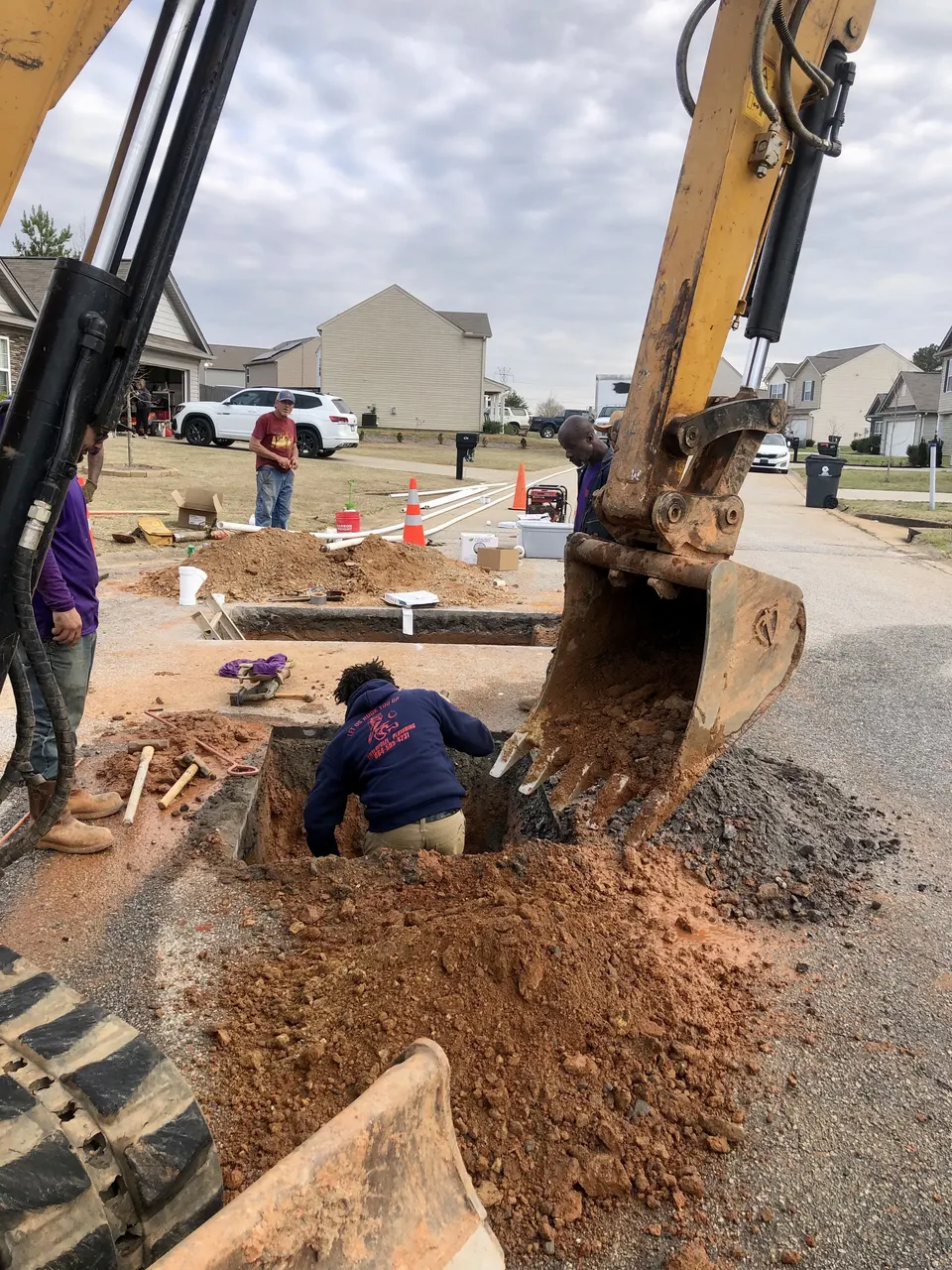
Install a Water Line Without Damaging Your Yard
How trenchless installation bores beneath the lawn — the full process, step by step, and what it costs in SC.
Read article
Repair or Replace an Old Leaking Water Service Line?
First leak on sound pipe = repair; galvanized, polybutylene, or a second leak = replace. The cost math.
Read article