Quick Answer
Yes — boring under a road is one of the most common directional drilling jobs. Sloan Underground bores under county roads, state highways, and private drives across South Carolina without cutting asphalt, closing lanes, or disrupting traffic. Most single-road crossings are complete in one day.
Tell us about the job
Family-owned since 1965 — we reply within one business day with a straight answer.
Yes — Roads Are One of the Most Common Directional Bore Jobs
Road crossings are the single most frequent use case for horizontal directional drilling (HDD) in South Carolina. Any time a utility — water, gas, electric, fiber — needs to cross from one side of a road to the other, directional boring is the standard solution. It has been since the 1990s, and it's what Sloan Underground has been called out to do on job sites across Upstate SC for decades.
The alternative to boring is an open-cut crossing: saw-cut the asphalt, trench across the road, install the pipe, backfill, tamp, and patch the pavement. That process requires DOT permits for lane closures, traffic control crews, flagmen, and a pavement restoration bond. When you add it all up, boring is almost always cheaper, faster, and less disruptive.
With horizontal directional drilling, the rig sets up on one side of the road. A pilot bore is steered beneath the road at the required depth. The casing or product pipe is then pulled back through the bore hole. No lanes close. No asphalt gets cut. The bore path is invisible from the surface. A road crossing that would take two days of flagging and traffic delays with open-cut is typically done by 3 PM the same day with HDD.
What Types of Roads Can Be Bored Under?
Directional boring is compatible with every paved road surface and road class common in South Carolina. That includes:
- County roads — two-lane rural roads maintained by county road departments
- State highways — routes maintained by SCDOT, including primary and secondary state roads
- Private driveways — concrete, asphalt, or pavers (see our guide on boring under a driveway without damage)
- Interstate service roads and ramps — with appropriate clearance from SCDOT and FHWA
- Parking lots and aprons — commercial and industrial applications
The surface material — concrete, asphalt, brick pavers — doesn't factor into the bore at all. The bore path runs well beneath the road structure, so what's on the surface doesn't change the process.
South Carolina typically requires a minimum of 3–6 feet of cover beneath paved roads for utility installations. Major highways and SCDOT primary routes may require 5–8 feet depending on utility type. Sloan coordinates exact depth requirements with the applicable road authority before every bore.
Do You Need a Permit to Bore Under a Road in South Carolina?
Yes. Any work within a public road right-of-way in South Carolina requires a permit, and the permit type depends on which entity owns and maintains the road.
- State roads (SCDOT routes): Require an SCDOT Encroachment Permit. Applications go through the appropriate SCDOT district office. Permit review typically takes 2–6 weeks for routine utility crossings, though timelines vary.
- County roads: Require a County Right-of-Way Encroachment Permit from the county road department. Processing times are often shorter than SCDOT — many Upstate counties turn these around in 1–3 weeks.
- Municipal streets: City-maintained streets require a permit from the city's public works or engineering department.
Sloan Underground handles permit coordination as part of the project. We know which roads are SCDOT versus county-maintained, we have working relationships with district offices, and we know what the application requires. Most clients don't need to touch the paperwork.
Before any bore, we also coordinate utility locates before any bore through 811. Road right-of-ways are often packed with existing utilities — water mains, gas lines, fiber conduit, and buried electric. A thorough 811 call is essential before the pilot head ever goes in the ground.
Permitting also means you're covered legally. Boring under a road without authorization from the road authority is a code violation and creates significant liability. Permitted work protects everyone on the project.
How Long Does a Road Bore Take?
The bore itself — not counting permitting, which happens in advance — moves quickly. Here's what to expect based on job size:
- Single-lane crossing (20–60 feet): Typically a 4–6 hour job. Setup, pilot bore, pullback, connections — all done in one day.
- Two-lane rural road (60–120 feet): Same-day completion in most cases. Crew is usually off the job site by mid-afternoon.
- Four-lane highway crossing (120–250 feet): One to two days depending on pipe diameter, casing requirements, and soil conditions.
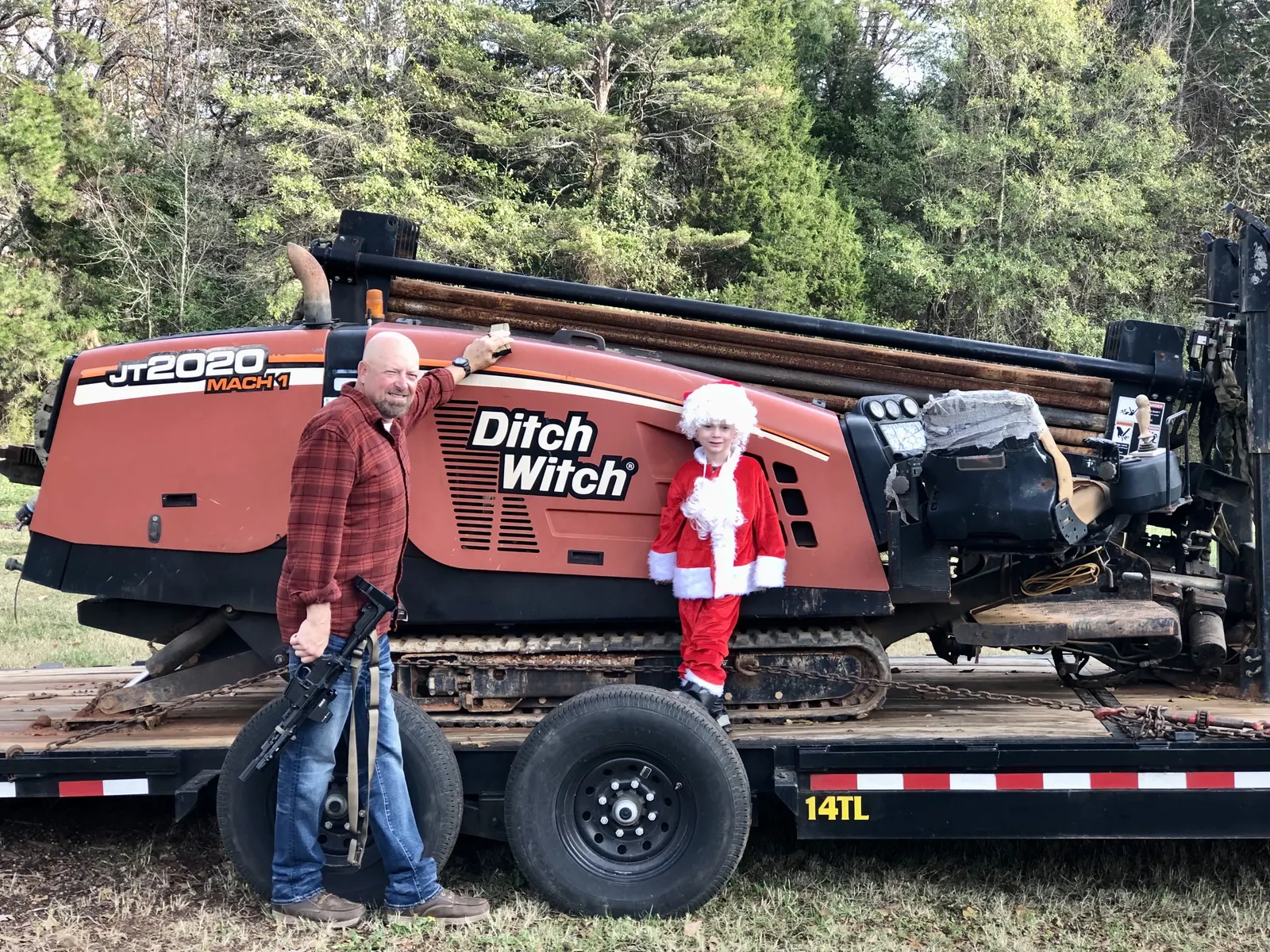
- Long bore across a major highway or multi-lane corridor (250–500+ feet): Two to three days. Our Ditch Witch JT-2020 handles these longer runs.
Boring length for road crossings in South Carolina commonly runs 50–500 feet, though the HDD equipment Sloan operates — including the Ditch Witch JT-5, JT-520, and JT-2020 — can handle longer runs when the project requires it.
Weather and soil conditions affect scheduling. Upstate SC red piedmont clay is generally cooperative for boring, but saturated ground after heavy rain can delay a job. We schedule around those conditions when possible.
For commercial underground utility projects, road crossings are often the critical-path item. Getting permits early — before the rest of the project is ready — keeps the job from stalling. We recommend starting the permit application as soon as the bore location is confirmed.
Frequently Asked Questions
Can you bore under a state highway in SC?
Yes. Boring under a state highway in South Carolina requires an SCDOT encroachment permit. Sloan Underground handles permit coordination and works within SCDOT right-of-way requirements so the project stays on schedule. We've bored under SC state routes across the Upstate and Midlands — it's routine work for us.
How deep does the bore go under a road?
Typically 3–6 feet minimum under paved roads. Major highways and interstates often require 5–8 feet of cover depending on the utility type and the road authority's specifications. Sloan verifies required depths with the permitting agency before the bore begins.
What utilities can be installed under a road by boring?
Water lines, gas lines, electric conduit, fiber optic conduit, sewer force mains, and storm drainage pipe can all be installed under a road via directional boring. The bore size — from 1.5 inches up to 12 inches and larger — scales to match the pipe being installed.
Is it cheaper to bore under a road or get a lane closure?
Boring is usually faster, less expensive, and avoids traffic disruption entirely. Open-cut road crossings require traffic control crews, asphalt saw-cutting, pavement restoration, and DOT inspection — costs that add up quickly. A bore eliminates most of that. For most utility crossings under two lanes, directional boring is the clear economic choice.