Quick Answer
If you hit a gas line, call 911 immediately and evacuate — don't try to fix it. If you hit an electric line, treat it as energized until the utility confirms otherwise. Hit fiber or telecom: not immediately dangerous, but you must report it and stop work. For every utility type, stop excavating, call the utility, and call 811 to report. Prevention is simple: call 811 at least 3 business days before any digging.
Tell us about the job
Family-owned since 1965 — we reply within one business day with a straight answer.
What to Do Immediately If You Hit a Utility Line
A utility strike is a fast-moving situation. The right response depends entirely on what type of utility you hit. Here's the breakdown by utility type:
- Stop all work immediately. Shut off any engine-powered equipment.
- Evacuate the area — get everyone at least 300 feet away from the strike.
- Do not use any ignition source. No cell phones near the site, no lighters, no vehicle keys.
- Call 911 from a safe distance.
- Call the gas utility's emergency line.
- Do not re-enter the area until the gas utility and emergency responders have cleared it and confirmed the gas is off.
- Do not attempt any repair. Gas line repairs require licensed gas contractors and utility authorization.
- Treat all struck conductors as energized — do not touch the line or any equipment in contact with it.
- If equipment is in contact with an energized line, stay in the cab (ground contact can complete a lethal circuit).
- Call 911. Call the electric utility immediately.
- Keep bystanders at least 50 feet away.
- Wait for the utility to confirm the line is de-energized and grounded before resuming work.
For water and sewer lines: Stop excavation, contain any flow if possible, and call the water utility to report the damage and request a repair crew. Water line strikes aren't life-threatening in the same way, but a broken water main can cause significant property damage and road undermining if left unaddressed.
For fiber optic and telecom lines: Fiber strikes are not immediately dangerous — there's no electricity in the line itself. However, you must stop work and report the strike to the utility or telecom company. Fiber damage can disrupt communications for hospitals, businesses, or data centers. The repair cost can be significant, and failing to report is a legal liability.
Who Is Liable When You Hit an Underground Utility?
Liability for a utility strike in South Carolina depends on a specific sequence of events: whether 811 was called, whether the utility was properly located and marked, and whether the excavator respected those markings.
| Scenario | Excavator Called 811? | Utility Marked Within Tolerance? | Liability |
|---|---|---|---|
| Best case (marked correctly, dug outside tolerance) | Yes | Yes | Shared / fact-specific |
| Excavator digs within 18" of marks without hand-digging | Yes | Yes | Excavator liable |
| Utility not marked within 3 business days | Yes | No | Utility may share liability |
| No 811 call made before excavation | No | N/A | Excavator fully liable + violations |
The "tolerance zone" in South Carolina is 18–24 inches on each side of the outer edge of a marked utility. Within that zone, hand-digging (or vacuum excavation) is required — power equipment must stop. This is the most common point where liability breaks down: an excavator calls 811, utilities get marked, but a mechanical bucket swings within 12 inches of a gas line and the tolerance zone defense disappears.
Sloan Underground calls 811 before every job, no exceptions. Sixty years of experience boring under roads, driveways, and established neighborhoods in Upstate SC means we've seen what happens when locates get skipped. We don't.
Calling 811 starts the clock on utility locate requests, but the excavator's safety obligations continue on-site. You must still: pothole (hand-dig) within the tolerance zone, respect markings even if the actual pipe location "looks" different, and treat any unmarked area as potentially containing utilities. Especially in Upstate SC, where older infrastructure is common and as-built maps can be unreliable.
The 811 Process in South Carolina
South Carolina's 811 system — the statewide one-call center — is both legally required and operationally essential. The process is straightforward:
- Call 811 or submit online at
sc811.comat least 3 full business days before any excavation. This is not optional — South Carolina law under the Underground Facilities Damage Prevention Act requires it. - Provide your dig site address and a description of the work.
- Each utility with buried infrastructure in the area will send a locator to mark the site with color-coded paint or flags.
- Wait until all utilities have responded (marked or confirmed "no conflict") before starting excavation.
The color-code standard used across South Carolina:
When flags and paint are placed, the locate is valid for a defined window — in South Carolina, typically 15 business days. After that window, a re-notify (a new 811 call) is required before work continues.
How Directional Boring Reduces Utility Strike Risk
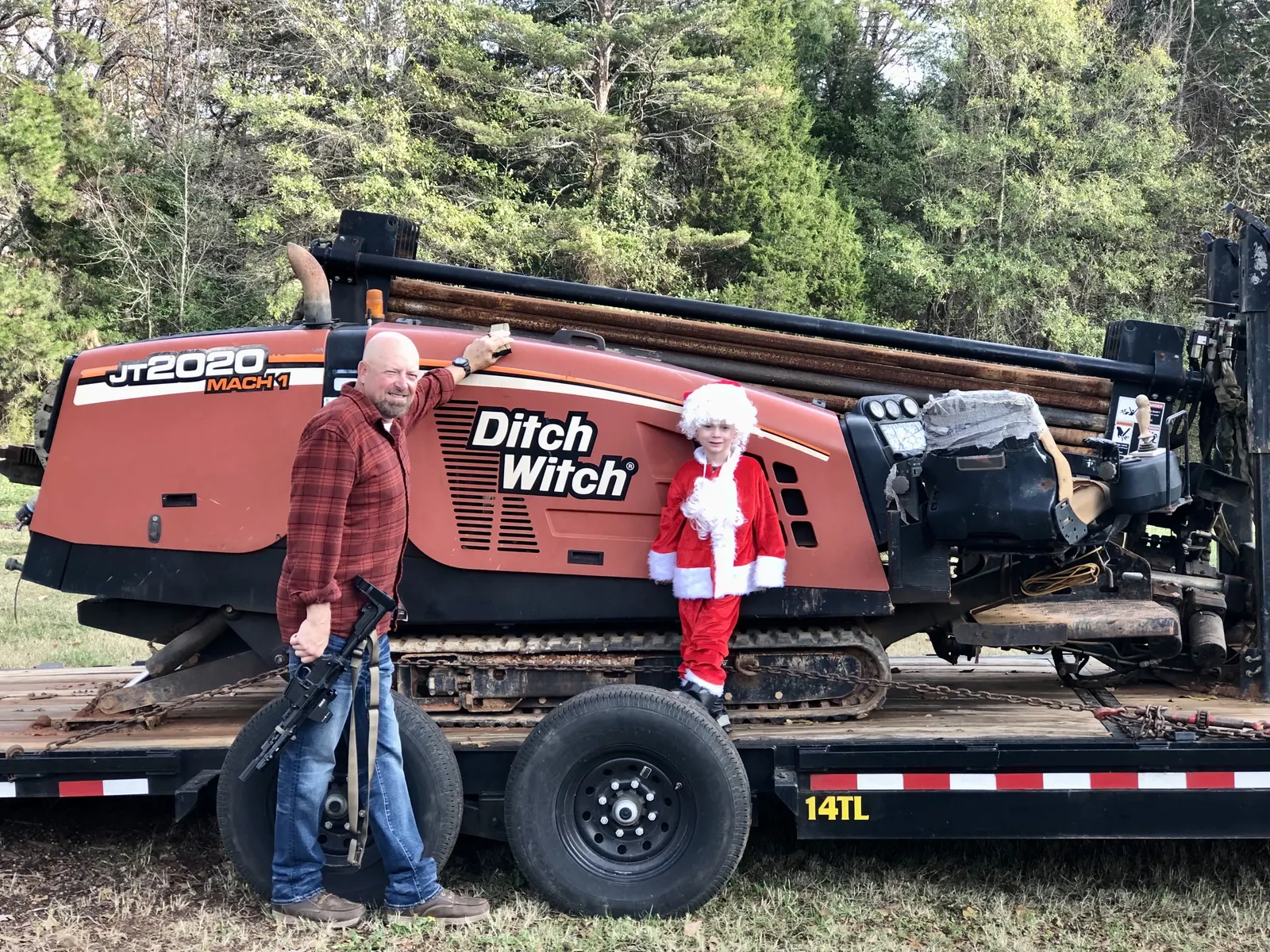
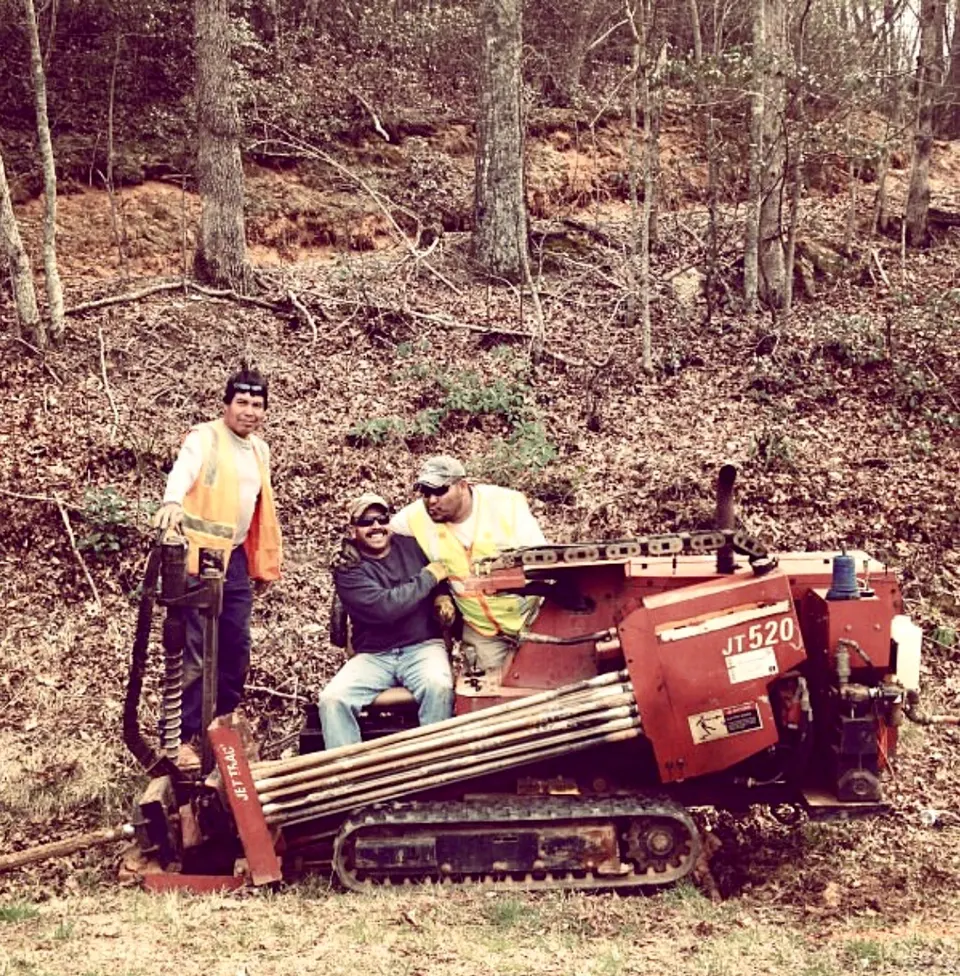
Sloan Underground has operated horizontal directional drilling equipment in South Carolina since 1965. Our fleet — Ditch Witch JT-5, JT-520, and JT-2020 — includes machines suited to residential bores under driveways and long commercial road crossings. Across all of that work, utility safety comes before schedule.
Here's how our process minimizes strike risk on every bore:
- 811 before every job, no exceptions. We don't start until locate flags are in the ground and every utility in the corridor has responded.
- Electronic locating equipment on site. We use electromagnetic locating tools to track our own bore head in real time, and to cross-check utility positions against what's marked on the surface.
- Bore path planned around conflicts. Before the pilot bit goes in, we review the marked utility positions and plan the bore path depth and trajectory to maintain safe clearances. On jobs like boring under a road, where utility density is highest, this planning step is especially important.
- Experience matters. Newer utilities that haven't been updated in as-built records, unmapped old infrastructure, and private utilities that don't register through 811 are real hazards in Upstate SC. Sixty years of experience on these soils means we know where to be cautious even when the marks say clear.
HDD doesn't eliminate utility strike risk — nothing does. But it reduces exposure by steering the bore path at depth and allowing precise control over where the drill head travels. When you plan the bore job for Greenville, Spartanburg, Anderson, or anywhere in the commercial underground utility corridor, safety is built into how we operate.
Frequently Asked Questions
Who do you call if you hit a gas line?
Call 911 immediately, then the gas utility. Evacuate the area — do not attempt repairs, do not use any ignition source, and do not re-enter until emergency responders and the utility have cleared the scene. A struck gas line is a life-safety emergency. Treat it as one.
Is it illegal to dig without calling 811 in SC?
Yes. South Carolina law requires calling 811 or submitting an online locate request before any excavation. Digging without calling 811 is a violation of the SC Underground Facilities Damage Prevention Act and creates significant civil and criminal liability if a utility is damaged. Fines and legal exposure are substantial.
What color flags mark gas lines?
Yellow flags or paint mark gas lines. Red marks electric power lines and cables. Blue marks potable water. Green marks sewer and drain lines. Orange marks telecommunications, fiber, CATV, and alarm lines. Pink marks temporary survey marks. White marks the proposed excavation area.
Can directional boring hit an underground utility?
Yes, which is why 811 locates are required before every bore. Even with electronic locating tools and experienced operators, unexpected or unmarked utilities exist. Sloan Underground calls 811 before every single job, uses electronic bore head tracking to confirm clearances, and plans bore paths around marked conflicts. Proper locates plus experienced operators minimize risk — but they don't eliminate it, which is why we take every job seriously.