
Replacing a water service line at a Lake Keowee or Lake Hartwell home usually costs more than the $2,000–$6,000 statewide bracket, because the run is longer: at roughly $15–$45 per foot for directional boring, a 150-foot lake run lands around $2,250–$6,750 and a 400-foot run around $6,000–$18,000. Rock, slope, retaining walls, and shoreline approvals push a job toward the top of its bracket; long runs and open ground pull it toward the bottom. Here’s the per-foot math, why lake lots price differently, how trenchless compares with open-cut once the slope has to be restored, and when a repair is enough. Sloan Underground Construction, a family-owned contractor founded in 1965 and licensed in South Carolina (General Contractor license #14665), works from its base in Fountain Inn.
How much does it cost to replace a water line at a lake home?
Replacing a water line at a lake home costs roughly $2,250 to $18,000, because lake runs are long and boring is priced by the foot. Sloan Underground Construction prices lake-home water line replacement by the foot plus the site conditions, not by a statewide average, because distance is the single biggest variable on a lake lot.
On most in-town lots the meter sits a few dozen feet from the house. On a Keowee, Jocassee, or Hartwell lot the meter is at the road and the house is down near the water, so the service line commonly runs 150 to 400+ feet. Applying the published $15–$45-per-foot range for directional boring gives these brackets:
| Scenario | Basis | Roughly |
|---|---|---|
| 150-foot run | $15–$45 per foot of directional boring | $2,250–$6,750 |
| 300-foot run | $15–$45 per foot of directional boring | $4,500–$13,500 |
| 400-foot run | $15–$45 per foot of directional boring | $6,000–$18,000 |
| Bores through rock | Scales with how much granite is in the path | $4,000–$20,000+ |
| Spot repair on a sound line | One isolated failure, small excavation | Hundreds to about $1,500 |
Two corrections to the raw math. Long runs trend toward the lower per-foot end because the rig setup and mobilization are spread across more footage — a 400-foot run rarely prices at $45 a foot. Rock, steep terraces, hardscape crossings, and shoreline approvals push toward the upper end. Treat every number above as a bracket; a real price needs someone walking the run from the meter to the house. For the statewide baseline these brackets are built on, see our guide to water line replacement cost in South Carolina.
Why do lake-home replacements cost more than in-town replacements?
Lake-home replacements cost more than in-town ones because of six drivers: run length, slope, rock, hardscape, approvals, and rig access. None of them show up on a flat subdivision lot, and knowing them lets you read a lake-lot estimate line by line.
Run Length
Meter at the road, house at the water. A 300-foot service line is five times the pipe, five times the bore, and five times the tracking of a typical in-town run. Length is the first number on any lake estimate, which is why the brackets above are built per foot. Our post on the cost to run a water line 500 or 1,000 feet covers the longest runs.
Slope and Terraces
A bore down a terraced lakefront slope has to be plotted so the entry and exit pits land on level ground, and the drill head has to be tracked from the surface the whole way to hold depth as the grade changes. That planning and tracking is labor a flat lot never needs.
Rock
Keowee and Jocassee lots sit on granite shelf; Hartwell lots mix red clay with rock pockets. Granite slows the bore, changes the tooling, and is the main reason a lake job climbs into the $4,000–$20,000+ rocky-terrain range. Sloan Underground Construction’s Ditch Witch JT-5, JT-520 and JT-2020 rigs bore clay, rock, and sand, but rock is never priced the same as clay.
Hardscape in the Path
Retaining walls, stone steps, paver terraces, and seawalls are the reason open-cut estimates on lake lots balloon. A bore passes beneath them; a trench goes through them and then pays to rebuild them. How the bore clears a wall without disturbing it is covered in our post on replacing a water line under a retaining wall.
Shoreline and HOA Approvals
Lake Hartwell is a U.S. Army Corps of Engineers lake; Lake Keowee and Lake Jocassee are Duke Energy lakes. Work inside their shoreline zones needs their approval, and communities like Keowee Key, The Cliffs at Keowee, and the Reserve at Lake Keowee run architectural review on anything that touches the lot. Approvals mainly add lead time: a replacement that stays on your lot above the shoreline zone is the simpler case.
Access for the Rig
A narrow, switchbacked lake driveway or a gated community changes where the rig can stage and how long setup takes. It is a modest line item, but it is a real one, and an honest estimate names it instead of folding it into a mystery number.
Is trenchless or open-cut cheaper on a lake lot?
Trenchless is cheaper than open-cut on nearly every Keowee and Hartwell lot once restoration is counted. An open trench from the road to the water has to be regraded, stabilized against erosion, replanted, and every wall, step and path it crossed rebuilt, and that restoration usually costs more than the pipe and labor combined.
The channel also has to be stabilized so the next storm doesn’t wash it into the lake, and a rebuilt stone wall never quite matches the original.
A directional bore replaces the line from a small pit at the meter and a small pit at the house. The slope, the walls, the terraces, and the shoreline landscaping never move, so the bill is the pipe, the bore, and the connections. That is why the all-in trenchless number beats the all-in open-cut number on almost every lake lot — the exception being a flat, open lot with a short run and nothing on top, where a trench can still be the cheaper option. The full comparison, including the erosion and steep-ground cases, is in our guide to trenching vs. directional boring for Upstate lake homes, and the per-foot method is on our horizontal directional drilling page.
| Method | Where the money goes | What is left on the slope | When it is cheaper |
|---|---|---|---|
| Trenchless bore | The pipe, the bore, and the connections. | Two small pits at the meter and the house, backfilled and seeded. | On almost every lake lot, once restoration is counted. |
| Open-cut trench | Pipe and labor, plus backfill, regrading, erosion control, replanting, and rebuilding every wall, step, and path crossed. | A channel down the slope until it heals. | Only on a flat, open lot with a short run and nothing on top. |
Ask Every Bidder One Question
“Does this price include putting the slope, the walls, and the landscaping back the way they were?” On a lake lot an open-cut bid that excludes restoration isn’t a lower price — it’s an incomplete one. A trenchless bid is naturally all-in because there is almost nothing to restore: two pits, backfilled and seeded. Compare the all-in numbers and the lake-lot answer is usually obvious.
When is a repair enough instead of a full replacement?
A spot repair is enough when the failure is one isolated event on an otherwise healthy line. Examples are a root strike, a section crushed during wall construction, or a single failed fitting; excavating that point and replacing the damaged section keeps the bill in the hundreds to roughly $1,500 range.
Full replacement is the smarter spend when the line is old galvanized steel or polybutylene, when this is the second leak on the same run, when pressure has dropped house-wide from internal corrosion, or when the repair dig would tear out a wall or terrace anyway: if you are paying for access, put a whole new line in the hole. Paying twice for two repairs on a dying 300-foot line costs more than one trenchless replacement. The post on repairing vs. replacing a leaking water service line walks through the decision.
What does the site visit and written estimate cover on a lake lot?
The site visit and written estimate are free and cover the whole run from the meter to the house. The crew finds the meter, measures the real distance, notes every wall, terrace, step, and tree the bore has to clear, looks for rock at the surface, and picks pit locations on level ground.
The visit also checks whether any part of the work falls inside the Corps or Duke Energy shoreline zone or needs your community’s review board. The written all-in price lists pipe, boring, and connections before anything is scheduled; confirm any permit or meter fees with your water district. The same process applies whether the lot is in Oconee County, Pickens County, or on the Anderson side of Hartwell.
How do you get started?
To get started, call (864) 386-1649 or request an estimate online to set up a site visit at the lake lot. The site visit walks the run from the meter to the house, and the written line-item estimate follows before anything is scheduled.
If the line you need is a new run to the water rather than a replacement, the guide to running water to a boat dock on Lake Hartwell or Keowee covers that job, and more lake-lot guides are in the Sloan Underground blog.
Frequently Asked Questions
How much does it cost to replace a water line at a Lake Keowee or Lake Hartwell home?
A trenchless water line replacement at a lake home typically lands between about $2,250 and $18,000, depending on length, rock, slope, and hardscape. Directional boring runs roughly $15 to $45 per foot in South Carolina, and a lake lot with the meter at the road and the house near the water is commonly 150 to 400+ feet. Long runs trend toward the lower per-foot end because mobilization is spread across more footage; granite and steep terraces push toward the upper end. The site visit and written estimate from Sloan Underground are free: (864) 386-1649.
Why does a lake-home water line cost more to replace than one in town?
A lake-home water line costs more to replace than one in town for four reasons. The run is longer, the lot is steep and terraced, the ground under Keowee and Jocassee lots is often granite shelf, and the path is usually crossed by retaining walls, stone steps, and landscaping that cost more to rebuild than the pipe itself. Shoreline approvals and HOA architectural review add lead time. None of those apply to a 60-foot run across a flat subdivision lawn, which is where the $2,000 to $6,000 statewide bracket comes from.
Is trenchless cheaper than open-cut on a lake lot?
Yes, trenchless is almost always cheaper than open-cut on a lake lot once restoration is counted. An open trench down a lake slope has to be regraded, stabilized against erosion, replanted, and any wall or stone path it crossed rebuilt, and that restoration line item usually exceeds the pipe and labor. A directional bore replaces the line from two small pits and leaves the slope, the walls, and the landscaping in place. On the rare flat, open lake lot with a short run, open-cut can still be the cheaper option.
Can a lake-home water line just be repaired instead of replaced?
Yes, a lake-home water line can be repaired when the failure is one isolated point on an otherwise sound line. A spot repair in the hundreds to roughly $1,500 range is the right call in that case. If the line is old galvanized steel or polybutylene, has leaked more than once, or the repair dig would tear up a wall or terrace anyway, replacing the whole run trenchlessly usually costs less than two repairs and removes the risk. A camera or pressure test settles it before anyone quotes.
Do I need permission from the lake authority or my HOA to replace the line?
Yes, a lake-home water line replacement often needs lake authority or HOA permission when any part of the work is near the shoreline. Lake Hartwell is a U.S. Army Corps of Engineers lake and Lake Keowee and Lake Jocassee are Duke Energy lakes; work within their shoreline zones needs their approval, and communities like Keowee Key, The Cliffs at Keowee, and the Reserve at Lake Keowee have architectural review boards that want to see the plan first. Confirm the requirements before scheduling. A bore that stays on your lot above the shoreline zone is usually simpler.
Related Articles
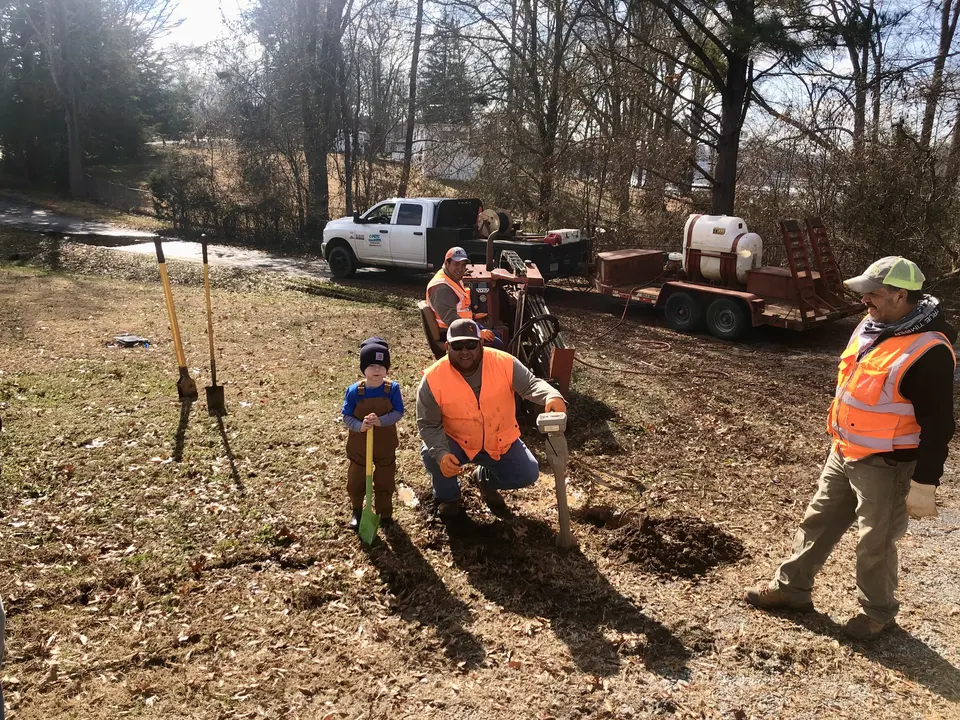
Running Water to a Boat Dock on Lake Hartwell or Keowee
Boring a continuous line down the slope to the dock — Corps vs Duke Energy rules, winterizing, and cost.
Read article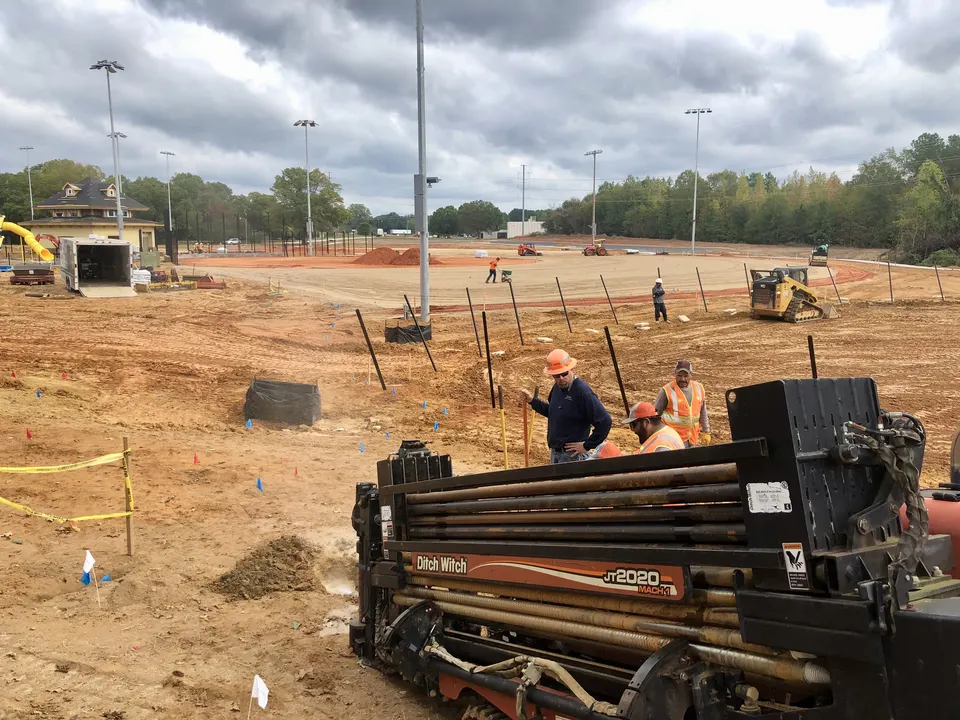
Trenching vs. Directional Boring for Upstate SC Lake Homes
When boring wins on steep, rocky Keowee and Hartwell lots, when a trench still fits, and what each costs.
Read article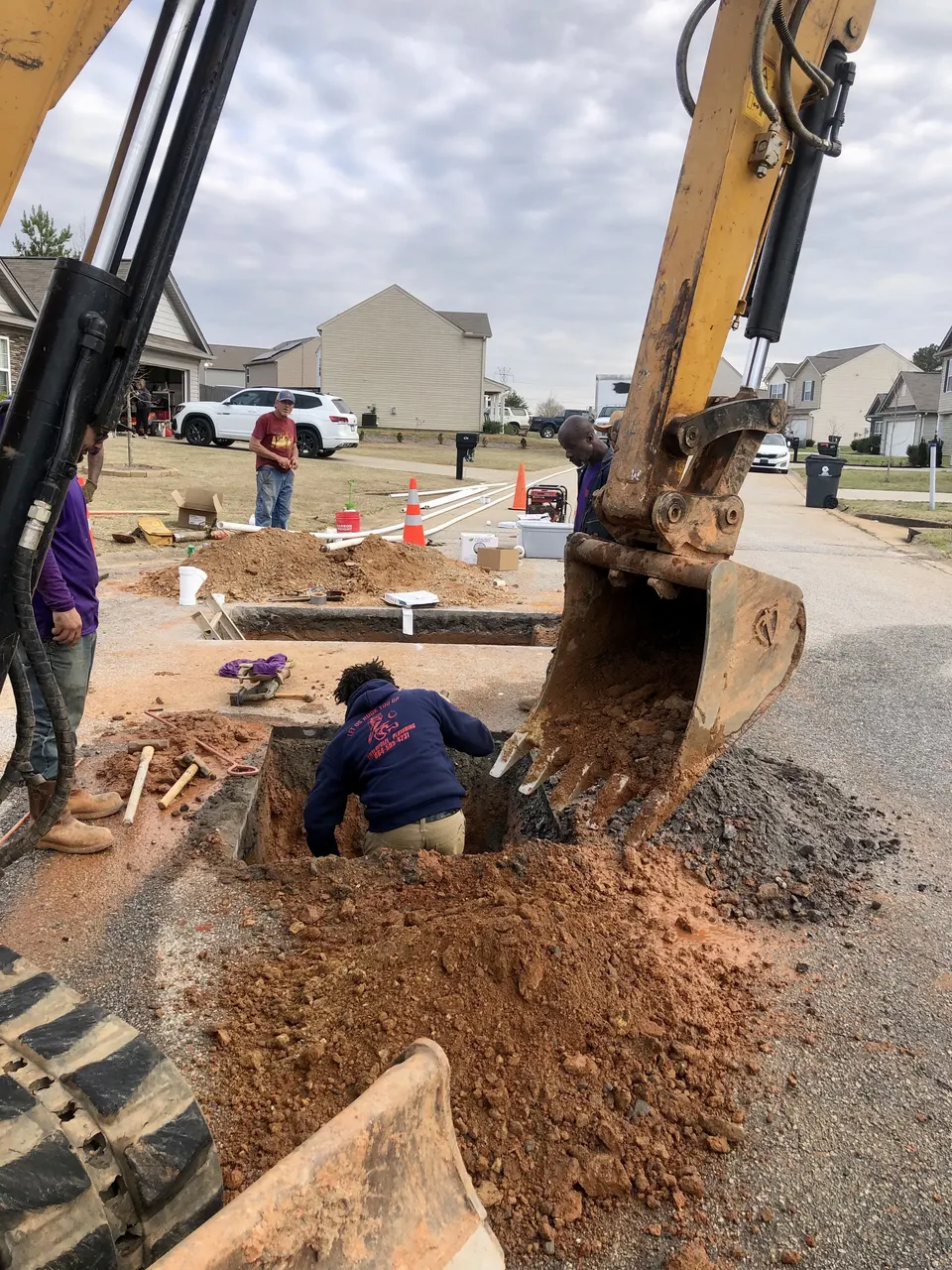
Water Line Replacement Cost in South Carolina (2026)
The statewide $2,000–$6,000 bracket, the six factors that drive it, and why trenchless wins on all-in cost.
Read article