
Trenchless sewer line installation puts a new sewer lateral in the ground without a trench: a directional drill bores a graded path beneath the yard from a pit near the house to a pit near the street tap, then pulls new HDPE or PVC pipe back through it, usually in one day. Sloan Underground Construction, the family-owned underground utility contractor at 208 Goldsmith Rd in Fountain Inn, does this work across Greenville, Simpsonville, Mauldin, Piedmont, Powdersville, Williamston, Travelers Rest, and Anderson. Here’s how trenchless sewer work differs from open-cut, how to tell whether your line needs repair or replacement, what it costs in Upstate South Carolina, and how the job actually runs.
Can a Sewer Line Be Installed Without Digging Up the Yard?
A sewer line can be installed without digging up the yard: Sloan Underground Construction bores it with a horizontal directional drill between two small pits. The one extra requirement is grade. A sewer lateral is a gravity line, so the bore has to hold a steady downhill slope from the house to the main or the septic tank.
The method is the same horizontal directional drilling Sloan Underground uses for water, gas, and fiber lines. Waste flows downhill with no pump behind it, so the slope has to hold the entire run. A trench makes that easy to see. A bore has to earn it.
Directional drilling handles it because the drill head is tracked from the surface every few feet. The operator reads depth and pitch on a locator as the bore advances, steering the head so the finished path drops at the grade the plumbing code and the sewer authority require for that pipe size. Once the pilot bore is through, a reamer opens it to size and the new pipe is pulled back in one continuous piece. The pipe goes in under the driveway, the sidewalk, the patio, and the root zones of mature trees rather than through them.
For aging pipe that is still structurally sound and holding grade, there is a second trenchless option: cured-in-place lining, where a resin-saturated liner is fed through the existing pipe and cured into a new pipe inside the old one. Lining rehabilitates; boring replaces. Which one fits depends on what a camera finds — more on that below.
Why Upstate Sewer Laterals Fail
Most Upstate homes built before the mid-1980s still drain through the original lateral — vitrified clay with a joint every few feet, cast iron that rusts from the inside, or Orangeburg (tar-impregnated fiber pipe) that slowly deforms under load. Every clay joint is an entry point for oak, maple, and crepe myrtle roots, and Piedmont red clay shifts enough through wet winters and dry summers to open those joints wider. When the line fails, it usually fails where it crosses the driveway or the front-yard trees — exactly where trenching costs the most.
Does Your Sewer Line Need Repair, Replacement, or a New Install?
A sewer line with one isolated failure needs a spot repair, a line failing along its length needs replacement, and a property with no lateral needs a new install. All three get searched as “trenchless sewer line repair,” and they carry very different prices. A camera inspection shows which one you have.
Spot Repair — One Isolated Failure
A single root intrusion, one crushed section from old construction, or one separated joint on an otherwise healthy line. Excavate that one point (or line that one section), fix it, and you’re done for a fraction of full-replacement cost. Symptoms: one recurring slow drain, one soggy spot in the yard.
Full Replacement — The Line Is at End of Life
Multiple cracks, offsets, or bellies on camera; clay, cast iron, or Orangeburg pipe; a second backup on the same run; sewage smell in the yard; or a lateral that has lost its grade. Patching a dying line just moves the next failure down the pipe. A trenchless bore replaces the whole run in a day — see our guide to trenchless pipe installation cost and process.
New Installation — No Lateral Exists Yet
A new build, a detached garage or in-law suite, an addition on the far side of the house, or a septic-to-sewer conversion when the municipal main reaches your street. The lateral is bored from the structure to the new tap and inspected before it’s tied in.
The warning signs overlap with a failing water line, but the tells are different: a water line leak spins the meter and raises the bill, while a sewer problem shows up as gurgling drains, backups at the lowest fixture in the house, a persistent sewage odor, or a patch of grass that’s greener and softer than the rest of the yard. If you’re not sure which line you’re dealing with, our post on the signs a water line is leaking helps rule one out.
What Does Trenchless Sewer Line Installation Cost in Upstate SC?
Trenchless sewer line installation in Upstate SC costs roughly $2,000 to $7,000 for most residential laterals, driven by length, diameter, depth, soil, and what the line passes beneath. Those are brackets, not quotes: a real price needs an on-site look at the cleanout, the tap, and everything in between.
The number that matters is the all-in total, because open-cut and trenchless bills are built differently:
| Job | What gets dug up | Rough cost | Surface restoration |
|---|---|---|---|
| Open-cut through a driveway (120 ft) | A trench the full length of the run | Roughly $2,000 in pipe and labor | Around $6,000 to demolish and repour the driveway, plus lawn and landscaping |
| Same run, trenchless | Two small pits | About $4,500 total | Pits backfilled and seeded |
| Spot repair on a sound line | The one failure point | Hundreds to roughly $1,500 | Depends on depth and what sits on top of the failure point |
Two more line items sit outside the table. A camera inspection is a modest cost that often pays for itself by turning a guessed “replace everything” into a targeted repair, or the reverse. Permit and tap or inspection fees are set by the sewer authority or municipality and are confirmed in the estimate.
Open lawn with nothing on top is the one case where open-cut can come out cheaper. The moment the line crosses a driveway, a walkway, a patio, or the roots of a tree you want to keep, trenchless wins on total cost — the full breakdown is in our guide to directional boring cost in South Carolina.
How Does a Trenchless Sewer Line Replacement Work, Step by Step?
A trenchless sewer line replacement works in six steps: camera and locate, grade plan, two small pits, pilot bore, ream and pull, then connect and inspect. Sloan Underground Construction runs a typical residential lateral in that order, from the first site visit to the sewer authority’s inspection of the tap.
- Camera and locate. The existing lateral is camera-inspected and its path, depth, and failure points are marked. SC 811 locates every other buried utility in the yard — free, and required by law before any boring.
- Grade plan. The elevation at the house cleanout and at the tap set the slope the bore has to hold. Depth, pit locations, and any obstacles along the path are plotted before the rig arrives.
- Two small pits. One at the house connection, one at the street tap or septic inlet. That is the entire excavation.
- Pilot bore. The Ditch Witch drills the steerable pilot path, tracked from the surface and held to grade.
- Ream and pull. The bore is reamed to size and the new HDPE or PVC sewer pipe is pulled through in one continuous run — no joints buried under the yard.
- Connect and inspect. The new line is tied in at both ends, the sewer authority inspects the tap, the pits are backfilled and seeded, the site is cleaned up, and the crew walks the property with you before leaving.
Because the drill goes beneath the surface, the process is the same whether the line crosses open grass, a concrete driveway, or a slab. Our post on boring under a driveway without damaging it shows what those two pits look like when the crew leaves.
Do You Need a Permit to Install a Sewer Line in Upstate SC?
A sewer line installation in Upstate SC needs a tap or connection approval from the sewer authority that owns the main. A bore under a state-maintained road also needs an SCDOT encroachment permit, and city or county streets have their own process. Confirm the offices for your address; the written estimate lists them.
This matters most when the main sits on the far side of the street. An open-cut crossing means a pavement cut, traffic control, and a patch the road owner has to accept. A bore passes under the pavement between a pit in your yard and a pit at the tap, which is the same approach described in our post on boring under a road. Either way the SC 811 locate comes first, and the sewer authority inspects its own connection before the pits are closed.
Where Does Sloan Underground Install Sewer Lines?
Sloan Underground Construction installs sewer lines across the Greenville metro and the wider Upstate from its base at 208 Goldsmith Rd in Fountain Inn. That covers Simpsonville, Mauldin and Fountain Inn along I-385, Piedmont and Powdersville on the Anderson County line, Williamston, Travelers Rest, Greer, Taylors, Anderson and Greenville.
City pages carry the local detail: trenchless sewer and water lines in Simpsonville, Powdersville, Travelers Rest and Greenville, with county coverage on the Anderson and Greenville County pages.
The ground is the same story across the region: red Piedmont clay that bores cleanly, broken up by granite pockets and rock shelves that slow any method down. The subdivisions that went in around Simpsonville and Mauldin through the 1970s and early 1980s are now at the age where laterals fail: original clay pipe, mature hardwoods planted at the same time, and driveways poured directly over the lateral.
How Does the Estimate Visit Work?
The free estimate is a site visit followed by a written, line-item price, and neither costs anything. Sloan Underground Construction finds the cleanout and the tap, measures the run, notes what the new line has to pass under, checks the grade the lateral needs, and marks where the two pits would go.
If the line hasn’t been camera-inspected yet, that’s the first recommendation, because it decides repair versus replacement before anyone quotes either. The written price includes any permit or inspection fees the sewer authority charges, and you have it before anything is scheduled.
Sloan Underground Construction was founded in 1965 and holds South Carolina General Contractor License #14665. The crew runs the same trenchless pipe installation method Sloan Underground uses for storm drainage and utility pipe on sewer laterals. Call (864) 386-1649 or send the job details through the form above. More guides are on the Sloan Underground blog.
Frequently Asked Questions
Can a sewer line really be installed without digging a trench?
A sewer line can be installed without a trench: a horizontal directional drill bores a steerable path beneath the yard between a small pit near the house and one near the street tap or septic connection, then pulls new HDPE or PVC sewer pipe back through the bore. The drill head is tracked from the surface the whole way, so the operator holds the downhill grade a gravity sewer lateral needs. The lawn, driveway, and landscaping above the line never move.
How much does trenchless sewer line installation cost in Upstate SC?
Most residential trenchless installs run roughly $2,000 to $7,000 depending on length, pipe diameter, depth, soil, and what the line has to pass under. The number to compare is the all-in total: a 120-foot open-cut replacement through a driveway might be $2,000 in pipe and labor plus $6,000 to rebuild the driveway, while the same run trenchless is about $4,500 total and finishes in a day. Call Sloan Underground Construction at (864) 386-1649 for a written price on your run.
How do I know if my sewer line needs repair or full replacement?
A sewer line with one isolated problem (a single root intrusion, a crushed section from old construction, one bad joint) needs a repair, not a replacement. Repeated backups, multiple cracks or offsets on a camera inspection, old clay, cast iron, or Orangeburg pipe, or a lateral that has lost its grade all point to replacement. A camera inspection settles the question before anyone quotes a fix.
How long does a trenchless sewer line replacement take?
A typical residential lateral is bored, pulled, connected, and inspected in a single day. Open-cut replacement usually stretches longer once trenching, backfill, and surface restoration are added. Long runs, rock, or a congested utility corridor can extend either method.
Does trenchless work on the sewer line under my driveway or slab?
Trenchless boring works under a driveway or slab; that is the situation it was made for. The bore passes beneath driveways, patios, sidewalks, mature trees, and slab foundations without cutting them. Sloan Underground runs Ditch Witch JT-520 and JT-2020 directional drills on exactly this work across Greenville, Simpsonville, Mauldin, Piedmont, Powdersville, Williamston, Travelers Rest, and Anderson.
Related Articles
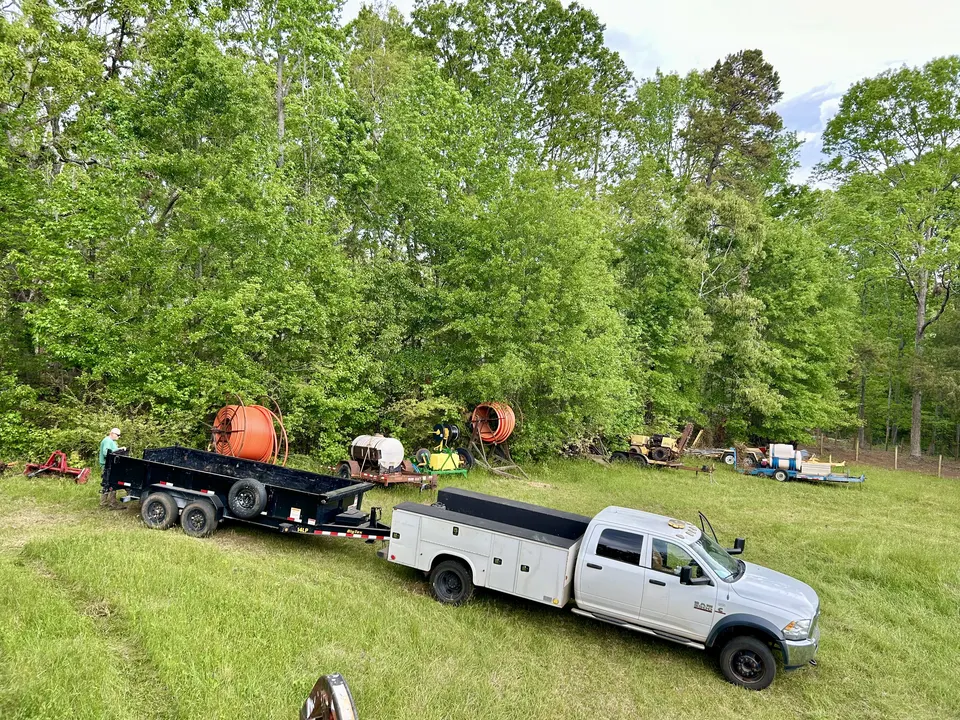
Trenchless Pipe Installation: Cost & How It Works
The four-step bore process, honest cost ranges, and why trenchless beats open trenching once restoration is counted.
Read article
How to Bore Under a Driveway Without Damage
What the two entry pits look like, how deep the bore runs, and why the concrete never gets cut.
Read article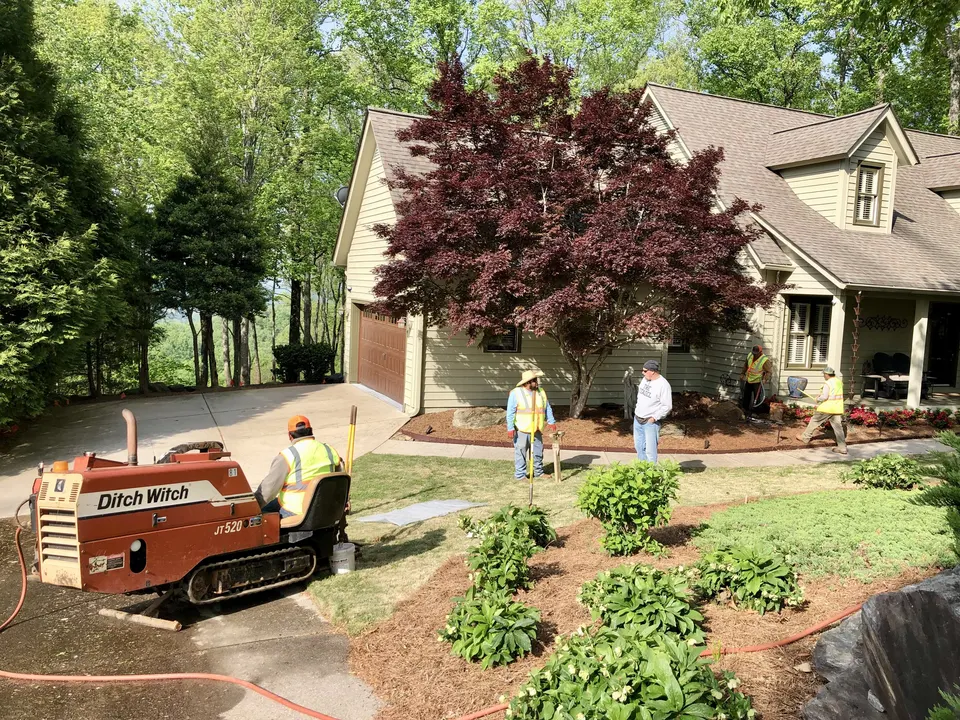
Will Trenching Kill My Trees?
How root-zone excavation damages mature trees — and how boring beneath them avoids it entirely.
Read article