
Trenchless pipe installation puts a new water, gas, or utility line underground without digging a trench across your property — a directional drill bores a path between two small pits and pulls the new pipe through it, and most residential jobs in the Upstate cost $1,500–$3,500. The lawn, driveway, and mature trees above the line stay untouched, which is why trenchless usually beats open trenching once you count restoration. Here’s how the process works, what drives the price, and which pipes it works for — from the crew behind trenchless pipe installation across the SC Upstate.
What Is Trenchless Pipe Installation?
Trenchless pipe installation is any method that places or replaces an underground pipe without excavating an open trench along its full length. Three methods cover nearly all residential and light commercial work, and they solve different problems:
Horizontal Directional Boring — New Lines
A steerable drill rig bores a pilot path underground between an entry pit and an exit pit, then pulls the new pipe back through the enlarged bore. It’s the method for installing a new line where none exists — or a new run to replace a failed one on a fresh path. This is what Sloan Underground Construction does, using Ditch Witch JT-520 and JT-2020 rigs. See our horizontal directional drilling service for the full capability list.
Pipe Bursting — Same-Path Replacement
A bursting head is pulled through the old pipe, fracturing it outward while dragging the new pipe into the space it occupied. It replaces a failed line along its exact existing path — common for sewer laterals — but it needs a pullable old pipe to follow and access pits at both ends.
Slip Lining — Renewing a Host Pipe
A smaller-diameter liner pipe is inserted inside the existing pipe, which stays in the ground as a host. It’s fast and cheap when the old pipe is structurally intact and losing some diameter is acceptable — mostly a sewer and culvert technique, not a fit for pressurized water or gas service lines.
For homeowners in the Upstate, directional boring is the method you’ll almost always see quoted: most residential projects are new water lines, gas lines, or conduit where the old path is failed, undersized, or nonexistent — and boring works whether or not there’s an old pipe to follow.
How Does the Trenchless Installation Process Work?
A directional bore follows the same four-stage sequence on nearly every residential job — locate, pilot bore, back-ream, pull. From locates to finished pipe, most single-family installations are complete within one to two weeks, with the drilling itself usually done in a day.
- Utility locates and drill planning. SC811 marks every public utility crossing the property — power, gas, water, communications — at least three working days before drilling. The crew plans the bore path around those marks, sets the entry and exit pits, and confirms depth requirements for the pipe going in.
- Pilot bore. The drill rig steers a small-diameter drill head along the planned path underground. A walkover locator tracks the head’s exact depth and position in real time, so the operator can steer under the driveway, beneath tree roots, and past marked utilities with the path verified foot by foot.
- Back-reaming. When the drill head surfaces at the exit pit, it’s swapped for a reamer — a cutting head that’s pulled back through the pilot hole to enlarge it. The bore is opened to roughly 1.5 times the diameter of the pipe it will carry, giving the pull clearance without disturbing the ground above.
- Pipe pull and tie-in. The new pipe — fused HDPE for water, coated steel or polyethylene for gas, PVC or HDPE conduit for power and fiber — is attached behind the reamer on the final pass and pulled through the bore in one continuous run. The crew then makes the connections at each end, pressure-tests, and backfills the two pits.
Why Boring Suits Upstate Ground
The Piedmont’s red clay is actually good drilling ground — dense enough to hold a clean, stable bore path without collapsing. The challenge here is the rock that clay gives way to, sometimes without warning. That’s an equipment-and-experience problem: Sloan Underground Construction has drilled this ground since 1965, four generations of the same family, and William Sloan is on-site on jobs — so when the drill head meets granite instead of clay, the plan adjusts on the spot rather than the job stalling.
What Does Trenchless Pipe Installation Cost?
Most residential trenchless installations in the Upstate fall between $1,500 and $3,500 — a typical water service line, gas line, or conduit run bored under a yard and driveway. That range widens in both directions depending on the variables below, which is why any real answer starts with a site visit and a free estimate rather than a flat per-foot rate.
- Bore length — the single biggest driver. A 60-foot meter-to-house run and a 300-foot rural setback are different jobs.
- Pipe diameter and material — a 1-inch HDPE water line pulls easier than a 4-inch conduit bank, and material costs differ.
- Soil and rock — clay bores fast; rock drilling is slower and harder on tooling, and it raises the price.
- Obstacles and crossings — existing utilities to weave past, driveways and roads to pass beneath, and required depths all shape the drill plan.
- Tie-in work — connections at the meter, the house, or the ISP handhole are part of the finished job, not extras.
The comparison that matters is against open trenching with restoration counted. Trenching often looks cheaper on the excavation line — an open cut is simpler than a steered bore. But the trench bill doesn’t end when the pipe is in: cutting and repouring a concrete driveway section, replacing sod across the lawn, re-running irrigation lines the trench severed, and re-landscaping can add anywhere from a few hundred to several thousand dollars — and a mature tree lost to root damage can’t be bought back at any price. On a bare dirt path with nothing above it, trenching can genuinely be the cheaper call. Across a finished, landscaped Upstate yard, the totals usually converge or flip in trenchless’s favor. For a deeper breakdown of drilling prices specifically, see our guide to directional boring cost in South Carolina.
Which Pipes Can Be Installed Trenchless?
Directional boring installs nearly every buried utility a home or business needs — the drill doesn’t care what the pipe carries, only its diameter and pull strength. The four most common installations across the Upstate:
Water Service Lines
The most frequent residential bore: a new HDPE line from the meter to the house, replacing failed galvanized or polybutylene pipe. Because the bore takes a fresh path, the old leaking line can simply be abandoned in place. This is the backbone of our water line replacement work.
Gas Lines
New gas service for a converted furnace, standby generator, pool heater, or outdoor kitchen — bored at code depth from the meter to the appliance with a tracer wire pulled alongside, then pressure-tested before tie-in.
Electrical Conduit
Underground power to a detached garage, workshop, well pump, or gate — conduit pulled through the bore, ready for the electrician’s wire. No trench across the yard between the panel and the outbuilding.
Fiber and Communications
Fiber drops and communications conduit for homes and commercial sites, including road and driveway crossings where trenching isn’t an option at all.
Will Trenchless Installation Tear Up My Yard, Driveway, or Trees?
No — the surface disruption is limited to a small entry pit and exit pit at the ends of the bore, each backfilled the same day the pipe goes in. Everything between them is untouched: the drill path runs several feet underground, beneath lawn, hardscape, and roots.
That protection matters most in three places. Driveways and walkways stay whole because the bore passes under them — no saw cuts, no repour, no color-mismatched concrete patch; our post on boring under a driveway without tearing it up covers exactly how that pass works. Established lawns and landscaping keep their irrigation, sod, and beds intact. And mature trees survive: an open trench through a root zone severs the feeder roots a tree depends on and can kill it over the following seasons, while a bore passes below the root zone entirely — the full mechanics are in Will Trenching Kill Your Trees?. A 40-year-old oak is the one part of a property no restoration budget can put back.
Where Does Sloan Underground Install Trenchless Pipe?
Sloan Underground Construction is based in Greenville and installs trenchless water, gas, conduit, and fiber lines across the Upstate — Powdersville, Piedmont, and Easley to the west, Mauldin and Simpsonville down the Golden Strip, Greer to the northeast, and Williamston and Anderson along the Highway 29 corridor — plus the Midlands and Western North Carolina. It’s the same ground the family has drilled for four generations, so the crew knows where the clay runs deep and where the granite starts before the rig unloads. Licensed and insured, free estimates on every job: call (864) 386-1649 or start at our trenchless pipe installation page.
Frequently Asked Questions
What is trenchless pipe installation?
Trenchless pipe installation is any method that puts a new underground pipe in place without digging an open trench along its whole path. The most common residential method is horizontal directional boring: a drill rig steers a pilot bore underground between two small pits, then pulls the new pipe back through the bore. The lawn, driveway, and landscaping above the line stay intact.
How much does trenchless pipe installation cost?
Most residential trenchless installations in the Upstate — a water service line, gas line, or conduit run bored under a yard or driveway — land in the $1,500 to $3,500 range. The final number depends on bore length, pipe diameter and material, soil conditions (red clay bores differently than rock), and how many utilities have to be located and avoided. Longer runs and road crossings scale higher. Sloan Underground provides free estimates, so you get a real number for your property before committing.
How long does a trenchless installation take?
A typical residential bore — locates already completed — is usually a one-day job: a few hours to set up and drill the pilot bore, then the back-ream and pipe pull. Utility locates through SC811 must be requested at least three full working days before digging, so from first call to finished pipe, most projects wrap inside one to two weeks. Longer commercial runs or rock drilling can add time.
Does directional boring work in rocky or clay soil?
Yes. Upstate red clay is actually a favorable drilling medium — it holds a clean bore path well. Rock is harder and slower, but purpose-built drill heads handle most of what the Piedmont serves up. Sloan Underground runs Ditch Witch JT-520 and JT-2020 rigs and has been installing underground utilities in this soil since 1965, so the equipment and the drill plan are matched to local ground conditions, not a generic spec.
Will trenchless installation damage my yard or driveway?
No — that is the point of the method. The only excavation is a small entry pit and exit pit at the ends of the bore, each roughly the size of a laundry basket. The drill path runs beneath your lawn, driveway, walkways, and tree roots, so there is no trench to backfill, no concrete to cut and repour, and no sod to replace. Both pits are backfilled and tamped when the pipe is in, and most yards show almost no trace of the work within a few weeks.
Related Articles
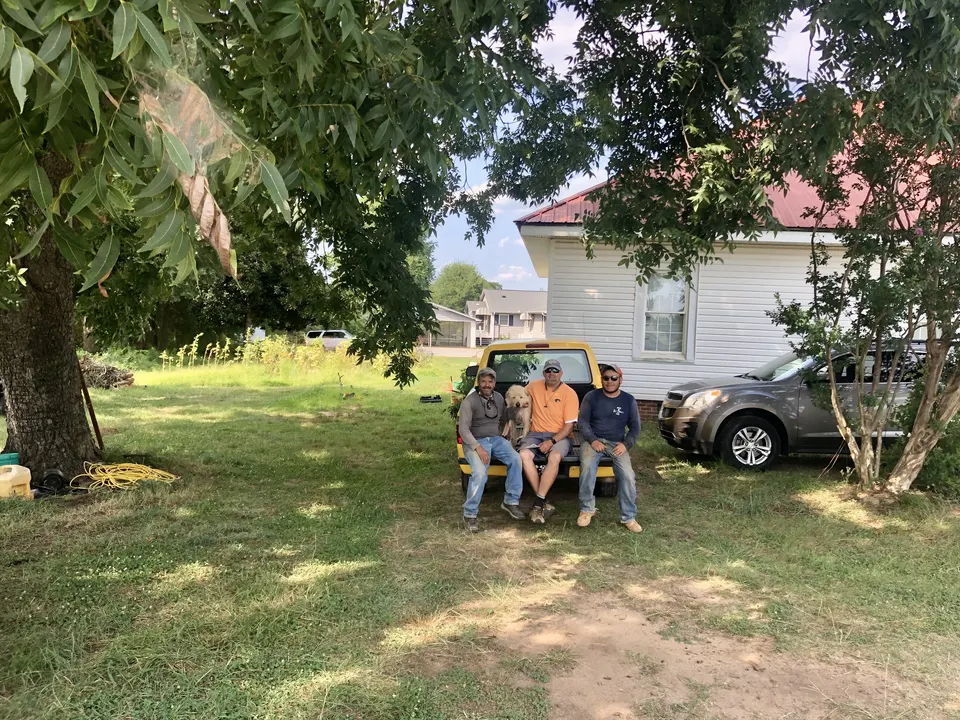
Bore Under a Driveway Without Tearing It Up
How directional boring passes beneath concrete, asphalt, or pavers — leaving the surface completely intact.
Read article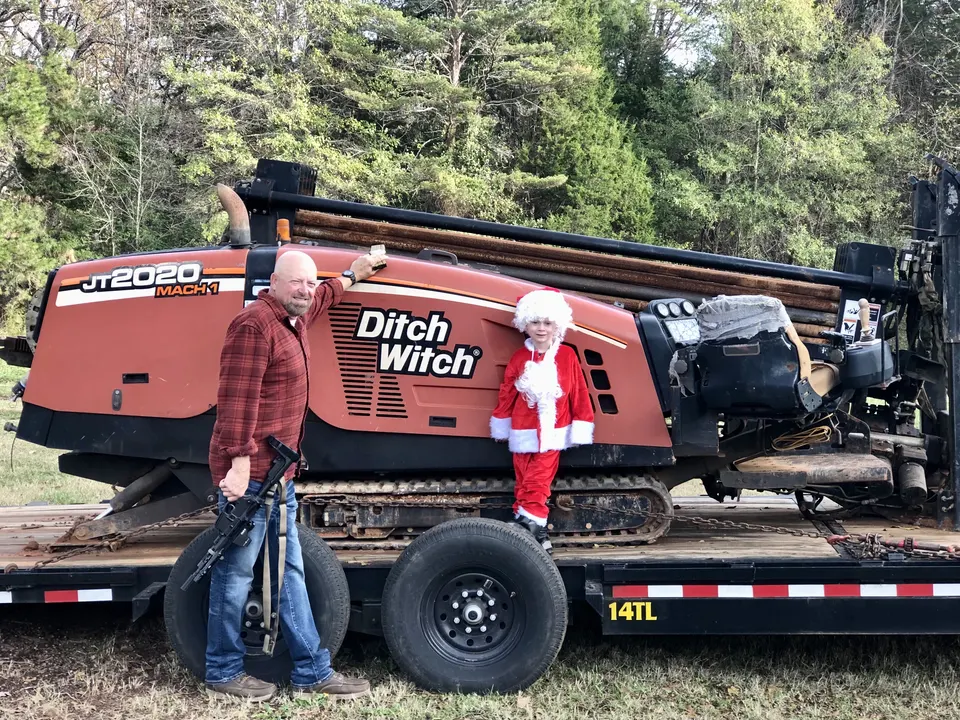
Directional Boring Cost in South Carolina
What residential and commercial bores run across SC — and the variables that move the quote.
Read article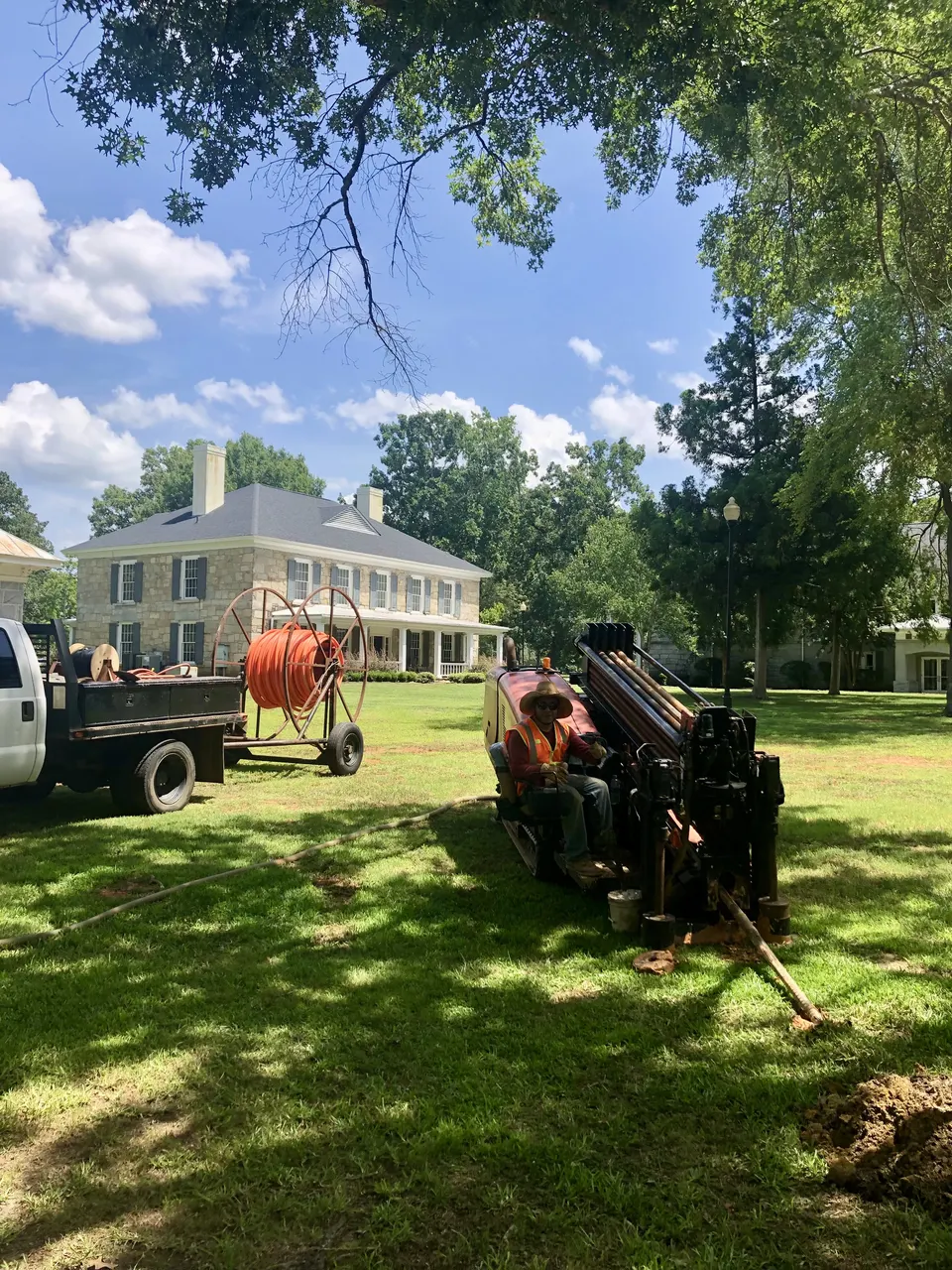
Trenchless Sewer Line Installation & Repair in Upstate SC
How a sewer lateral is bored to grade without a trench, repair vs replacement, and honest Upstate costs.
Read article