
Choose an underground utility contractor by verifying licensing and insurance, confirming they call 811 for utility locates on every dig, and asking whether they own their directional drilling equipment or rent it. Add four more questions — restoration policy, who pulls permits, timeline honesty, and local references — and you'll filter out almost every bad crew before a shovel touches your property. Here's what a real underground utility contractor does, the seven questions that matter, and the red flags that should end the conversation.
What Does an Underground Utility Contractor Actually Do?
An underground utility contractor installs, replaces, and repairs the buried lines that connect a building to the outside world — water services, sewer laterals, gas lines, electrical conduit, and fiber — using excavation and trenchless equipment that plumbers and electricians typically don't own. The work starts at the meter, the transformer, or the tap, and ends where the line reaches the structure.
That's the key distinction people miss when they search "underground utility contractor near me" and get a list of plumbing companies. A plumber's world is the piping inside the building; an electrician's is the interior wiring and panels. The buried run across your yard — under the driveway, past the oak tree, through forty feet of Upstate red clay — is a different trade with different machines: excavators, trenchers, and horizontal directional drills that bore beneath the surface instead of cutting it open. On many projects the trades hand off to each other: Sloan Underground places the new water line or conduit, and your plumber or electrician makes the final connection at the house.
Scale matters too. A crew set up for residential underground utilities — a single service line to a home — is doing a fundamentally similar but smaller version of what a commercial underground utility contractor does across a retail pad or subdivision: multiple utilities, deeper cover, tighter specs, and inspectors on site. A contractor who works both ends of that range has usually seen whatever your property is about to throw at them.
What 7 Questions Should You Ask Before Hiring?
Seven questions separate professional underground utility companies from crews you'll regret: licensing and insurance, the 811 locate process, owned versus rented equipment, restoration policy, permits, timeline honesty, and local references. Ask all seven — the answers take ten minutes and can save you a destroyed yard or a struck gas line.
1. Are You Licensed and Insured for Utility Work?
Ask for the license classification and current certificates of insurance — general liability plus workers' comp for every person on the crew. Utility work carries risks a handyman policy doesn't cover: a struck gas or fiber line can cause damage far beyond your lot line. A legitimate contractor produces documents the same day; a bad one changes the subject.
2. Walk Me Through Your 811 Locate Process
The right answer is specific: they notify SC811 (or NC811) before every dig, wait the required working days for marks, and hand-expose or pothole near marked lines instead of trusting paint blindly. They should also explain how they find private lines 811 doesn't mark. Our post on what happens when you hit an underground utility shows exactly why this question is non-negotiable.
3. Do You Own Your Equipment — Including a Directional Drill?
Ownership of directional drilling rigs is the clearest single marker of a serious underground utility contractor. An owned drill means trenchless installation is a first option, not an upsell — and no rental fees hiding in your quote. Sloan Underground runs its own Ditch Witch JT-520 and JT-2020 drills on jobs across the Carolinas.
4. What's Your Restoration Policy?
Get it in writing: what happens to the lawn, driveway, and landscaping when the utility is in? A good contractor tells you exactly what gets bored under versus opened up, how spoil is handled, and what condition the surface is left in. If trees are in the path, read will trenching kill my trees before you accept an open-cut plan.
5. Who Pulls the Permits?
The contractor should — full stop. Water, sewer, and gas connections in Upstate SC jurisdictions require permits and inspections, and the crew doing the work should handle the paperwork and meet the inspector. A contractor who asks you to pull an owner's permit is usually dodging licensing scrutiny, and it shifts liability for the work onto you.
6. What's a Realistic Timeline — Including the Waiting?
An honest answer includes the parts the contractor doesn't control: three-plus working days for 811 marks, permit turnaround, utility-company scheduling for meter sets or tie-ins, and inspection windows. A residential bore itself often takes a day; the calendar around it takes longer. Anyone promising "we can start tomorrow" on a job that requires locates is telling you they skip locates.
7. Can You Give Me Local References?
Ask for recent jobs in your area — not a polished portfolio, but addresses and homeowners or builders you can actually contact. Soil is local knowledge: a crew that has bored through Piedmont red clay and Western NC rock knows things a crew from somewhere flat and sandy doesn't. Local references also prove the contractor will still be reachable next year.
What Red Flags Should Rule a Contractor Out?
Three red flags should end the conversation immediately: a crew that knocks on your door uninvited after a storm, a contractor who wants cash only, and anyone willing to dig without utility locates. Each one signals a business built to disappear when something goes wrong.
- Door-knockers after storms — legitimate underground utility companies book work through estimates and referrals, not by canvassing damaged neighborhoods for deposits
- Cash-only, large deposit up front — no paper trail means no recourse; a real contractor invoices against a written scope
- No 811 locates — "we know where everything is" precedes most strike incidents; locates are law, not a courtesy
- No written estimate or contract — a verbal number for buried work guarantees a dispute about what was included
- Can't name their equipment — a contractor who owns machines can tell you the make and model without thinking; vagueness usually means renting, subbing, or hand-digging
- Pressure to skip permits — unpermitted utility work surfaces at inspection time when you sell the property, and the fix costs more than the original job
Why Owned Directional Drills Change the Job
A horizontal directional drill installs a utility beneath your yard, driveway, or trees through two small pits instead of an open trench — but only contractors who own one offer it as the default. Sloan Underground's Ditch Witch JT-520 and JT-2020 rigs mean the trenchless option is priced into the estimate from the start, sized to the bore, and run by a crew that operates the same machines every week in the same red clay. Renters pass along daily rates, learn the machine on your job, and quietly steer bids back toward trenching.
Why Do Equipment Ownership and Experience Matter So Much?
Because underground work is invisible until it fails, the two things you can actually verify before hiring — what a contractor owns and how long they've been doing this — are your best predictors of what happens below grade. Machines and tenure can't be faked on the day the crew shows up.
Sloan Underground Construction has been family-owned since 1965 — four generations of the same family putting utilities in Carolina ground — and William Sloan is on-site on jobs, not managing from an office. That kind of continuity shows up in small decisions: where to set the bore pits so the driveway survives, when clay is too wet to compact honestly, which inspector wants what documented. It's the difference between a company that installs underground utilities and a crew that rents equipment when a job comes along.
Experience also shapes the price conversation. A contractor who has bored hundreds of Carolina crossings can quote from evidence rather than padding for the unknown — our breakdown of directional boring costs in South Carolina shows the ranges honest bids fall into and why quotes far below them usually leave something out.
What Should a Good Estimate Include?
A good underground utility estimate is written, itemized, and specific to your property — it names the installation method, the material, the footage, who pulls permits, what restoration is included, and what could change the price. If it's a single number on a text message, keep shopping.
- Method, stated plainly — directional bore, open trench, or a combination, and why that's the right call for your route
- Material and size — the pipe or conduit type and diameter going in the ground, not just "new water line"
- Measured footage — from an actual site visit, because buried work is priced by the foot and the obstacles
- Permits and locates — who files, who pays, and confirmation that 811 comes first
- Restoration scope — what happens to turf, concrete, asphalt, and landscaping after the line is in
- Exclusions and contingencies — rock clauses and unknown-obstruction language, in writing, so a surprise below grade doesn't become a surprise on the invoice
Sloan Underground provides free written estimates across the Upstate — Greenville, Spartanburg, Anderson, Travelers Rest, Powdersville, and Pickens County — plus the Midlands and Western North Carolina. Call (864) 386-1649 or start with our underground utility services page to see how we scope residential and commercial work.
Frequently Asked Questions
What's the difference between an underground utility contractor and a plumber?
A plumber works on the plumbing inside your building and typically hands off at the foundation; an electrician does the same for interior wiring. An underground utility contractor installs and replaces the buried lines that connect the building to the outside world — water services, sewer laterals, gas lines, electrical conduit, and fiber — using excavation and trenchless equipment like directional drills that plumbers and electricians generally don't own. On many projects the two work together: the utility contractor places the buried line, and the plumber or electrician makes the final connections.
Should an underground utility contractor call 811 before digging?
Yes, on every job, without exception. South Carolina law requires notifying SC811 at least three full working days before excavation so existing buried utilities can be marked. A professional contractor treats locates as step one of every project and can explain exactly how they handle private lines that 811 doesn't mark — like the run from your meter to the house. If a contractor shrugs off locates or offers to "just be careful," end the conversation there.
Does it matter whether a contractor owns their directional drill?
It matters more than most homeowners realize. A contractor who owns directional drilling rigs — Sloan Underground runs its own Ditch Witch JT-520 and JT-2020 — controls its own schedule, knows the machine's limits in local soil, and isn't padding your price with daily rental fees. Crews that rent a drill a few times a year tend to be slower, harder to schedule, and more likely to abandon a difficult bore and switch to trenching your yard instead.
What insurance should an underground utility contractor carry?
At minimum: general liability coverage sized for utility work (striking a gas or fiber line can cause damage well beyond your property) and workers' compensation for every crew member on site. Ask for current certificates of insurance rather than taking a yes at face value — a legitimate contractor can produce them the same day. If a crew is uninsured and a worker is hurt in a trench on your property, the claim can land on you as the homeowner.
How do I get an estimate from an underground utility contractor near Greenville?
Sloan Underground Construction provides free estimates across the SC Upstate, the Midlands, and Western North Carolina. Call (864) 386-1649 or request an estimate online, and a crew that's been doing this work for four generations — with William Sloan on-site on jobs — will look at the actual route, soil, and obstacles before quoting, so the number you get is the number the job is built around.
Related Articles
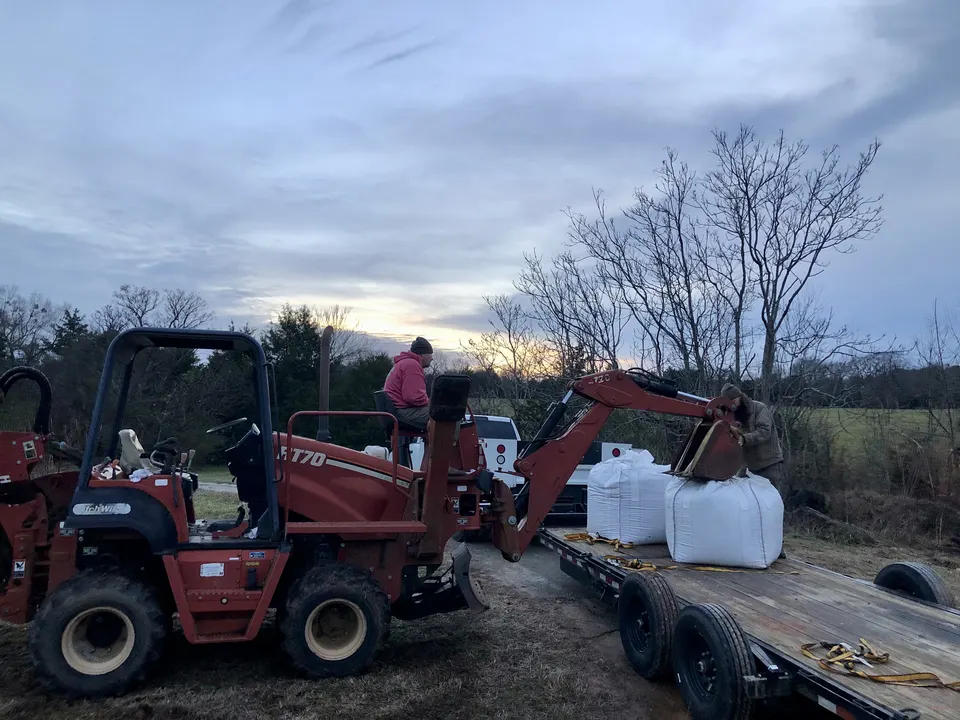
What Happens If You Hit an Underground Utility?
The real cost of a strike — repairs, liability, outages — and how locates and careful boring prevent it.
Read article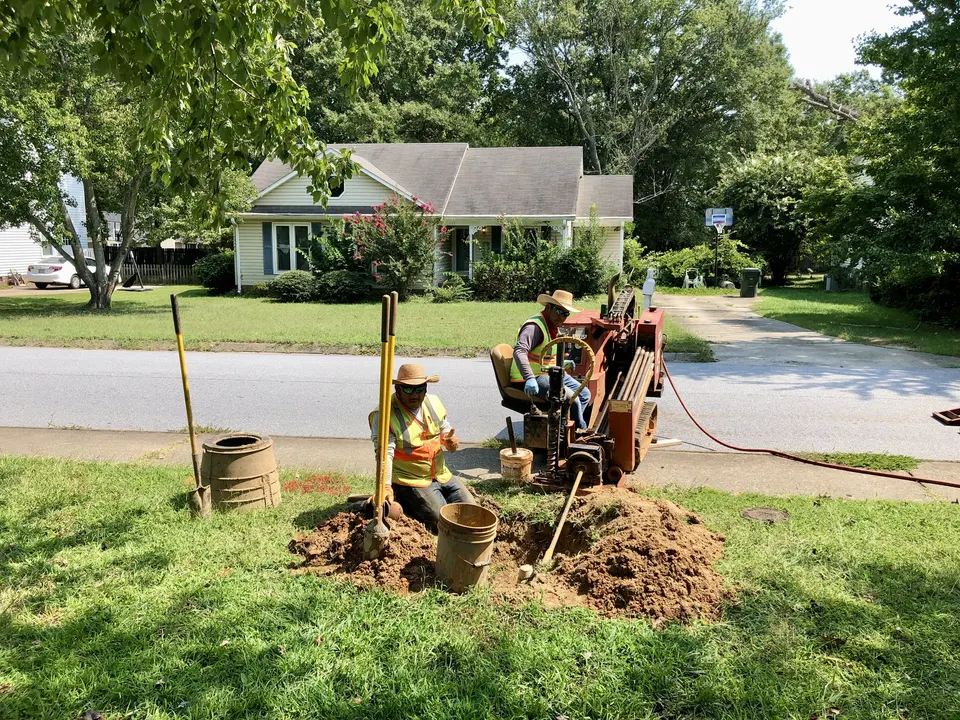
Directional Boring Cost in South Carolina
Per-foot ranges for trenchless installation — and what makes one bore cost more than another.
Read article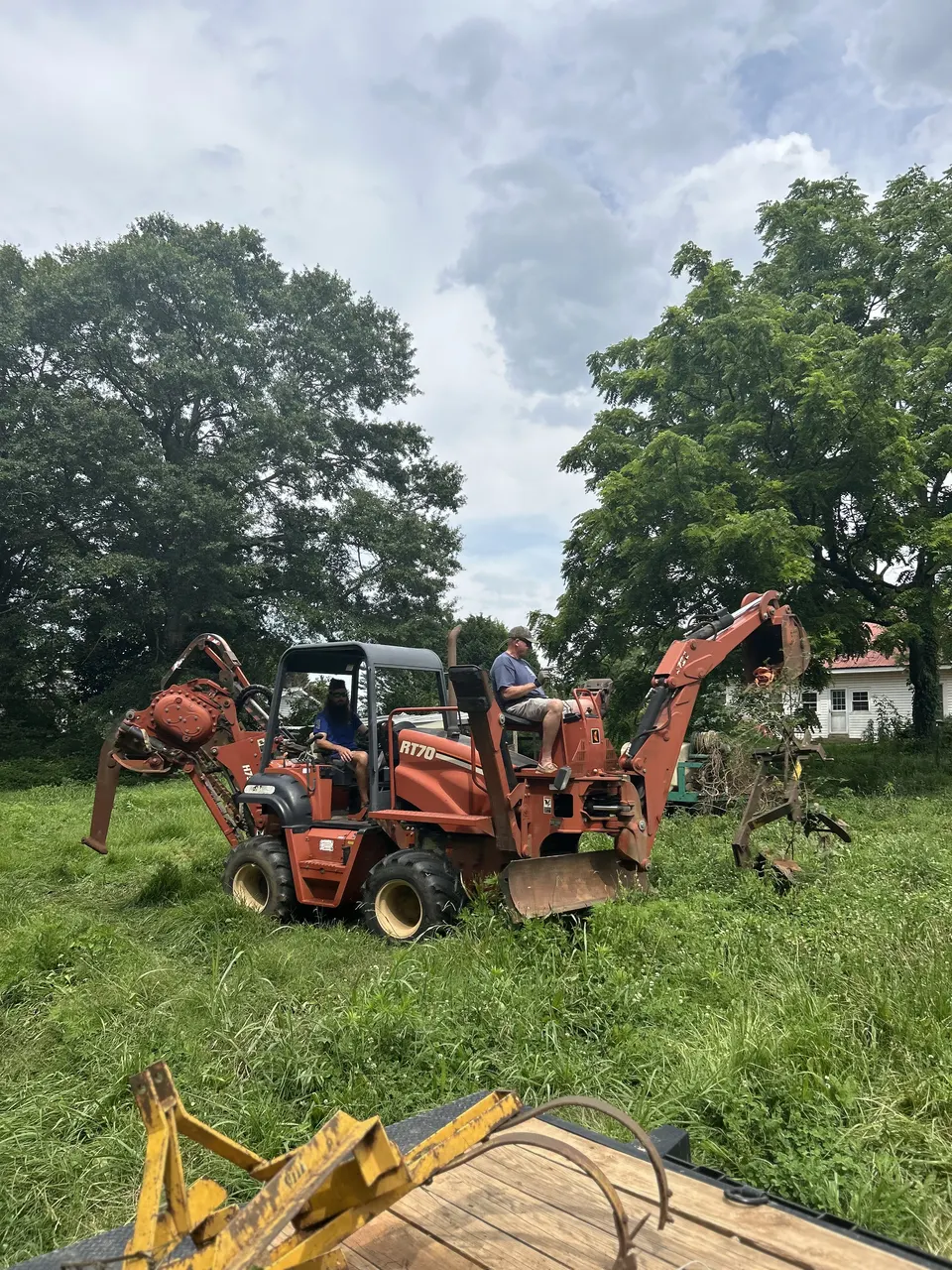
Underground Utility Construction in SC: A Builder’s Guide
Scope, main extensions vs on-site work, trenchless vs open-cut, and how a commercial utility job runs.
Read article