Quick Answer
Fiber optic cable installation in South Carolina requires conduit placement at NEC-compliant depths (18–48 inches depending on the location), directional boring beneath roads and driveways, and coordination with the internet service provider. Sloan Underground handles permitting, 811 locates, conduit installation, and ISP hand-off for residential and commercial fiber projects across Upstate SC.
Tell us about the job
Family-owned since 1965 — we reply within one business day with a straight answer.
Fiber Optic Cable Installation Requires Underground Conduit Placement
Fiber optic cable installation in South Carolina — whether for a residential fiber-to-the-home (FTTH) connection or a commercial multi-building network — requires underground conduit installation. The fiber optic cable itself is installed inside HDPE innerduct, and that innerduct is either direct-buried in a trench or pulled back through a directionally-bored conduit run.
Sloan Underground Construction handles the underground infrastructure portion of fiber installations: conduit placement, road crossings via horizontal directional drilling, depth-compliant burial per NEC 2026, permitting, and 811 utility locates. Once the conduit is installed and terminated at the demarcation point, the ISP or fiber contractor pulls the cable.
Fiber optic cable is fragile compared to copper. The bend radius on most single-mode fiber is 1.5–2 inches — tighter than that and you risk signal loss or cable damage. That's why the conduit pathway is critical. A poorly planned bore path with sharp bends, or a trench installed at the wrong depth, creates installation problems the fiber contractor inherits. Sloan has been installing underground utilities across South Carolina since 1965. We know where pipes belong, what depth codes require, and how to coordinate with the crew pulling cable.
How Deep Does Fiber Need to Be Buried in South Carolina?
The National Electrical Code (NEC) sets minimum burial depth for communications cable in conduit, and South Carolina follows NEC 2026 as the baseline. Required depth varies by location:
- Under landscaping or lawn areas: Minimum 18 inches. This is the standard for yard runs where no vehicle traffic is expected.
- Under driveways or parking areas: 24 inches minimum where vehicle loads are possible. Concrete or asphalt does not count toward cover depth — measurement is from the bottom of the pavement to the top of the conduit.
- Beneath roadways: 36–48 inches depending on the road authority. SCDOT typically requires 36 inches for state highways; some county road departments specify 48 inches for rural routes. Sloan verifies depth requirements with the permit-issuing agency before every road crossing.
- Within 2 feet of building foundations: 18 inches minimum, but many commercial projects spec 24 inches to match electrical service conduit depth.
These are minimum depths. If the bore or trench crosses an area where future excavation is likely — a future landscaping bed, a planned storm drain — going deeper reduces the risk of accidental strikes later.
Fiber cable buried at 12 inches under a driveway gets severed the first time someone installs landscape lighting or replaces a sprinkler line. Road bores installed at 24 inches instead of 36 inches fail utility locates and violate the encroachment permit. Sloan installs every conduit to code depth the first time.
What Size Conduit Is Used for Fiber?
Conduit sizing depends on the fiber type and whether future expansion is planned. Common sizes for fiber installations in South Carolina:
- 1-inch HDPE innerduct: Residential FTTH installations. Single fiber drop from the pedestal or handhole to the house. This is what AT&T Fiber, Brightspeed, and most municipal fiber providers use for single-family homes.
- 1.25-inch HDPE innerduct: Residential with future expansion. Allows room for a second fiber bundle or a larger cable.
- 2-inch conduit: Commercial fiber runs, multi-tenant buildings, or residential installations where multiple services (fiber + future conduit for something else) share the same bore path.
- 4-inch conduit: Commercial backbone runs between buildings, data centers, or cell tower backhaul. Accommodates multiple fiber bundles or future cable upgrades without re-boring.
For fiber optic installation projects, Sloan coordinates conduit sizing with the ISP or the general contractor before the bore begins. Installing 1-inch conduit when the project requires 2-inch means tearing out the bore and starting over. We confirm specs in writing before mobilization.
Directional Boring Eliminates Surface Disruption
Most fiber installations in South Carolina involve at least one road crossing, a driveway crossing, or a run beneath existing hardscape. Open-cut trenching across these surfaces destroys pavement and creates restoration liability. Directional boring avoids that entirely.
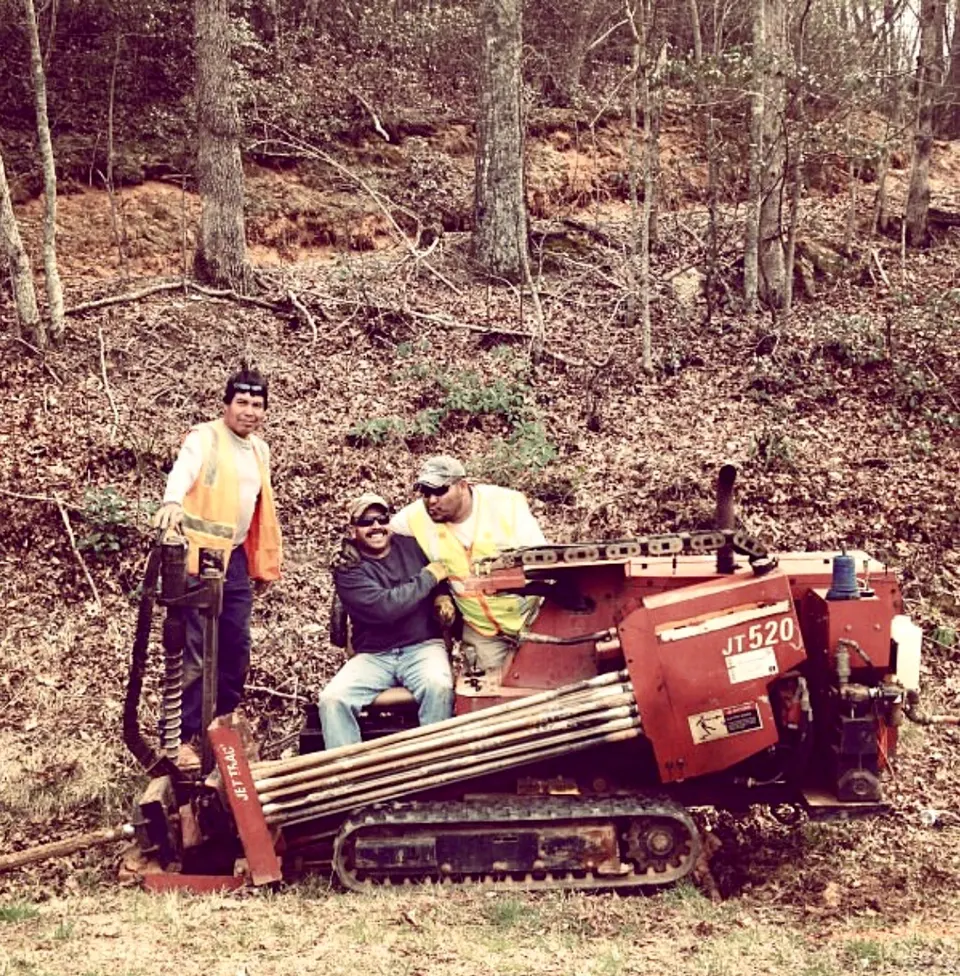
Sloan Underground uses horizontal directional drilling (HDD) to bore beneath roads, driveways, parking lots, and landscaped areas. The drill rig sets up at the entry point. A steerable pilot bore is drilled along the planned path at the required depth. Once the pilot bore exits at the far side, the conduit is attached to the drill stem and pulled back through the bore hole in one continuous run. The surface stays intact. No asphalt cutting, no lane closures, no destroyed landscaping.
We run the same trenchless process for road crossings, driveway bores, and yard runs where the client wants zero surface disruption. For residential FTTH installations, most homeowners choose directional boring to avoid tearing up their yard.
The bore path can handle curves — our equipment steers around existing utilities, tree roots, and underground obstacles flagged during the 811 locate. Bend radius stays well above the fiber cable's minimum, so there's no risk of kinking the conduit during pullback.
Permitting and ISP Coordination
Any fiber installation within a public road right-of-way in South Carolina requires a permit. The permit type depends on which entity owns the road:
- SCDOT Encroachment Permit: Required for state-maintained highways and primary routes. Applications go through the SCDOT district office. Processing time runs 2–6 weeks for standard utility crossings.
- County Right-of-Way Permit: Required for county-maintained roads. County road departments handle these permits, and turnaround is often faster than SCDOT — typically 1–3 weeks in Upstate counties.
- Municipal Utility Permit: City-maintained streets require a permit from the city's public works or engineering department.
Sloan Underground handles all permitting as part of the conduit installation project. We know which roads are SCDOT versus county jurisdiction, we have working relationships with the permitting offices, and we know what the application requires. Most clients don't need to touch the paperwork.
Before any bore, we coordinate 811 utility locates. Road right-of-ways in South Carolina are often packed with existing utilities — water mains, gas lines, buried electric, and other fiber conduit. We've worked job sites where three ISPs have conduit in the same road shoulder within 2 feet of each other. A clean 811 call is essential before the pilot bore goes in the ground. See our guide on what happens if you hit an underground utility.
For commercial fiber projects, Sloan also coordinates with the ISP or the fiber contractor pulling cable. We confirm the conduit termination points, pull-rope placement, and hand-off timing so the fiber crew can start pulling cable as soon as the conduit installation is complete. Most commercial jobs involve multiple conduit runs — from the street to the building, between buildings on a campus, or from a fiber vault to individual suites. Those jobs require detailed coordination to avoid installation delays.
How Long Does Fiber Conduit Installation Take?
Installation timelines vary by project scope and permitting lead time. Here's what to expect:
- Residential FTTH service line (road to house): 4–6 hours for a single bore. Setup, bore, pullback, termination — complete in one day. No permitting required if the bore stays on private property.
- Residential FTTH with road crossing: Add 2–4 weeks for permit processing if the bore crosses a public road. The bore itself is still a same-day job once the permit is approved.
- Commercial single-building fiber service: 1–2 days for conduit installation from the street to the demarc inside the building. Permitting adds 2–6 weeks depending on road authority.
- Multi-building campus or subdivision backbone: Several days to several weeks depending on total bore length, number of road crossings, and soil conditions. Projects with 5+ bore runs often schedule in phases to match ISP cable-pulling crews.
For commercial projects on a construction timeline, road crossings are often the critical-path item. Permitting takes weeks, and the bore can't happen until the permit is approved. Starting the permit application as soon as the bore location is confirmed keeps the project from stalling. Sloan recommends submitting permits 4–6 weeks before the scheduled installation date.
Frequently Asked Questions
How deep does fiber optic cable need to be buried in South Carolina?
Minimum 18 inches under landscaping, 24 inches under driveways or parking areas where vehicle traffic is possible, and 36–48 inches beneath roadways depending on the road authority. Sloan Underground verifies required depths with the permit-issuing agency before every installation.
Can fiber optic cable be installed without trenching?
Yes. Directional boring installs fiber conduit beneath driveways, roads, and hardscapes without open trenching. Sloan Underground uses horizontal directional drilling (HDD) to bore beneath roads and pull back HDPE conduit for fiber optic cable placement. The surface stays intact and no asphalt or landscaping gets torn up.
What size conduit is used for fiber optic cable?
Residential fiber-to-the-home (FTTH) projects typically use 1-inch or 1.25-inch HDPE innerduct. Commercial fiber installations often use 2-inch or 4-inch conduit to accommodate multiple fiber bundles or future expansion. Sloan coordinates conduit sizing with the ISP before installation begins.
Do you need a permit to install fiber optic cable underground in SC?
Yes. Any fiber installation within a public road right-of-way requires a permit — SCDOT encroachment permit for state routes, county right-of-way permit for county roads, or a municipal permit for city streets. Private property installations may also require a utility easement. Sloan Underground handles all permitting and 811 utility locates as part of the project.
How long does underground fiber installation take?
A single residential service line bore (from the road to the house) typically takes 4–6 hours. Commercial jobs with multiple conduit runs, road crossings, and permit requirements can run several days to weeks depending on length and site conditions. Permitting lead time for road crossings adds 2–6 weeks before work can begin.