
Sudden low water pressure almost always points to one of five causes: a burst or leaking underground water line, a failing pressure regulator, a partially closed main shutoff valve, municipal supply issues, or sediment buildup in pipes. If pressure dropped abruptly — working fine yesterday, weak throughout the house today — the most likely culprits are an underground service line break, a pressure reducing valve (PRV) failure, or a shutoff valve that was left partially closed after recent work. Here's how to diagnose each — and when the fix requires excavation.
Common Causes of Suddenly Low Water Pressure
When pressure loss is sudden and affects every fixture in the house simultaneously, the problem is almost always in the supply chain — not inside your plumbing. Work through these causes in order.
Underground Service Line Leak or Break
This is the most serious cause and one of the most common. An underground water line can fail suddenly from ground shifting, tree root pressure, freeze damage, or simply age-related corrosion reaching a failure point. When the line breaks or develops a major leak, pressurized water escapes into the soil before it reaches your home — reducing available pressure at every fixture.
Look for these signs:
- Wet spots, soggy zones, or unexplained standing water in your yard
- Running water sound when all fixtures are off
- Water meter spinning continuously even with everything shut off inside
- Sudden spike in your water bill alongside the pressure drop
If you suspect an underground leak, perform the meter test: shut off all interior fixtures, watch your meter's leak indicator for 10 minutes. If it's moving, close the main interior shutoff valve (where the service line enters the house) and check the meter again. If it's still moving with the interior supply closed, the leak is in the underground service line. See our full guide on why your water meter is spinning for detailed instructions.
Pressure Reducing Valve (PRV) Failure
Most homes in Greenville, Spartanburg, Anderson, and Upstate SC have a pressure reducing valve (also called a pressure regulator) near the main shutoff. This bell-shaped brass device steps down municipal supply pressure (often 80–120 PSI) to safe residential pressure (40–80 PSI). When a PRV fails, it usually fails in the restrictive direction — throttling pressure to the entire house down to 20–30 PSI or lower.
PRV failures are often sudden. The valve diaphragm or spring can fail abruptly, causing pressure to drop overnight. A plumber can test the output pressure with a gauge, adjust the set screw if possible, or replace the valve. Replacement typically costs $150–$400 and restores normal pressure immediately.
Partially Closed Main Shutoff or Curb Stop
If you or a plumber recently worked on the plumbing system and shut off the main water valve, verify it was fully reopened. A ball valve should be parallel to the pipe when open; a gate valve should be turned fully counterclockwise. Even a 25% closure can cut pressure significantly. This is the quickest fix on this list — fully open the valve and pressure restores instantly.
The curb stop — the utility's shutoff valve near the meter pit — can also be left partially closed after utility work. You may be able to see the valve position through the meter pit cover. If it looks only partially open, contact your water utility to have them reopen it. Do not operate the curb stop yourself — only utility technicians should adjust it.
Municipal Supply Issues
Water utilities occasionally reduce system pressure during main repairs, fire suppression demand, or peak usage periods (summer afternoons when irrigation is heavy). Call your water utility to ask whether there's reduced pressure in your area or active work on nearby mains. If it's a temporary municipal issue, no action is needed on your end — pressure will restore when utility work completes.
Sediment Buildup or Corrosion in Aging Lines
Homes built before 1970 often still have galvanized steel service lines. These corrode from the inside out, building up iron oxide scale that progressively narrows the pipe's interior diameter. While this is usually a gradual process, a large piece of scale can break loose and partially block flow, causing a sudden pressure drop. If your home is 50+ years old and you've never replaced the service line, galvanized corrosion may be the cause. The only fix is full line replacement — typically trenchless HDPE boring.
When Low Water Pressure Signals an Underground Line Problem
An underground service line leak or break is the most common cause of sudden pressure loss that doesn't resolve itself. Unlike a PRV adjustment or a reopened shutoff valve — which restore pressure immediately — an underground line problem requires professional excavation or trenchless replacement.
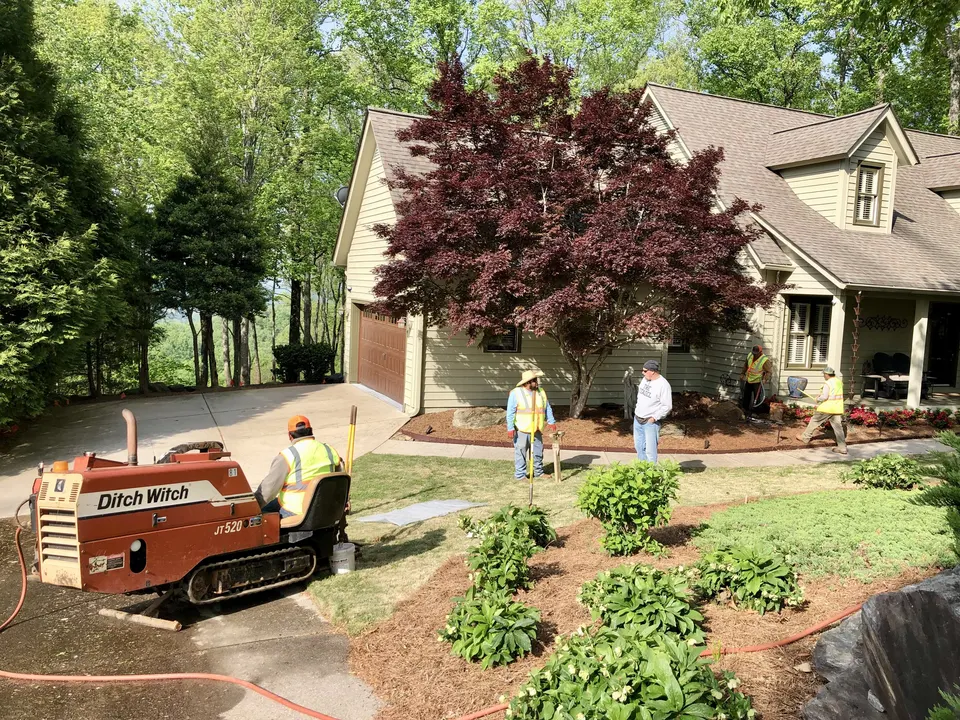
Sloan Underground Construction, a licensed South Carolina underground utility contractor based in Greenville County, has been diagnosing and replacing failing service lines across Upstate SC since 1965. We offer professional low water pressure diagnosis to pinpoint the exact cause before recommending a repair. Trenchless directional boring replaces the entire service line without disturbing your yard, driveway, or landscaping — the new HDPE line is bored beneath the surface and pulled through in one day.
When to suspect an underground line issue:
- Pressure dropped suddenly and has not recovered
- You see wet spots, sinkholes, or unusually green grass patches in your yard
- The meter spins continuously with all interior fixtures off
- Your water bill spiked at the same time pressure dropped
- You hear running water sounds outside or near the foundation when everything is off
If any of these apply, the next step is a professional assessment. Sloan Underground offers free written estimates within 24 hours and can typically restore service the same week. See our water line installation page for more on what's involved in trenchless replacement.
How to Diagnose Low Water Pressure at Home
Use this step-by-step sequence to narrow down the cause efficiently.
- Is pressure low at every fixture or just one? Single-fixture pressure loss points to a clogged aerator, failing valve, or fixture-specific issue. House-wide low pressure — every faucet, shower, and hose bib weak simultaneously — means the problem is in the supply chain. Continue below for house-wide pressure loss.
- Check the main shutoff valve. Locate it where the service line enters your foundation. Verify it's fully open — ball valve parallel to the pipe, gate valve turned fully counterclockwise. If it was partially closed, fully open it and check if pressure restores.
- Call your water utility. Rule out municipal supply issues. Ask if there's reduced pressure in your area or any active main work nearby. If the utility confirms a supply issue, wait for their work to complete — no action needed on your end.
- Check for a PRV and test pressure. Look for a brass bell-shaped pressure regulator near the main shutoff. Install a pressure gauge on an outdoor hose bib or washing machine inlet (both are threaded fittings). Normal residential water pressure is 40–80 PSI. Below 40 PSI with a PRV present suggests PRV failure. Have a plumber adjust or replace it.
- Perform the water meter leak test. Shut off all interior fixtures and appliances. Watch the meter's leak indicator for 10 minutes. If it's moving, close the main interior shutoff and check again. If the meter still moves with interior supply closed, you have an underground service line leak. This is conclusive.
- Assess service line age and material. If your home is pre-1970 and you've never replaced the service line, galvanized steel scale may be restricting flow. Get a professional assessment — line replacement may be the only long-term fix.
When to Call a Professional
Call a licensed underground utility contractor if:
- The meter test confirmed an underground leak (meter moving with interior shutoff closed)
- You see visible wet spots, sinkholes, or unusually lush grass zones in your yard
- Pressure dropped suddenly and has not recovered after checking the shutoff and calling the utility
- Your service line is galvanized steel and older than 40 years
- You hear running water outside when all fixtures are off
Sloan Underground Construction serves Greenville, Simpsonville, Greer, Taylors, Mauldin, Spartanburg, Boiling Springs, Anderson, Pendleton, Pickens, and all of Upstate South Carolina. We locate failing service lines, assess the extent of damage, and replace them trenchlessly — boring a new HDPE line beneath your yard without trenches, yard damage, or weeks-long restoration work.
Call (864) 386-1649 for a same-week assessment or visit our water line installation page to see what trenchless replacement looks like. Free written estimates provided within 24 hours.
Frequently Asked Questions
Why did my water pressure suddenly drop?
Sudden pressure drops usually have one of five causes: a burst or leaking underground service line losing pressure before it reaches the house, a pressure regulator that failed abruptly, a main shutoff valve that was partially closed (often after service work), municipal supply issues affecting your neighborhood, or a major leak inside the home draining available pressure. The most serious cause — underground line failure — often shows up as wet spots in the yard, running water sounds when everything is off, or a water meter that spins continuously.
Can a broken underground pipe cause low water pressure?
Yes. A broken or burst underground service line is one of the most common causes of sudden house-wide pressure loss. When the pipe fractures — from ground shifting, tree root intrusion, freezing, or age — pressurized water escapes into the soil before reaching your home. This reduces available flow and pressure at every fixture simultaneously. The break may be detectable as a wet zone in your yard, a sinkhole, or continuous meter movement with all fixtures off. Underground line failures require professional excavation or trenchless replacement to restore service.
How do I know if I have an underground water leak?
Shut off all fixtures and appliances that use water — faucets, showers, toilets, washing machine, dishwasher, ice makers. Go to your water meter and watch the leak indicator (small red or silver triangle, dial, or flow sensor). If it is moving or registering flow with everything off, you have a leak. Next, close the main interior shutoff valve where the service line enters your home. If the meter still moves with the interior supply shut off, the leak is in the underground service line between the meter and your foundation. This test takes 10 minutes and conclusively confirms whether an underground leak is the pressure problem.
Related Articles
Low Water Pressure: Causes and Fixes
Complete guide to diagnosing gradual pressure loss — PRVs, shutoffs, underground leaks, and inside-the-home restrictions.
Read article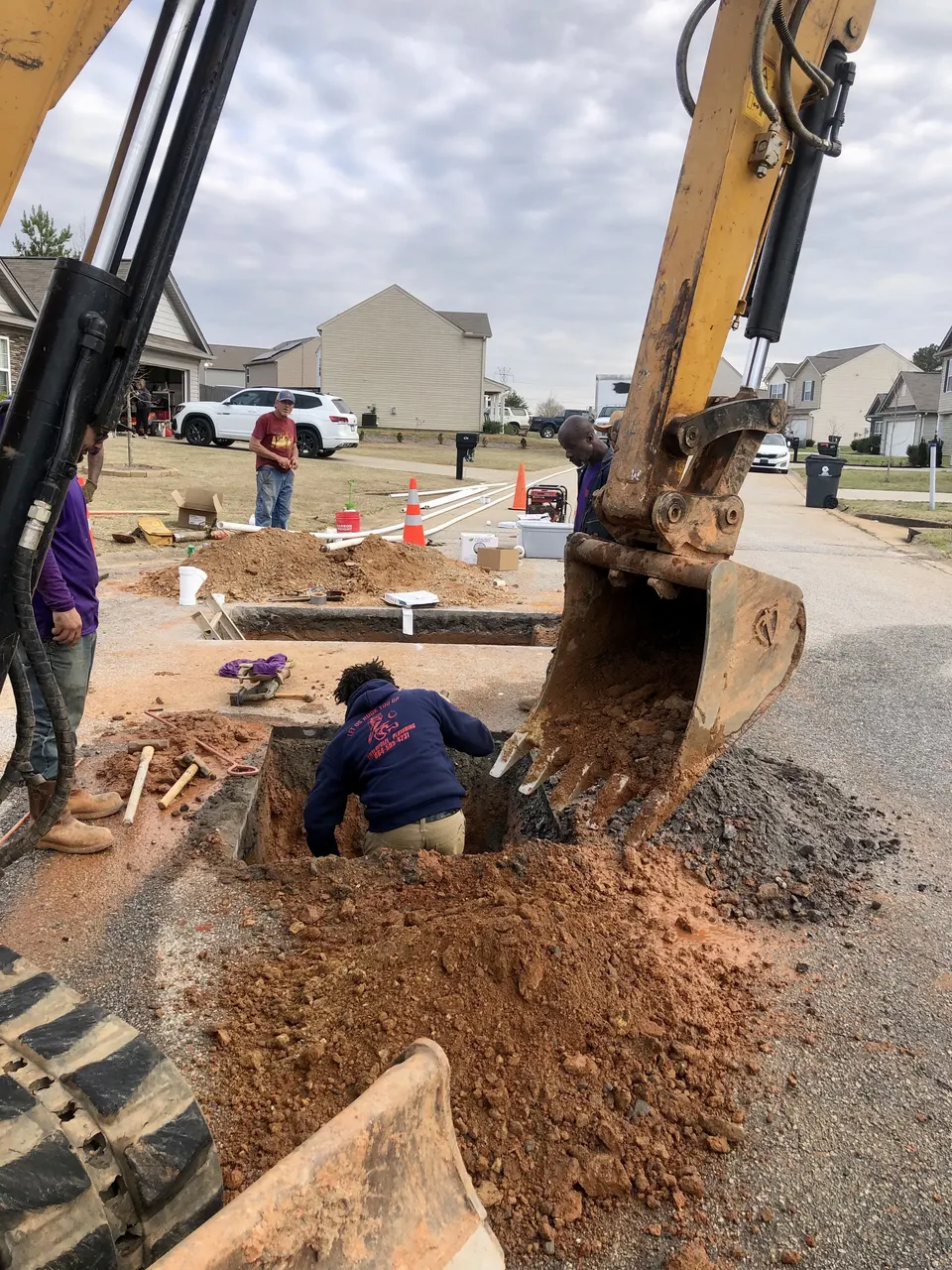
Signs Your Water Line Is Leaking
Visible, auditory, and utility signals that your underground service line is failing — plus how to detect early.
Read article
Why Is My Water Meter Spinning?
The two-hour leak test that confirms whether an underground service line is causing your pressure problem.
Read article