
House-wide low water pressure — every fixture weak simultaneously — almost always originates outside your interior plumbing. The most likely causes are a partially closed main shutoff or curb stop, a failing pressure reducing valve (PRV), an underground service line leak or restriction, or a galvanized line that has scaled shut from years of interior corrosion. Single-fixture pressure loss points to a clogged aerator or failing fixture valve — a different problem with simpler fixes.
Inside-the-Home Causes
Before concluding the problem is in your water line, work through the inside-the-home causes. Several of these have quick, inexpensive fixes.
Partially Closed Main Shutoff
The main shutoff valve — where the service line enters your home — may have been closed partially during previous work and not fully reopened. Ball valves should be parallel to the pipe (fully open); gate valves should be turned fully counterclockwise. A valve even 25% closed can cut pressure significantly. Check this first — it's a 30-second fix if this is the cause.
Failing Pressure Reducing Valve (PRV)
Most homes in Upstate SC have a PRV (also called a pressure regulator) on the service line at the point of entry. This brass bell-shaped device reduces municipal supply pressure (typically 80–120 PSI) down to safe residential pressure (40–80 PSI). When the PRV fails in the restrictive direction, it throttles pressure to the entire house. PRV replacement runs $150–$400 with a licensed plumber and is usually the fix when pressure drops suddenly on an otherwise-working plumbing system.
Clogged Aerators or Showerheads
If pressure is low on a single fixture or in one bathroom, check the aerator (the mesh screen at the faucet tip) and showerhead for mineral deposit buildup. In SC's moderately hard water areas, calcium and magnesium scale can restrict flow significantly over 1–2 years. Unscrew the aerator, soak in vinegar for 30 minutes, and replace — this often fully restores pressure at the fixture for free.
Water Softener Malfunction
A water softener stuck in regeneration mode or with a failed resin bed can restrict flow throughout the house. Bypass the softener using the bypass valve on the unit and check if pressure restores. If it does, service or replace the softener — do not run the household plumbing through a malfunctioning softener long-term.
Outside and Supply Line Causes
When inside checks don't resolve the pressure issue, the problem is in the water supply chain — either at the municipal level or in your underground service line.
Municipal Supply Pressure Drop
Water utilities adjust system pressure based on demand — pressure is typically lower in summer afternoons when irrigation and outdoor usage peak, and during nearby construction or main repairs. Call your water utility (Greenville Water: 864-241-6000; Spartanburg Water System: 864-582-3770) to ask whether system pressure is reduced in your area. If it's a temporary municipal issue, no action is required on your end.
Underground Service Line Leak
A leaking service line loses pressurized water before it reaches your house, reducing available flow and pressure at every fixture simultaneously. This is a gradual process — the pressure drop may be noticeable only after the leak has grown to a certain size. By the time pressure loss is obvious, the leak is likely losing significant water daily. The fix is full line replacement — typically trenchless HDPE boring in residential applications. For more on identifying this problem, see our guide on signs your water line is leaking and our water meter spinning test guide.
Corroded or Scaled Galvanized Line
Homes built before 1970 in Greenville, Spartanburg, Anderson, and other Upstate SC communities often still have their original galvanized steel service lines. These lines corrode from the inside out over decades, building up iron oxide scale that progressively narrows the interior diameter of the pipe. A galvanized service line at 50+ years may have reduced to an effective interior diameter of 3/4 inch or less from its original 1-inch specification. The resulting pressure loss looks exactly like a supply problem — because it essentially is. Replacement with HDPE restores full-rated flow immediately.
Partially Closed Curb Stop
The curb stop is the utility's shutoff valve near the meter pit, used to control supply to your property. If this valve was operated recently (during utility work or a prior service call) and not fully reopened, it can restrict flow significantly. You may be able to see the valve position through the meter pit cover. If it appears to be only partially open, contact your water utility — only their technicians should operate the curb stop valve.
Troubleshooting Low Water Pressure Step by Step
Use this sequence to narrow down the cause efficiently.
- Is pressure low at every fixture, or just one? Single fixture = aerator, valve, or fixture issue. Every fixture = supply chain problem. Continue below for house-wide low pressure.
- Check the main shutoff valve. Locate it where the service line enters the foundation. Verify it's fully open — ball valve parallel to pipe, gate valve fully counterclockwise.
- Check for a PRV. Look for the brass bell-shaped pressure regulator near the main shutoff. If it's there and the house is older, it may be due for replacement. Have a plumber check and adjust/replace as needed.
- Call your water utility. Ask if there's reduced pressure in your area or any active main work nearby. Rule out a municipal cause before investing in further diagnostics.
- Check your water meter. Shut off all interior fixtures and watch the meter's leak indicator. If it's moving with everything off and the main interior shutoff is closed, you have an underground service line issue. See our full guide on why your water meter is spinning.
- Assess your service line age and material. If your home is pre-1970 and you've never replaced the service line, galvanized steel scale may be the restriction. Get a professional assessment.
When to Call a Water Line Professional
Call a licensed underground contractor if:
- The meter is moving with all fixtures off and the main interior shutoff closed (underground leak confirmed)
- Your service line is galvanized steel and older than 40 years — assess before the pressure gets worse
- Pressure has been declining gradually over several months rather than dropping suddenly
- You see any of the yard symptoms described in our guide on signs of a leaking water line
- Your water bill has been rising without explanation alongside the pressure drop
Sloan Underground Construction has been assessing and replacing underground water service lines near Greenville, Simpsonville, Greer, Taylors, Spartanburg, Boiling Springs, Anderson, Pendleton, and throughout Upstate SC since 1965. Trenchless directional boring replaces failing lines without disturbing your yard, driveway, or landscaping.
Call (864) 386-1649 for a same-week assessment or visit our water line installation page to learn more about what's involved.
Frequently Asked Questions
What causes low water pressure throughout the whole house?
House-wide low pressure — affecting every faucet, shower, and hose bib simultaneously — almost always originates outside the interior plumbing. The most common causes are: a partially closed main shutoff valve or curb stop, a failing pressure reducing valve (PRV), an underground service line leak reducing available flow, the municipal supply pressure being lower than normal (check with your utility), or buildup in an aging galvanized service line restricting flow. Single-fixture pressure problems, by contrast, point to a clogged aerator, failing valve, or fixture-specific issue.
How do I know if my pressure reducing valve (PRV) is the problem?
A failing PRV either over-restricts pressure (sending low pressure throughout the house) or under-restricts it (allowing municipal pressure — often 80–120 PSI — directly into your home, which can damage fixtures and cause pipe failures). To test, install a pressure gauge on any outdoor hose bib or the washing machine inlet valve — both are threaded fittings. Normal residential water pressure is 40–80 PSI. Below 40 PSI indicates low supply or a restriction. If the PRV is accessible (usually near the main shutoff inside the home), adjusting the set screw can sometimes restore pressure; replacement costs $150–$400 with a plumber.
Can an underground water line leak cause low pressure?
Yes. A leaking underground service line loses pressurized water before it reaches the house, reducing available flow and pressure at all interior outlets. This is a common cause of gradually worsening house-wide pressure over months — the leak grows slowly and the pressure drop is gradual enough that homeowners often don't notice until it's significant. A water meter test (all fixtures off, watch the leak indicator) can confirm an active underground leak. If the meter is moving with everything shut off and the main interior shutoff is closed, the leak is in the service line between the meter and your foundation.
How long does it take to fix low water pressure from an underground line?
If the pressure problem is caused by an underground service line leak or blockage requiring line replacement, trenchless directional boring typically restores service in one day. The bore is run, the new HDPE line is pulled through, connections are made at both ends, and pressure is restored before the crew leaves. During the job, water is off for 4–8 hours. Sloan Underground serves Greenville, Spartanburg, Anderson, and all of Upstate SC — call (864) 386-1649 for a same-week assessment.
Related Articles

Why Is My Water Meter Spinning?
The two-hour leak test that confirms whether an underground service line is causing your pressure problem.
Read article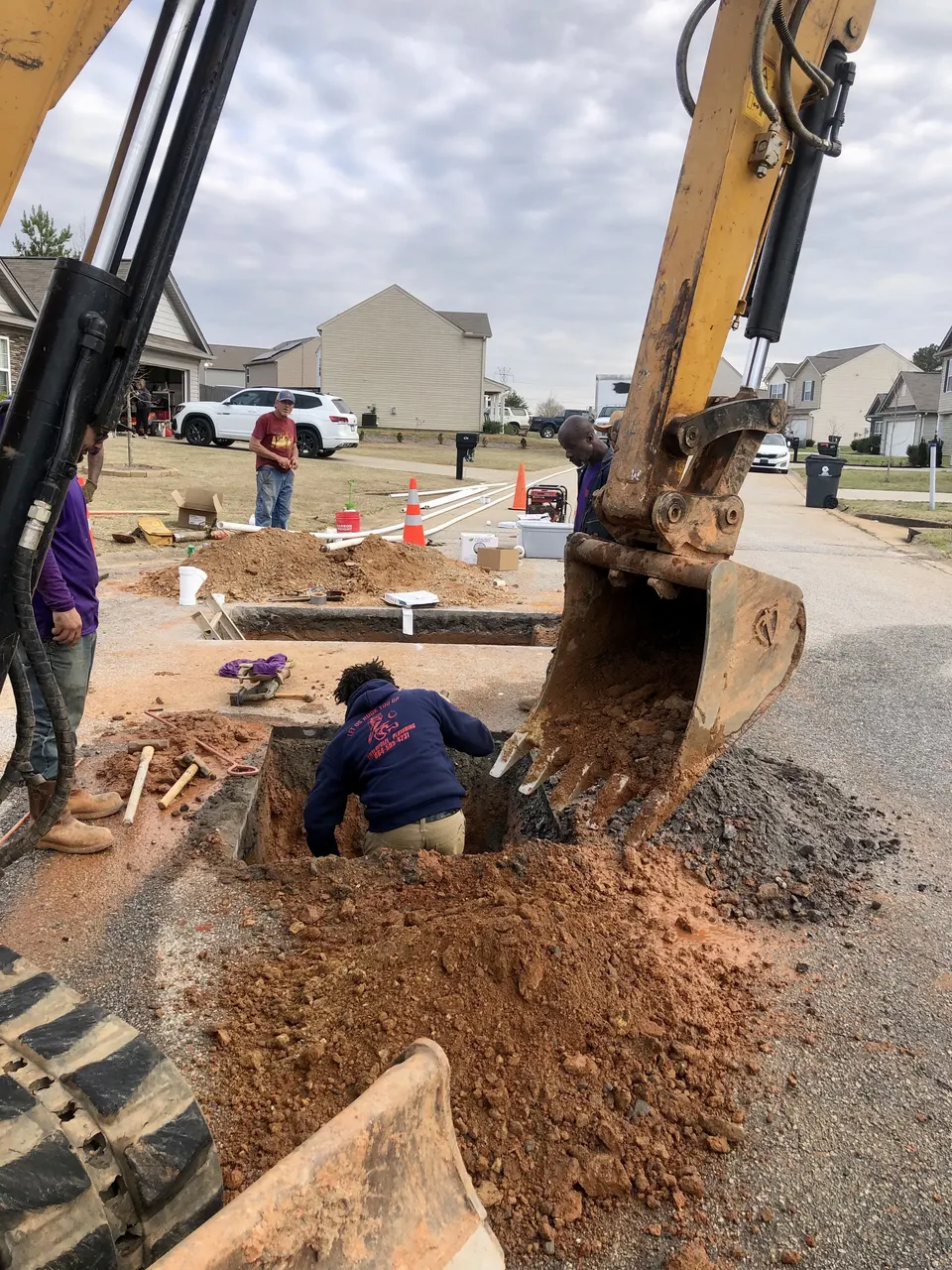
Signs Your Water Line Is Leaking
Visible, auditory, and utility signals that your underground service line is failing — plus how to detect early.
Read article